






 Portuguese
  Spanish


Japanese scientists created the first air-breathing battery that stores twice the energy of common batteries — and it works at room temperature, without needing pure oxygen
A battery that uses air itself as fuel. It sounds like science fiction, but researchers from NIMS (Japan’s National Institute for Materials Science), in partnership with Softbank Corp., have managed to create a functional prototype of a lithium-air battery with a density of 500 Wh/kg.
The number might seem abstract, but comparison makes it concrete. Conventional lithium-ion batteries — the same ones that power your cell phone and electric cars — store about 250 Wh/kg. The Japanese lithium-air battery stores twice that.
“It is the world’s first realization of a high-quality lithium-air battery charge and discharge reaction at room temperature,” stated NIMS and Softbank researchers in the study.
-
Brazilian scientists are simultaneously advancing two research projects on clean hydrogen and driving solutions that could transform the energy matrix, enhance industrial competitiveness, and accelerate large-scale emission reduction targets.

-
Advancement in renewable energy: A R$ 150 million project launched by Petrobras and Finep aims to create state-of-the-art electrolyzers for green hydrogen, strengthening national research and preparing Brazil to compete in a billion-dollar energy market.
-
Illiterate or semi-literate grandmothers were trained to repair solar systems, open rural workshops, and light up homes that still depended on kerosene.
-
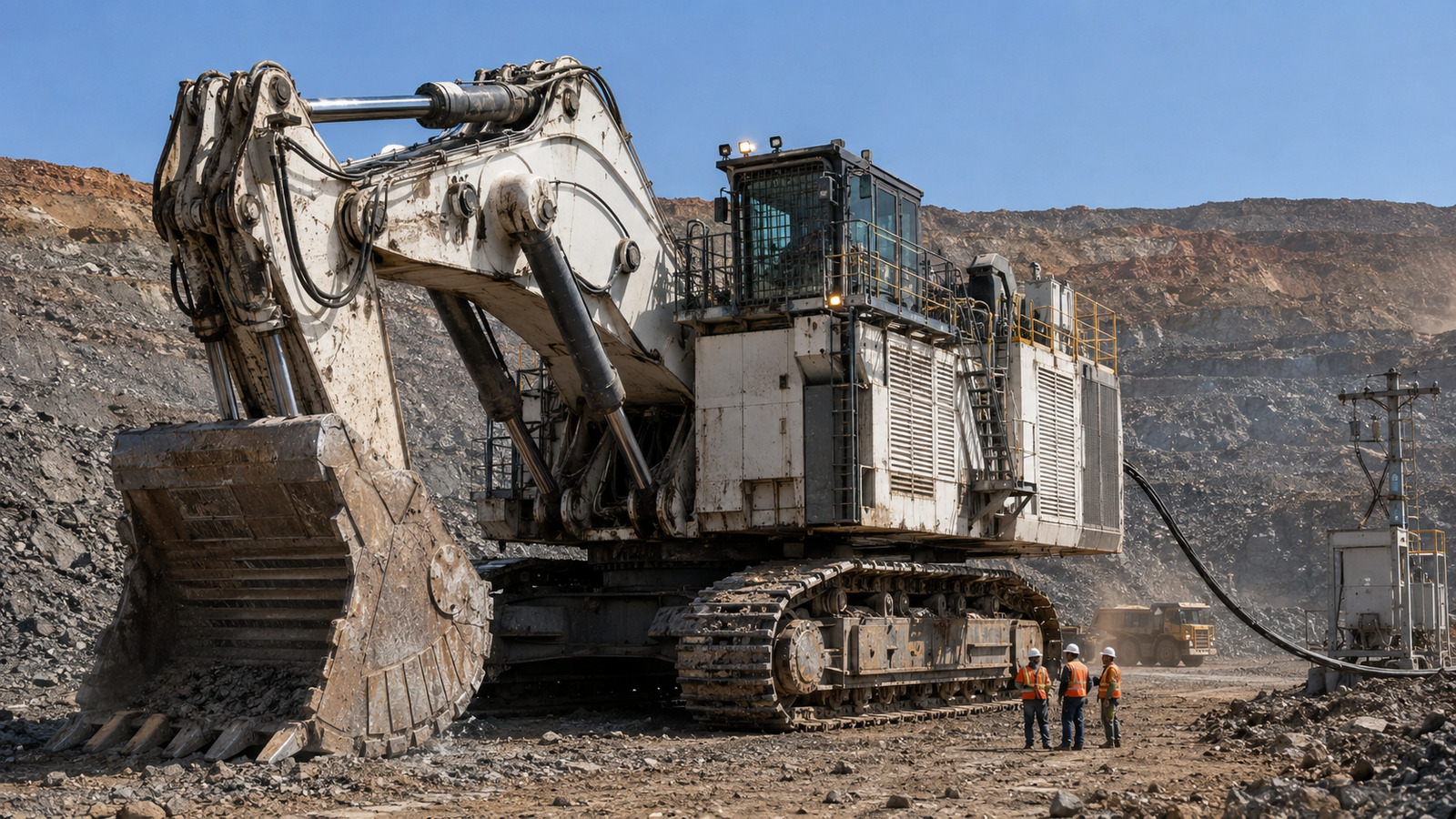
Unprecedented achievement in India: a colossal 650-ton, nearly 3,000 hp excavator is transformed into 100% electric, marking a new phase in heavy mining.




Therefore, it is not just a theoretical advance. The prototype works under real conditions, without special pure oxygen chambers.

With the lithium-air battery, electric cars could travel more than 600 km — with a lighter battery
The most impactful practical consequence of the lithium-air battery is the range of electric vehicles. With 500 Wh/kg, an electric car could travel more than 600 km on a single charge.
Furthermore, the battery would be significantly lighter than current lithium-ion batteries, as it stores twice the energy per kilogram.
The comparison with gasoline is becoming increasingly favorable. The energy stored at 500 Wh/kg is beginning to approach the energy density of fossil fuels.
Applications, however, are not limited to cars. NIMS and Softbank founded the Advanced Technology Development Center in 2018 with a focus on radio-base stations, IoT devices, and high-altitude platforms (HAPS).
Thus, cell towers in remote regions could operate with batteries that last weeks without recharging.
The global race for the battery of the future: Japan, South Korea, China, and the US compete for every watt
Japan is not alone in this race. Researchers at KAIST (Korea Advanced Institute of Science and Technology), led by Hyeokjin Kwon, have achieved a significant breakthrough in solid-state lithium-metal batteries.
The Korean prototype promises a range of 800 km, a lifespan of over 300,000 km, and charging in just 12 minutes.
In China, state-owned manufacturer FAW announced a semi-solid lithium-manganese battery with 500 Wh/kg — the same level as the Japanese prototype, but already integrated into production vehicles.
- Japan (NIMS/Softbank): Lithium-air battery, 500 Wh/kg, functional prototype at room temperature
- South Korea (KAIST): Solid-state lithium-metal, 800 km range, 12-minute charge
- China (FAW): Semi-solid, 500 Wh/kg, already in production vehicles
- USA/Germany (QuantumScape): Solid-state, 301 Wh/kg, production for VW motorcycles in 2026
- Japan (Toyota): Solid-state, more than 1,200 km, 5-minute recharge
The sodium-ion battery from CATL and BYD, 50% cheaper than lithium, represents another front of this revolution — focused on cost, not density.

How a battery that literally breathes works: air enters, reacts with lithium, and generates energy
The lithium-air battery works radically differently from conventional ones. Instead of carrying all reactants internally, it uses ambient air oxygen as one of the components of the electrochemical reaction.
During discharge, lithium in the anode reacts with oxygen entering through the porous structure of the cathode. This reaction generates electrical energy.
During recharging, the process reverses. Oxygen is released back into the air.
The major obstacle has always been making this reaction work stably at room temperature, without pure oxygen. Until now, most prototypes required sealed chambers with concentrated oxygen.
The Japanese prototype has overcome this limitation. It is the first to demonstrate stable charge and discharge cycles using common ambient air.
In Brazil, the acceleration of electric bus production shows that the country is already preparing to absorb the next generations of batteries when they reach the market.

It’s still a prototype — and the distance between laboratory and street remains enormous
On the other hand, it is essential to keep our feet on the ground. The NIMS lithium-air battery is still a laboratory prototype. There is no forecast for commercial production.
Its lifespan — described as “the best ever achieved” — has not been publicly quantified in terms of cycle numbers. Commercial lithium-ion batteries survive 1,000-2,000 cycles. There is no comparable data for the Japanese lithium-air battery.
Furthermore, lithium mining continues to be a serious environmental problem, regardless of the battery type. Extracting lithium from brines consumes large volumes of water in arid regions.
QuantumScape, for example, is already producing solid-state batteries for Volkswagen group motorcycles in 2026, but with “only” 301 Wh/kg. The distance between 500 Wh/kg in the lab and 500 Wh/kg in the factory can take years.
Still, the Japanese milestone is real and verifiable. For the first time, an air-breathing battery has worked under normal conditions. The path from lab to street is long, but the first step has just been taken.








Be the first to react!