Portuguese
  Spanish


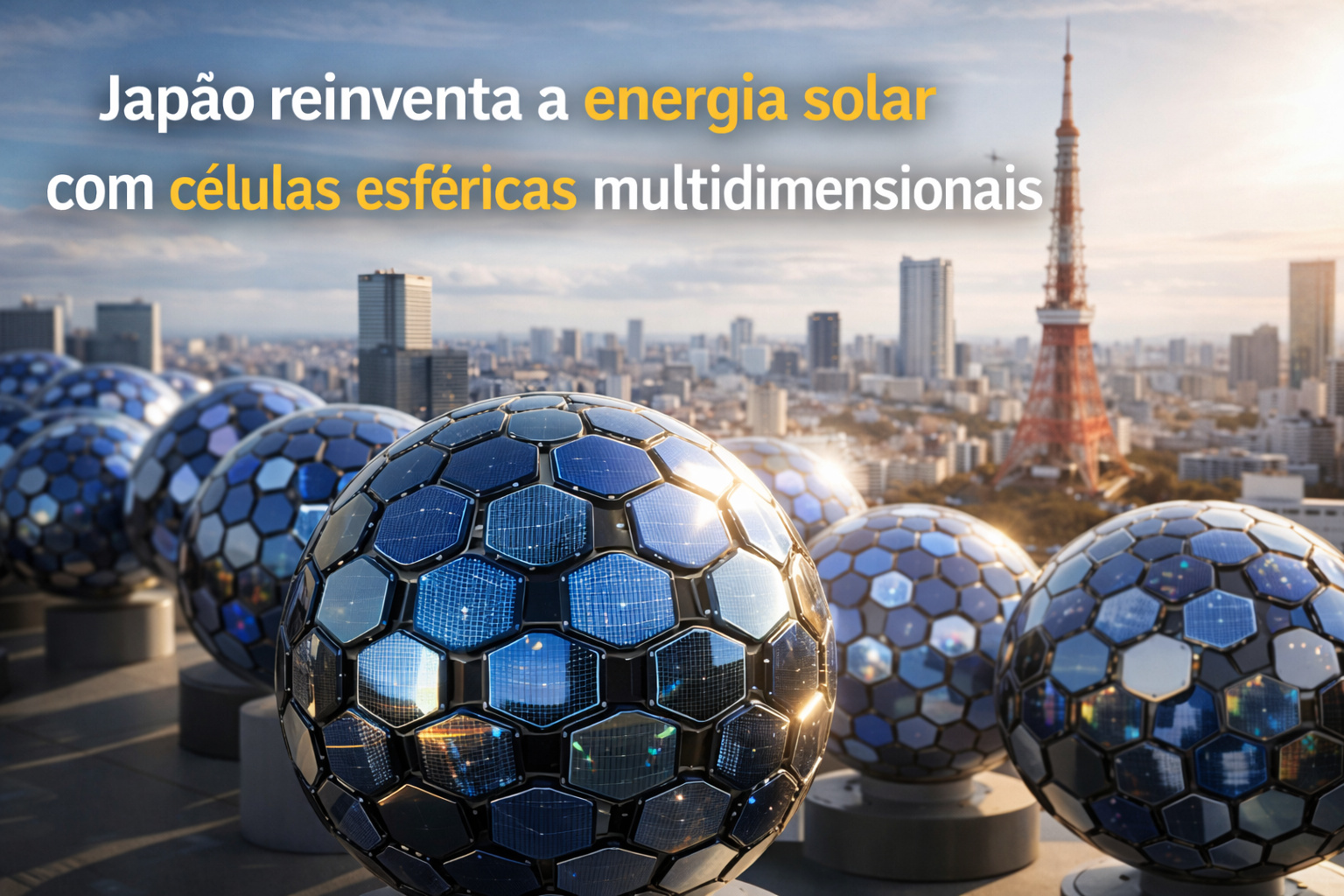


The solar energy is entering a new phase in Japan.
Researchers and companies in the country have announced a type of photovoltaic cell that promises to replace traditional flat and rigid panels.
Called multidimensional spherical cells, they capture light from virtually all directions, which could revolutionize the sector.
According to specialists involved in development, the curved structure allows for increased solar ray absorption.
Consequently, the system makes use of light that would normally be lost by conventional models, which depend on specific angles of incidence.
How Multidimensional Spherical Technology Works
Unlike traditional panels installed on fixed surfaces, spherical cells respond to the surrounding environment.
Light reflected from surfaces, walls, windows, and even the ground contributes to energy generation.
This occurs because the multidirectional shape captures solar radiation from 360 degrees.
-
Brazil’s Vitória Airport to Launch Solar Plant Covering Area of 10 Soccer Fields, Boosting Clean Energy and Cutting Costs

-
Switzerland Converts Train Tracks into Solar Power Plants with Removable Panels to Generate Energy Without Using Additional Land
-
Surge in Solar-Powered Homes in Brazil Leads to Grid Strain and Connection Restrictions in Three States

-
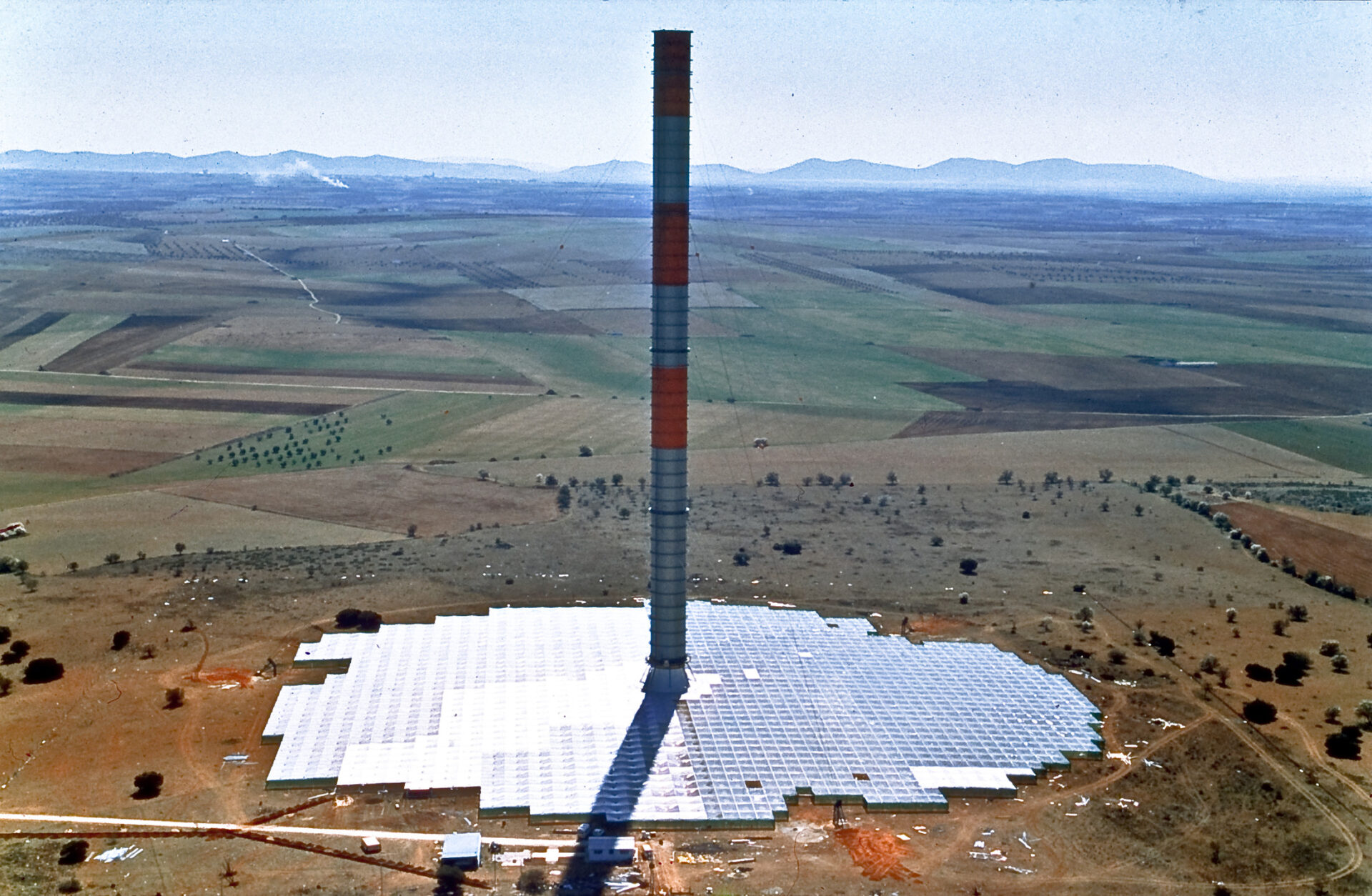
Solar Chimney in Spain Harnessed Sun to Generate Electricity for 7 Years Without Burning Fuel



Moreover, researchers state that the model can operate in reduced spaces, such as urban facades or shaded areas.
Thus, dense cities can generate more energy with less space, which is very difficult with the current design.
Farewell to the Flat Model?
Although the launch is still in testing stages, the innovation demonstrates the direction that solar energy is expected to take in the coming years.
The idea of large, sloped panels may cease to be the dominant standard.
With modular spherical materials, consumers will install smaller and lighter units, adaptable to roofs, poles, and even urban furniture.
Researchers remind us that this change could democratize access to electric generation.
As the cells operate with less dependence on positioning and tilt, families and businesses will be able to utilize areas previously discarded.
Gains in Efficiency and Sustainability
The new design also promises direct efficiency gains.
The technology can continue to absorb light even under variable weather conditions, such as fog or passing clouds.
Additionally, it can track the light cycle throughout the day without solar tracking mechanisms.
Therefore, reducing losses and taking advantage of diffuse lighting helps to increase the productivity of the system.
This means more energy using less surface area and, consequently, a lower environmental impact in manufacturing and installation.
Japan Advances in Solar Energy and the World Watches
Japan has already established itself as one of the global centers of technological innovation.
In the energy sector, the country has been accelerating research since the advancement of electrification and battery storage.
Now, the bet on spherical cells could directly influence manufacturers in Asia, Europe, and America.
Although industrial production has no set date yet, experts say that market interest has already begun to grow.
Therefore, the technology has a real chance of entering distributed energy programs and government initiatives.
The multidimensional spherical cells were presented by research groups and Japanese companies in early 2026.
The proposal combines advanced engineering with new materials to transform access to solar energy, especially in areas where traditional panels lose efficiency.
Thus, Japan signals the future of the sector and reinforces that innovation and sustainability go hand in hand.