Portuguese
  Spanish


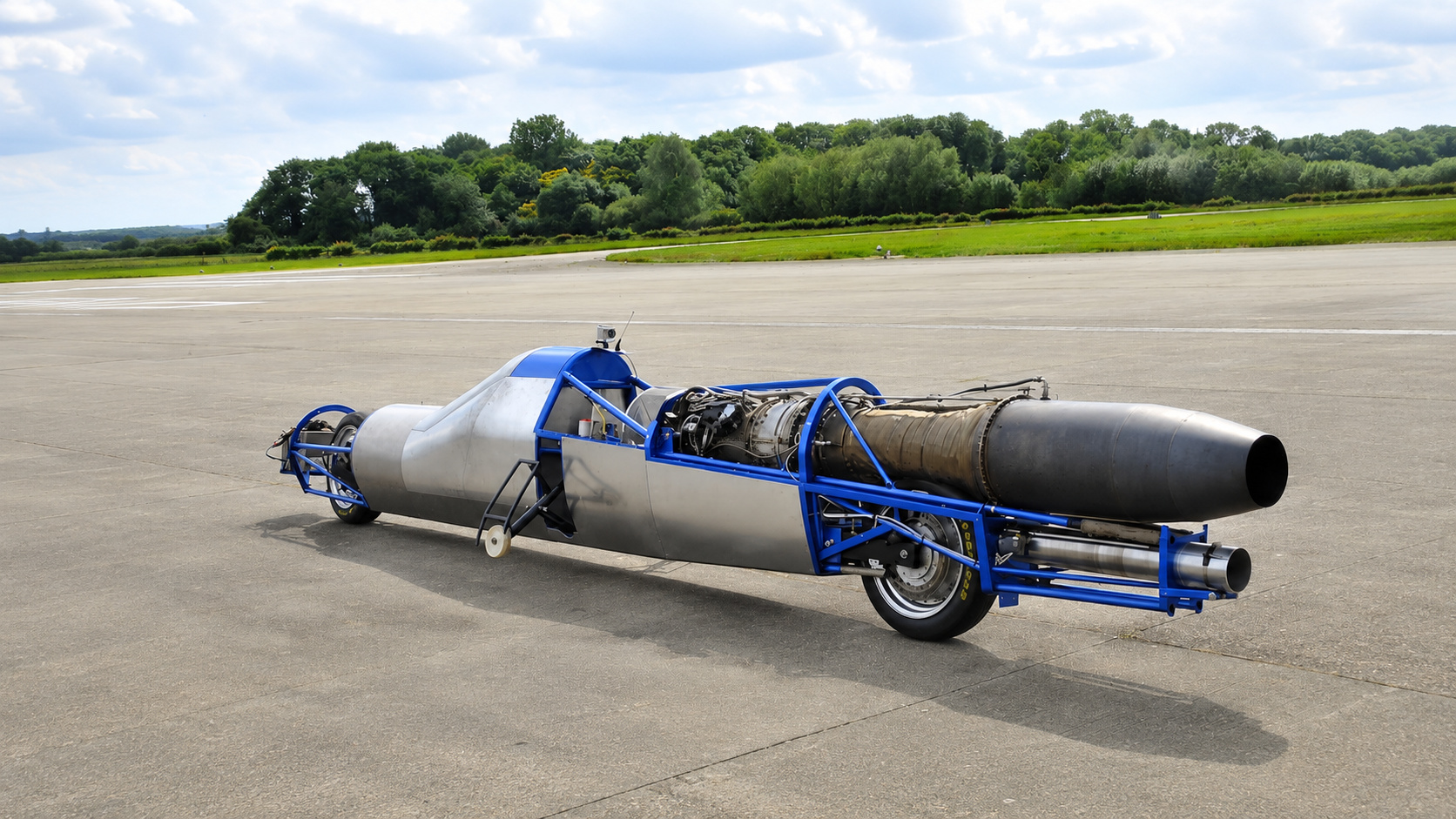

The Jet Reaction, created by the British Richard Brown, uses an adapted aeronautical turbine and was designed to reach up to 724 km/h in pursuit of the world record.
In a world where sports bikes already impress by surpassing 300 km/h, a British engineer decided to aim for a goal that seems straight out of science fiction. The British Richard Brown spent years developing the Jet Reaction, an experimental motorcycle powered by an adapted aeronautical turbine that was designed to reach speeds of up to 450 mph, equivalent to approximately 724 km/h.
The project’s goal is ambitious. Brown intends to surpass the current world speed record for motorcycles, which exceeds 605 km/h, established by streamliner vehicles specially built for racing on salt surfaces like the famous Bonneville Salt Flats in the United States.
The Jet Reaction looks more like a missile on wheels than a conventional motorcycle
Those who observe the Jet Reaction for the first time can hardly identify it as a bike. The vehicle has an extremely elongated and aerodynamic body, resembling more a land rocket than a traditional motorcycle.
-
Nissan Kicks S Direct 2018: Affordable Used SUV with Over 13 km/l Fuel Efficiency, 432-Liter Trunk, and CVT Automatic Transmission

-
Iconic Orange Double-Decker Bus, a Dutch Fan Favorite for Over 20 Years, Arrives in Texas for the World Cup After Touring Brazil, England, Qatar, and More
-
$100 Million Hypercar Collection, Including Ferrari LaFerrari and McLaren Speedtail, Found Abandoned at Los Angeles Airport
-
Hyundai ix35 2019: A Forgotten SUV with 2.0 Engine and 650 km Range Costs Less Than a New Kwid in Brazil



The rider is practically encapsulated within the structure, with only a small area of visibility facing forward. This configuration is not for aesthetics.
At speeds above 600 km/h, air resistance becomes one of the biggest obstacles. Therefore, every detail of the body was designed to reduce aerodynamic drag and increase stability at extreme speeds.
The heart of the machine is a helicopter turbine transformed into a land propeller
Unlike conventional motorcycles, the Jet Reaction does not use a traditional combustion engine connected to the rear wheel.


Richard Brown adopted a much more unusual solution: a turbine from a helicopter, modified to function as a land jet engine. The system uses afterburning to significantly increase the thrust produced by the assembly.
The exact power disclosed varies according to the configuration used in the tests, but project sources indicate numbers close to 1,250 horsepower, a value higher than many supercars and even some competition trucks.
The result is a machine capable of accelerating using the same basic principle found in jet aircraft.
The vehicle is over six meters long and weighs more than half a ton
The Jet Reaction is far from the proportions of a common motorcycle. The streamliner is approximately 6.1 meters long and weighs about 560 kg, numbers closer to those found in small cars than in conventional bikes.
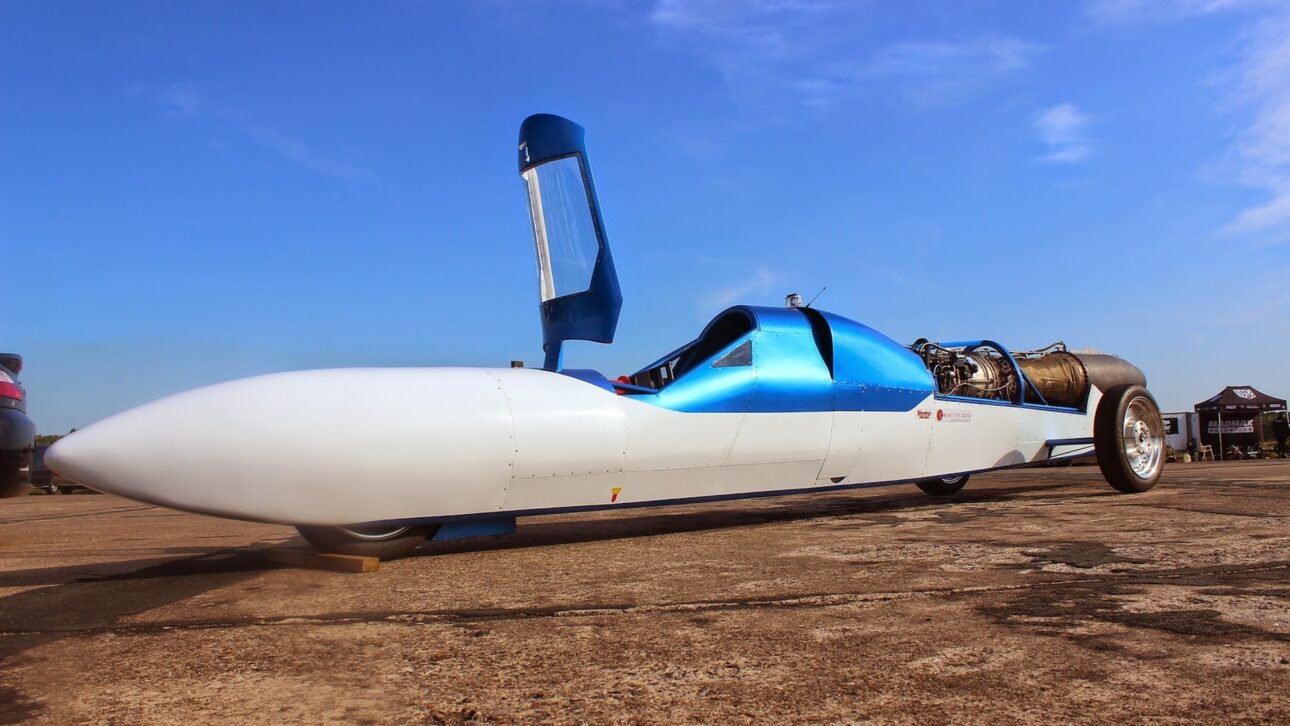
At speeds close to 700 km/h, stability becomes a critical issue. The additional length helps reduce oscillations and improves the aerodynamic behavior of the machine at high speeds.
The record Richard Brown is trying to surpass is over 605 km/h
The project’s goal is extremely challenging. The official world speed record on two wheels belongs to the streamliner Ack Attack, which recorded a certified average of 605.7 km/h in 2010 during tests conducted in Bonneville, Utah. The maximum speed recorded in a single run reached over 634 km/h.
To surpass this mark, the Jet Reaction would need not only to achieve higher speeds but also to complete the required round trips as per international rules for record certification. It is precisely this requirement that makes speed records so difficult to achieve.
Simulations indicated potential to reach up to 724 km/h
Before high-speed tests, the project underwent extensive aerodynamic analyses. Researchers from the University of Huddersfield conducted studies using computational fluid dynamics (CFD) to evaluate the vehicle’s behavior at extreme speeds.
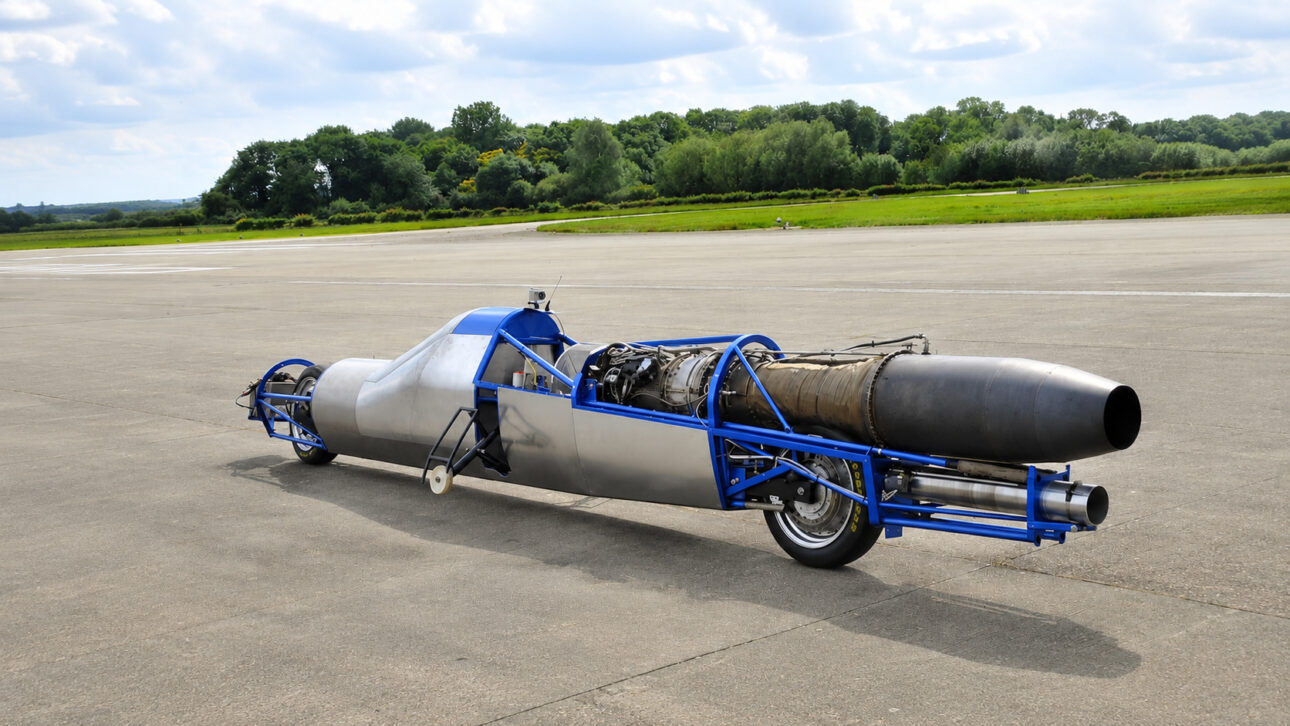
The simulations helped validate the aerodynamic design of the motorcycle and indicated that the concept could withstand speeds over 425 mph, about 684 km/h.
Other project analyses indicated that, under ideal conditions, the machine could theoretically reach up to 450 mph, equivalent to approximately 724 km/h. Even by land speed record standards, this is an impressive speed.
The creator had already set important marks before the Jet Reaction
Richard Brown did not enter this universe by chance. Before the Jet Reaction, he participated in projects involving rocket-powered motorcycles and other extreme vehicles aimed at speed records.
In 1999, he reached a speed exceeding 365 mph, approximately 587 km/h, in Bonneville with a rocket-propelled motorcycle.
According to the project itself, the switch to jet propulsion happened because turbines offer better power control and facilitate record attempts compared to rocket engines. The Jet Reaction was born precisely from this accumulated experience over decades.
The pursuit of speed limits continues to fascinate engineers decades later
The Jet Reaction was not created for transport, practicality, or daily use. It exists to answer a simple question: how far can a motorcycle go when practically all conventional limitations are removed?
With an adapted helicopter turbine, over six meters in length, and a projected speed exceeding that of many planes during takeoff, Richard Brown’s creation remains one of the most extreme projects ever developed in the two-wheel universe.
Even years after its presentation, the Jet Reaction remains one of the most impressive machines ever built in the quest for the title of the fastest motorcycle on the planet.