Portuguese
  Spanish


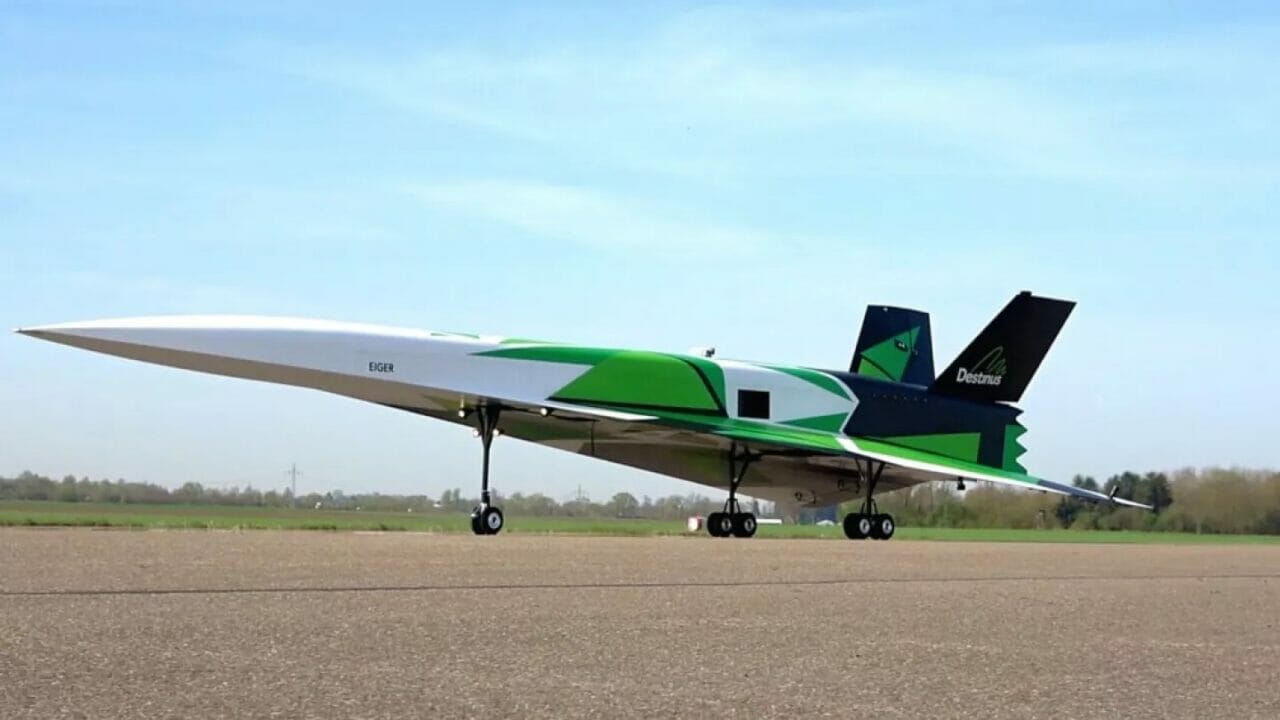

Swiss Company Is Developing A Hypersonic Jet That Will Use Hydrogen As Fuel. The Model Promises Commercial Hypersonic Flights In Just 1.5 Hours.
The development of a new hydrogen jet promises to take the first step towards a new era of hypersonic travel that would reduce the air travel time around the world by several hours. The last hypersonic jet to achieve such a feat was the Concorde, the supersonic result of Anglo-French engineering.
Hydrogen Jet Can Go From Paris To New York In Just 1.5 Hours
At its peak, the Concorde crossed the Atlantic in a unique time of about 3.5 hours, flying at a speed greater than 2,100 km/h. Now, a startup from Switzerland plans to reduce the current flight time from Paris to New York from 8 hours to just one and a half hours with its hypersonic passenger jet, which uses hydrogen as fuel.
While other companies are focusing again on supersonic flights, Destinus plans to develop the first commercial hydrogen-powered jet capable of making hypersonic flights at a speed 5 times that of sound and at altitudes greater than 33 km.
-
1983 Chevrolet Runs Over 100,000 km Without Gasoline, Powered by Wood Chips, Reaches 125 km/h in Airport Test

-
Workshop Converts Giant Tractor Tire Tricycle into a Three-Wheel Drive Hybrid with 36,000-Watt Electric Motor Capable of Climbing Hills

-
Sales of Brazil’s Cheapest Electric Car Halted Before First Deliveries: E-Motors Suspends Emova Easy Due to Import Tax Increase and Rising Freight Costs

-
Nissan Discontinues Qashqai SUV Amid Cost-Cutting, Chinese Competition, and Product Line Review




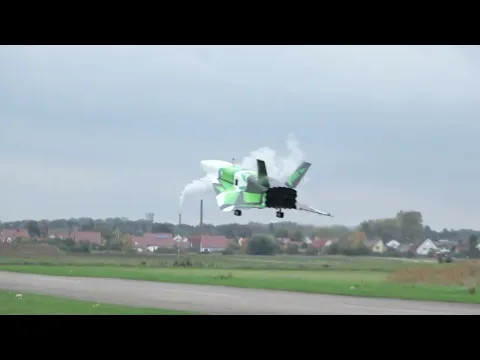

The company has been testing its aircraft prototype for the past two years, announcing successful test flights of its second prototype, called Eiger, at the end of last year. According to Destinus’s Director of Advanced Studies, Bart Van Hove, during this year’s Paris Air Show in Le Bourget, the prototypes are different from the final product, as the final product has very advanced propulsion technology.
Van Hove explains that there are different types of engines, ramjets, turbojets, all powered by hydrogen. This corresponds to a specific configuration of the vehicle, as seen in its vision of a hypersonic jet that captures a large amount of air and has a central conduit that splits into several engine ducts. This is not the case with the prototype, as the company is taking it step by step.
Ministry Of Science Of Spain Invests In Hypersonic Travel Project
Destinus recently announced participation in a program managed by the Ministry of Science of Spain, as part of the government’s plans to develop hydrogen-powered jets for supersonic flights.
The agency overseeing the ministry’s program, the Center for Technological Development and Industrial, selected the project as a strategic initiative under its Aeronautical Technologies Plan (PTA). With a current global investment of 12 million euros, the project involves companies and technology centers, as well as Spanish universities.
According to Destinus’s Director of Business Development and Products, Davide Bonetti, the company is very pleased to have received these grants, mainly because they are a clear sign that Destinus’s initiatives are in line with the strategic lines of Spain and Europe in boosting the hydrogen hypersonic jet.
Hydrogen Jet Will Make Test Flight From Frankfurt To Sydney
The energy from hydrogen is the target of much research and development, focusing on sustainability, given that the main byproducts of hydrogen combustion are heat and water. The amount of heat generated poses a significant design challenge.
Researchers from RMIT University in Melbourne recently developed 3D-printed catalysts that they claim can propel hypersonic flight and act as a cooling agent to combat the extreme heat generated when aircraft fly five times the speed of sound.
The Swiss company Destinus claims its technology will make a flight from Frankfurt to Sydney in just 4 hours and 15 minutes instead of the 20 hours it currently takes, while a flight from Frankfurt would take 2 hours and 45 minutes, 8 hours less than the time this trip currently takes.