Portuguese
  Spanish


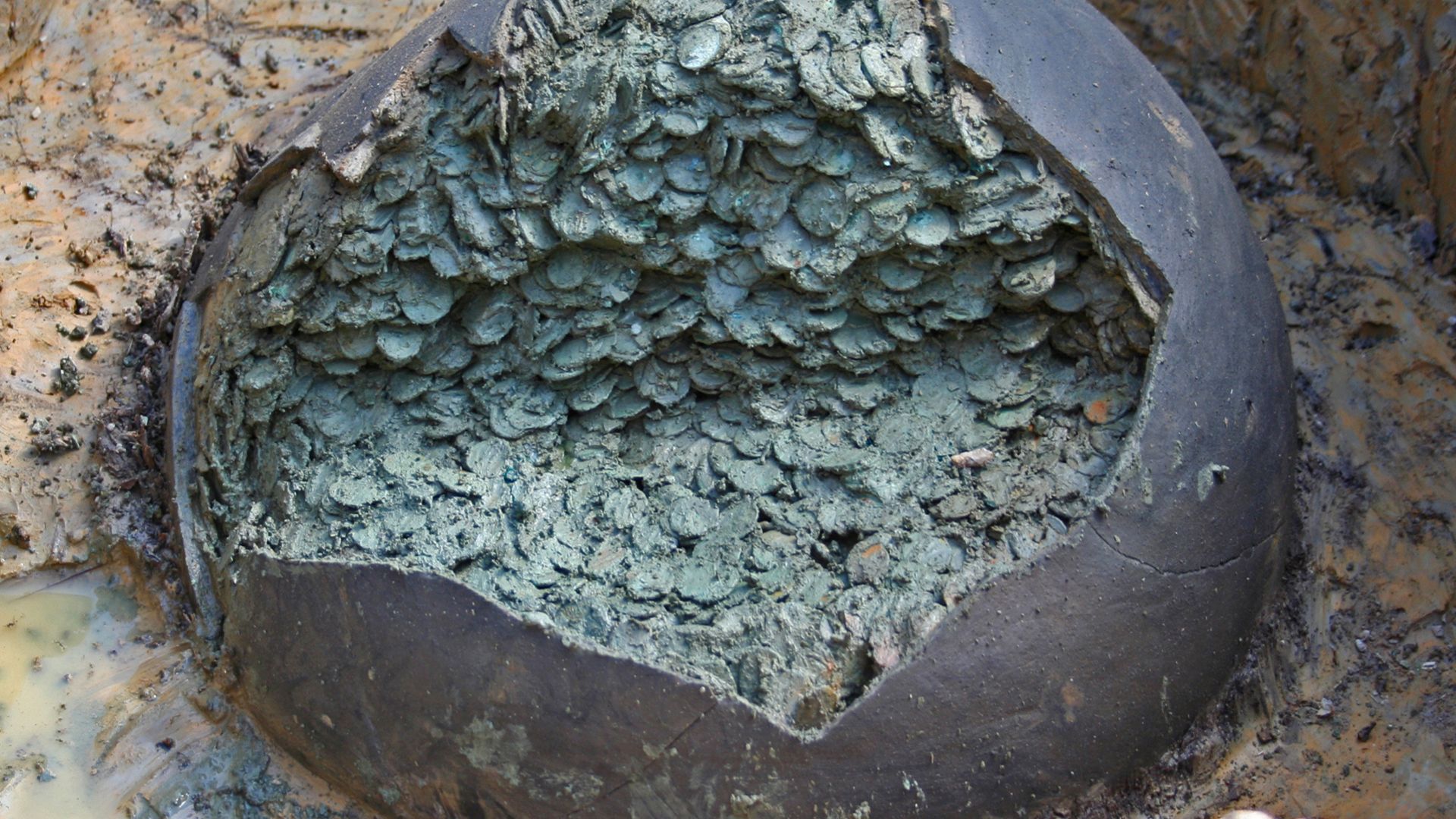

Dave Crisp found 52,503 Roman coins in the Frome Hoard, a historic discovery that changed Roman archaeology in England.
While exploring a field in Somerset, England, detectorist Dave Crisp made a discovery that entered the history of British archaeology. In April 2010, he located a large deposit of Roman coins that would later be identified as the Frome Hoard, as detailed by numismatist Sam Moorhead of the British Museum in the study The Frome Hoard. How a massive find changes everything. The excavation confirmed that the container held 52,503 Roman coins, a number that made the find the largest collection of coins ever found in a single container in Britain.
The case gained scientific weight because Dave Crisp left the pot in the ground for professional excavation, which preserved the burial context and allowed experts to study not only the pieces but also the way the treasure had been deposited.
How Dave Crisp found the Frome Hoard in a field in Somerset
The find occurred during a routine metal detector search in an area near Frome, in the southwest of England. The case was officially recorded by the Portable Antiquities Scheme, the British program aimed at recording archaeological discoveries made by the public, and quickly became regarded as one of the most relevant episodes ever documented by the system.
-
Salvador’s Acarajé Vendors Turn Used Frying Oil into Income by Selling it for Biodiesel Production

-
Volunteer Revives Dead Lake in Bengaluru Overnight, Doubling Water Capacity and Attracting Kingfishers and Herons
-
1909 Train Car Once Destined for Abandonment Transformed into Luxury Accommodation in the U.S. After $3,000 Restoration

-
86-Year-Old Brazilian Man Starts Homemade Bread Business After Learning from TV Recipe


Instead of removing all the content by himself, Crisp preserved the site and allowed the removal to be technically supervised. This decision was crucial for the scientific value of the discovery, as the excavation could document the position of the pot, the arrangement of the coins, and the archaeological context of the deposit.


The result was the formal identification of the Frome Hoard, the name given to the treasure found in the region. More than just a large volume of coins, the case became an example of how a discovery made by an amateur can gain enormous scientific relevance when the context is correctly preserved.
Frome Hoard gathered 52,503 Roman coins and surprised archaeologists
The excavation revealed that the 52,503 coins were inside a large ceramic jar carefully buried in a pit. Official sources indicate that the collection dates from the period between around 253 AD and the end of the 3rd century, a chronological range that places the deposit in a turbulent phase of the Roman world, when Britain was experiencing significant political and monetary pressures.
The size of the find immediately drew attention. The National Heritage Memorial Fund described the collection as the second largest collection of Roman coins ever found in Britain and the largest ever discovered within a single container, a combination that explains why the case gained national and international prominence.
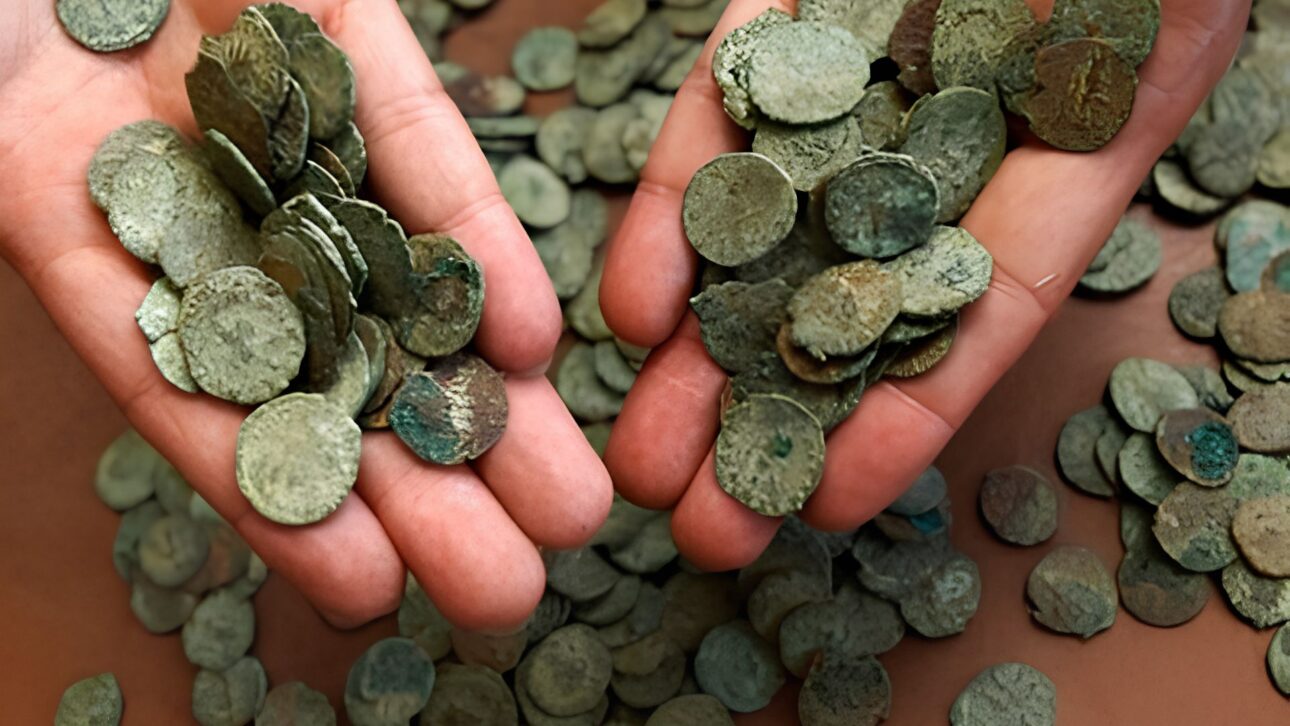
The treasure also stood out for the diversity of the coins. According to the official acquisition campaign, the lot includes issues from 26 Roman emperors, as well as rare pieces and specimens linked to one of the most complex periods of Roman presence in Britain.
Carausius Coins Gave the Find Even Greater Historical Value
Among the pieces found were more than 760 coins of Carausius, a ruler who commanded Britain and northern Gaul after breaking with the central Roman power. The NHMF stated that this is the largest group of Carausius coins ever found anywhere, which further elevated the historical importance of the Frome Hoard.
This detail helps explain why the find was not treated merely as a large accumulation of ancient coins. It began to offer valuable material for the study of monetary circulation, imperial politics, and regional dynamics of Roman Britain at the end of the 3rd century.
In practice, the Frome Hoard helped expand the understanding of a period when imperial authority, economy, and military power intersected in an unstable manner. This transformed the discovery into something much greater than a simple buried treasure.
Excavation of the Frome Hoard Changed the Archaeological Interpretation of the Deposit
For many years, large deposits of Roman coins were primarily seen as hidden reserves for future recovery.
In the case of Frome, the excavation opened the way for another interpretation. The South West Heritage Trust states that the jar was carefully buried and that the collection was likely deposited as a votive offering, rather than just a financial reserve hastily hidden.
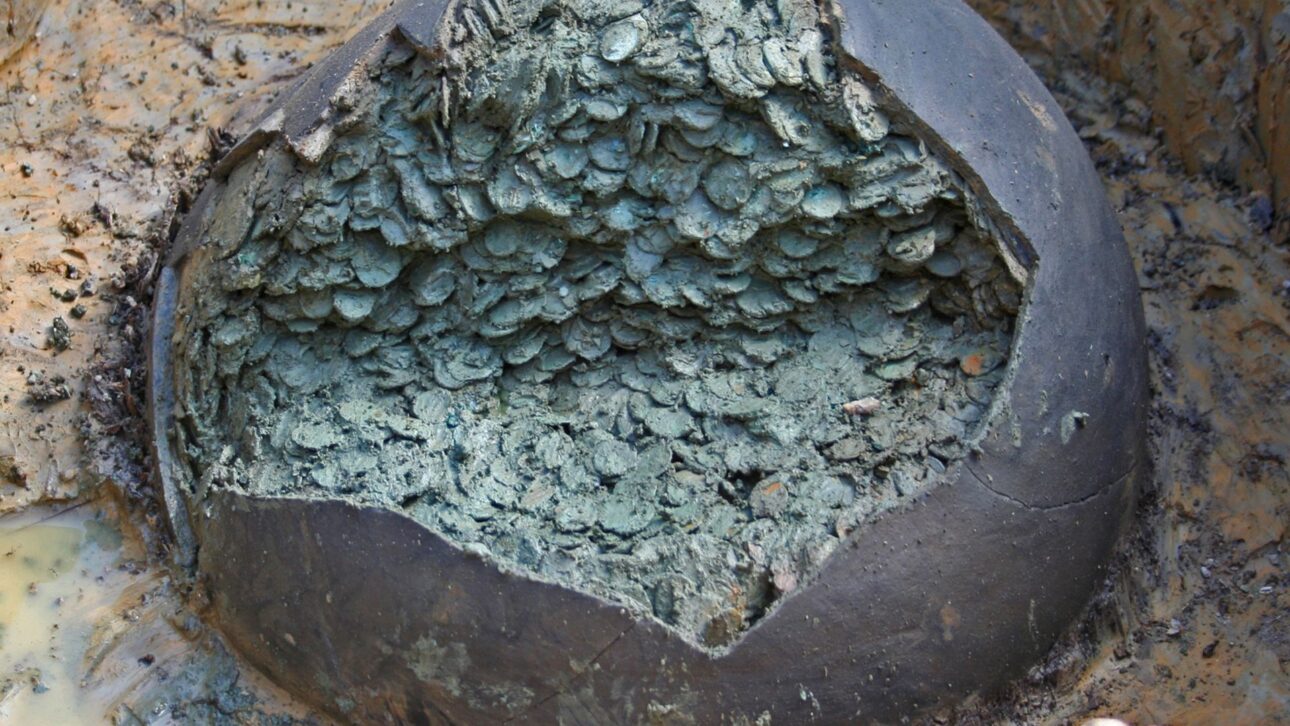
This interpretation gave the find an even greater archaeological weight. Instead of serving merely as evidence of wealth accumulation, the deposit also came to be read as evidence of ritual behavior, belief, and symbolic practice in a final phase of Roman rule in Britain.
It was precisely the preservation of the context that made this reading possible. Without careful excavation, the Frome Treasure would likely be remembered only for the impressive number of coins, and not for what it revealed about the meaning of the burial.
Official evaluation kept the treasure in Somerset after public campaign
After being officially recognized as treasure, the collection went through the British process of evaluation and acquisition. In 2011, the Museum of Somerset received the Frome Treasure after a campaign supported by the National Heritage Memorial Fund, the Art Fund, and public donations, ensuring that the material remained in the same region where it was discovered.
The acquisition value was set at £320,250, and the operation also included more than £100,000 for conservation. The official announcement detailed that the mobilization gathered public funds, institutional support, and popular fundraising to prevent the collection from leaving Somerset.
This stage was decisive in transforming a field discovery into accessible public heritage. Instead of dispersing, the treasure was preserved as a reference collection, reinforcing the connection between the discovery, the local community, and the Roman history of the region.
Dave Crisp’s discovery became a reference for archaeology and metal detecting
The story of Dave Crisp gained prominence not only for the size of the find but for the way he conducted the discovery. The case came to be cited as a positive example of cooperation between metal detectorists, archaeologists, and institutions responsible for the registration and preservation of heritage.
More than 1,700 years after being buried, the coins returned to the surface and changed the knowledge about Roman Britain. The Frome Treasure showed that a hobby practiced in an English field could end up revealing one of the most important archaeological collections ever found in the United Kingdom.
The episode also reinforced a central lesson of modern archaeology: the value of a discovery is not only in the object found but in the preserved context. In the case of Frome, it was this combination that transformed a pot full of coins into a historical milestone.