






 Portuguese
  Spanish


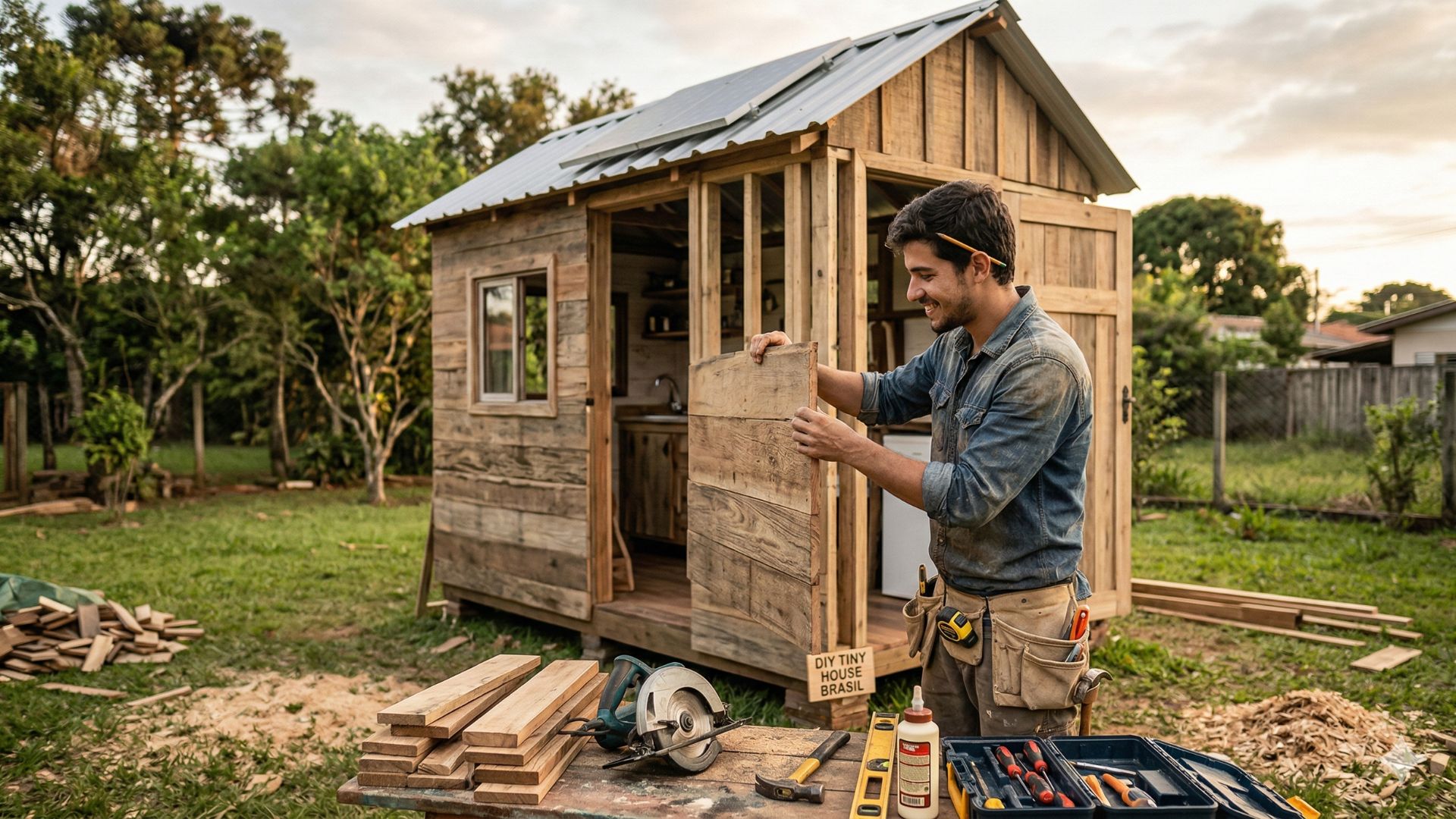


Discreet Construction In A Small Space Became A Showcase Of Creativity And Reuse, With Choices That Transformed Simple Wood And Foldable Solutions Into A Functional Home. The Project Draws Attention For Its Declared Cost, Precise Planning, And The Way Solar Energy And A Kitchen Fit Where Almost Nothing Else Seems To Fit.
A British video producer decided to transform a backyard into a compact housing project and, without a construction team, built a tiny house using skills learned from “do it yourself” videos on YouTube.
The construction, made in the Cotswolds region of England, drew attention for incorporating reclaimed wood, foldable furniture solutions, and solar panel installation in a small space, keeping the interior functional and organized.
According to a report published by Business Insider, Jacob Harrell stated he completed the work alone and that the cost was under £5,000, which the outlet converted to about $6,000.
-
China’s Engineered Bamboo: The “Material of the Future” Stronger Than Steel and a Sustainable Wood Alternative

-
Egypt’s “New Nile”: 170 km Artificial River Aims to Turn Desert into Farmland, but Water Supply Concerns Loom
-
Unable to secure a mortgage as a self-employed single mother, she designed her own floating home from a 20-meter boat and now lives “off-grid” with her two children and solar panels on an English canal.
-
Man Transforms Rusty Shipping Container into Luxury Home with Insulated Walls, Large Windows, and Drywall Finish, Surprising Onlookers


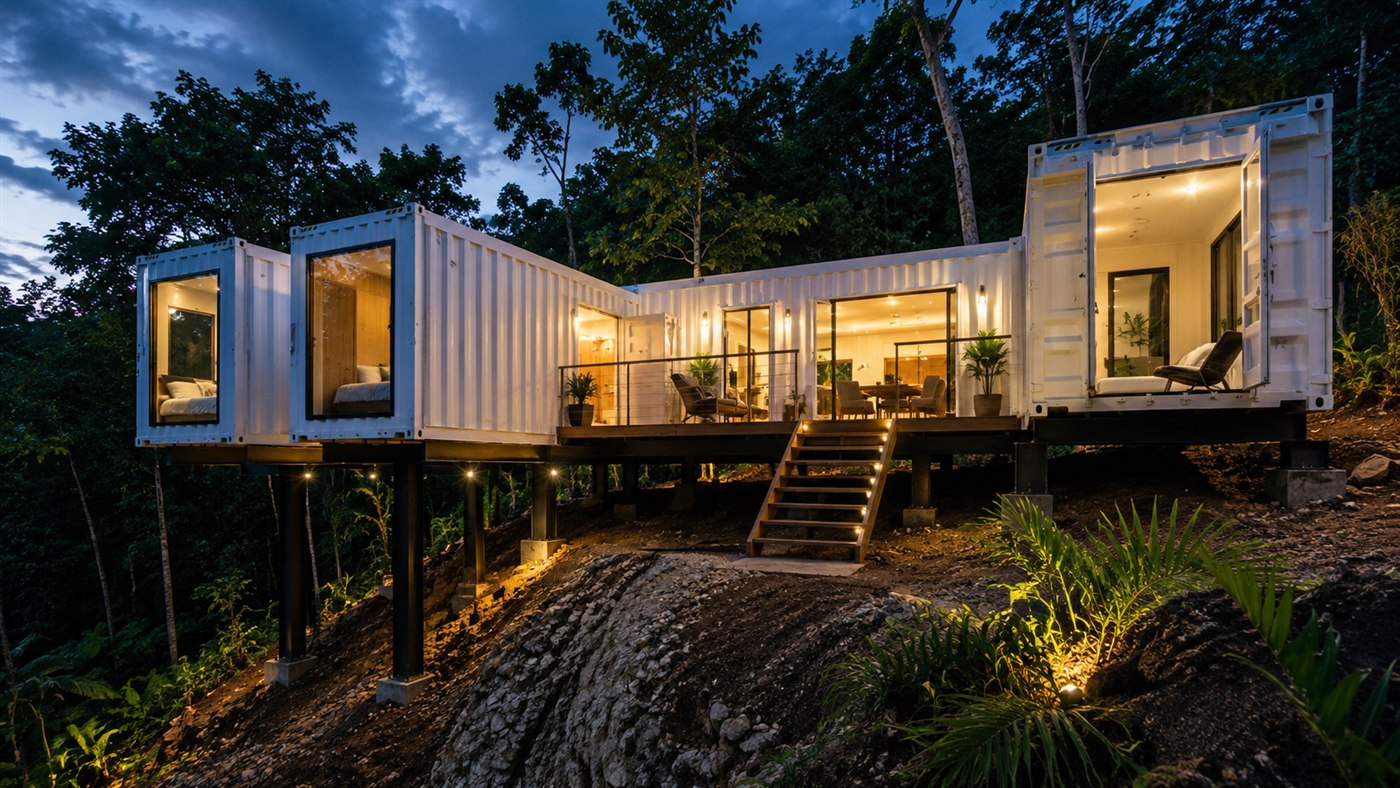
The work was completed in approximately four months and focused on maximizing available materials, with design decisions aimed at reducing waste and fitting essential functions, such as food preparation and sleeping areas, into a few square meters.
Tiny House In The Backyard: Building Alone And Compact Solutions

The story connects to a common reality for those facing changes in their professional routine and seeking alternatives to reorganize their lives with limited resources.
Harrell told Business Insider that after being laid off, he created a YouTube channel to document the process while looking for new employment.
The idea of building the tiny house was presented as a practical plan, linked to the desire to create an income source through local hosting and tourism, a proposal that depends on permits and land use regulations.
The project did not start from scratch with a ready-made house in mind, but from an initial structure that resembled a small “office” and was converted into a living configuration.
In his account to Business Insider, Harrell said that the structure took about a week to assemble, but it was not insulated or internally equipped at that stage.
From there, he moved on to the finishing and adaptation phase, designing the internal layout and building some of the furniture.
Kitchen, Foldable Tables, And Solar Energy In A Few Square Meters
Inside the compact space, the setup was designed to prioritize daily utility and wall utilization.
Business Insider described that the tiny house has a kitchen, foldable tables, solar panels, and a loft bedroom.
The presence of these elements helps explain the public’s interest in images and videos of small spaces that seem to “solve” an entire home in a reduced footprint, with visual solutions highlighting every square inch.

The kitchen was custom-built and, according to Business Insider, cabinets and internal pieces were made from reclaimed wood.
The outlet also reported that Harrell saved by using leftover materials and that some components came from family donations, such as a back window and French doors taken from his father’s house.
In projects like this, such details often attract more attention than the total size of the property because they bring the narrative closer to the reader: it is not just about “buying ready-made,” but about reorganizing what already exists and adapting it to the space.
Project Without Integrated Bathroom And Plan For Separate Structure
Another point mentioned by Business Insider is that the tiny house does not have an integrated bathroom, and Harrell’s stated intention was to place this function in a separate structure.
In practice, this choice alters how the public interprets the project: instead of a complete house with all traditional rooms, the focus is on the essentials, with compact kitchen and living areas and an elevated sleeping space, prioritizing lightness and simplicity.
Braided Exterior And Finishing With Reclaimed Wood
In addition to internal solutions, the external finishing is also part of the visual appeal.
Business Insider described an exterior with a braided appearance, achieved by twisting branches and pieces of wood to follow the curvature of the construction and create an integrated look with the surrounding environment, which includes wooded areas.
This type of aesthetic, when well executed, reinforces the impression that the tiny house “belongs” to the place where it was built, something that often leads to striking and highly shareable images.
Learning Through Videos And Experience With Alternative Housing
Harrell’s journey, as recorded in the report, includes previous experience with small repairs and improvements learned through videos and experiences in alternative housing, such as a Dutch barge used as a home.
He also participated in small-scale construction projects related to his work in video.
These elements help contextualize why he was able to carry out a complete work on his own without turning the narrative into a manual: the story remains centered on the result, the planning, and the individual effort.
Permissions, Land Use Rules, And Limits For Hosting
The case also highlights an important boundary between creativity and bureaucracy.
The report from Business Insider details the challenges faced by Harrell in obtaining permission and making the idea of transforming the space into a hosting option viable since tourism and land use regulations can be complex.
This point adds a factual component that often interests readers outside the “DIY” universe: the tiny house is not just a beautiful object, but an attempt to create a model of life and work, conditioned by local regulations.

Why Tiny Houses Have Become Global Curiosity Content
Tiny houses often gain prominence for providing an immediate contrast to traditional housing standards.
The combination of declared cost, execution time, and compact solutions creates a ready-made script for curiosity: how does someone fit a kitchen, living area, solar energy, and a loft bedroom into a minimal space while still keeping the environment looking organized?
In Harrell’s case, the answer presented by Business Insider revolves around objective decisions: reusing wood, producing essential furniture, and prioritizing items that serve multiple functions, like foldable tables.
The popularity of this type of content is often driven by backstage images, transformation, and finishing details, but the story told by Business Insider has an additional element that expands its reach: the fact that it was conducted by someone whose profession is linked to video production, which naturally favors consistent documentation and understanding of the steps without relying on major external interventions.
When the public follows a well-documented process with a clear outcome, the curiosity tends to remain, whether due to interest in compact housing or identification with the idea of “building something of their own.”
The report published by Business Insider also highlights that the indicated cost primarily referred to materials, as the work was carried out by Harrell himself.
At a time when housing and renovations are often associated with high budgets, this detail draws attention precisely because it is linked to specific choices of reuse and donations of components, in addition to individual execution.
At the same time, the report exposes that the path is not obstacle-free and that transforming the structure into a business depends on formal processes, an element that makes the story more realistic without losing its impact.
What stands out the most in a project like this is how small decisions change the perception of space: the table that folds and frees up circulation, the kitchen designed to fit where normally there would only be a counter, solar energy as part of autonomy, and the loft as a solution to separate resting and living areas.
In the end, the tiny house becomes a showcase of practical choices and a personal project that took shape through planning, reuse, and public video documentation of the process.
Would you live in such a compact space if it offered a functional kitchen, solar energy, and a loft bedroom, all designed to fit in a few square meters?







Tb acho que um WC completo ( pia, chuveiro e vaso sanitario) seria necessário.
Um banheiro integrado no projeto é essencial. A casa é bacana, mas sem banheiro eu não moraria.