Portuguese
  Spanish


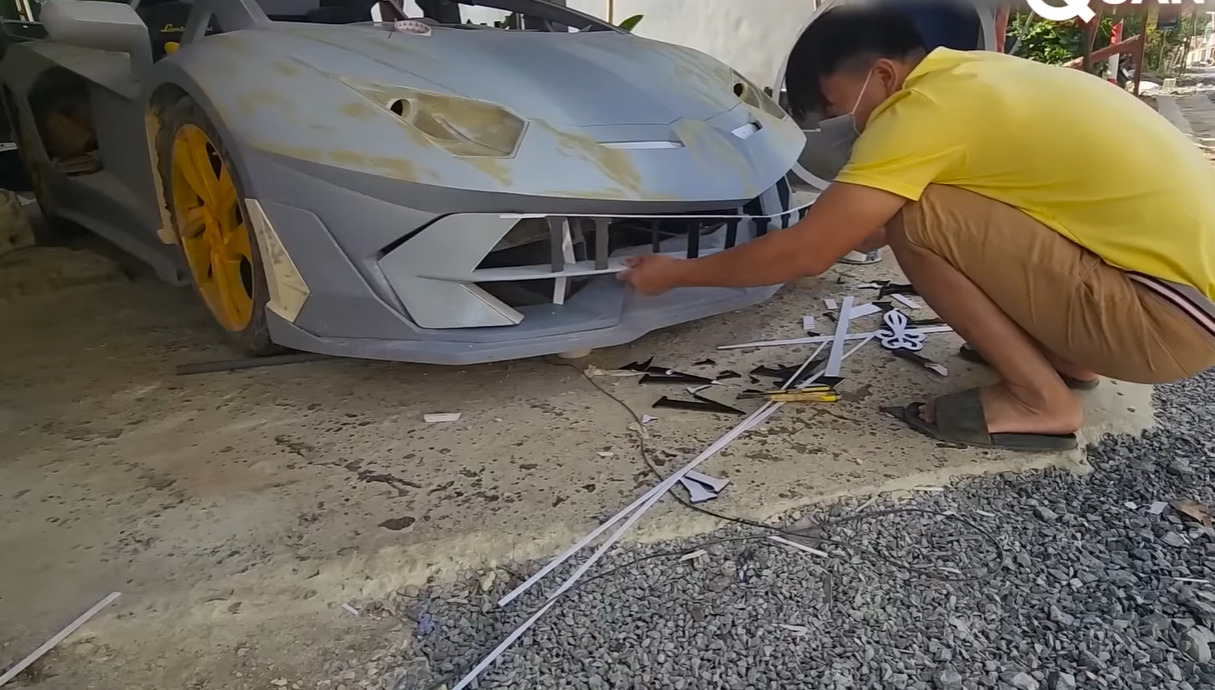


Video-Documented Project Shows How Planning, Tubular Chassis, Recycled Parts, and V8 Engine Allowed a Vietnamese to Transform Technical Improvisation into a Functional Replica of the Lamborghini Aventador
A Lamborghini Aventador built from scratch in a garage, using recycled parts and improvised solutions, gained prominence in a 30-minute video from the Quantum Tech HD channel. The project, led by a Vietnamese named Hải, draws attention for its faithful appearance and the craftsmanship involved.
Visual and Conceptual Planning Before Construction
Before starting any cuts or welding, Hải focused efforts on visual and structural planning, producing sketches and models to reproduce proportions such as height, wheelbase, and wheel positioning of the original Lamborghini Aventador.
This initial stage was crucial in guiding all subsequent steps, reducing rework and ensuring that the project maintained aesthetic coherence even while using artisanal methods and limited resources.
-
1983 Chevrolet Runs Over 100,000 km Without Gasoline, Powered by Wood Chips, Reaches 125 km/h in Airport Test

-
Workshop Converts Giant Tractor Tire Tricycle into a Three-Wheel Drive Hybrid with 36,000-Watt Electric Motor Capable of Climbing Hills

-
Sales of Brazil’s Cheapest Electric Car Halted Before First Deliveries: E-Motors Suspends Emova Easy Due to Import Tax Increase and Rising Freight Costs

-
Nissan Discontinues Qashqai SUV Amid Cost-Cutting, Chinese Competition, and Product Line Review






Tubular Structure Defines the Supercar’s Base
With the concept defined, the builder moved on to the reinforced steel tubular chassis, inspired by race cars, designed to offer structural rigidity, acceptable safety, and adequate space for the engine, suspension, and cabin.
The steel bars were cut and welded precisely to form a cage capable of supporting the body, V8 engine, and forces of acceleration, braking, and cornering typical of a powerful sports car.
Suspension Adapted with Recycled Parts
The suspension utilized repurposed components from other vehicles, including arms, shock absorbers, and axles, all adapted to achieve the desired geometry and maintain the characteristic low profile of the Aventador.
The adjustment prioritized stability and braking, balancing aggressive aesthetics with some practicality for everyday use, after successive revisions of measurements, height, and wheel alignment.
V8 Engine Replaces the Original V12
For the powertrain, Hải opted for a 5.7-liter naturally aspirated V8, taken from a donor car, likely a Toyota or similar, avoiding the complexity of the Aventador’s original V12.
The setup includes a polished intake manifold, dual stainless steel exhaust, and a 6-speed manual transmission, with an estimated power output between 400 and 500 hp after tuning.
A larger radiator, reinforced oil pump, and programmable ECU were integrated to control temperature, lubrication, and durability, especially under more aggressive and prolonged use conditions.
Handcrafted Body and Functional Interior
With the chassis completed, the fiberglass body was hand-molded, panel by panel, replicating the aggressive front, side air intakes, robust rear, and functional scissor doors.
The glossy black paint, applied in multiple layers, aims for a factory-like finish, reinforcing the visual impression of a supercar despite being a homemade construction.
The interior follows a simplified yet functional approach, prioritizing basic ergonomics and organization of essential controls, without luxuries, but coherent with the artisanal proposal and the controlled budget.
Road Tests and Final Adjustments of the Lamborghini
In the tests, 20-inch forged wheels, high-performance tires, and ventilated brakes showed that the car was designed for driving, not just for static display.
Functional spoilers contribute to stability at higher speeds, while successive adjustments to the suspension and brakes refined the vehicle’s dynamic behavior.
The result impresses by demonstrating how creativity, recycling parts, and a maker culture can transform an automotive dream into a complete home engineering project, documented in video on Quantum Tech HD.
With information from O Antagonista.