






 Portuguese
  Spanish


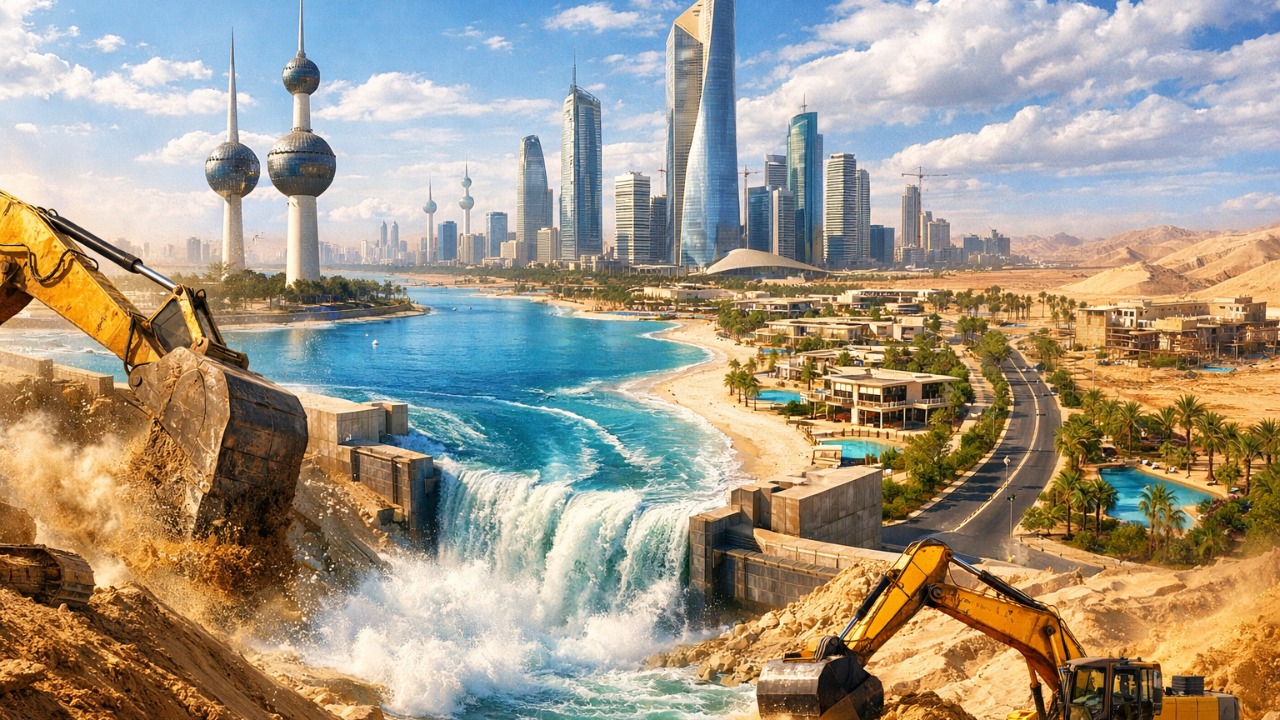


Building An Entire City In The Desert Becomes A Billion-Dollar Bet In Kuwait, That Pulls The Sea Into The Continent And Promises Private Beaches, But Faces Real Challenges Of Heat, Maintenance, And Sustainability.
When deciding to build an entire city in the desert, Kuwait chose a rare path: instead of advancing over the sea with artificial islands, it decided to pull the sea into the continent, creating channels, new coastlines, and planned neighborhoods under extreme heat.
The project promises private beaches, “seaside” living where there was once only sand, and a massive urban transformation. However, behind the perfect image lies a heavy technical and environmental cost, and the central question is simple: does this really work in the long run?
The Plan That Reverses The Logic Of Dubai
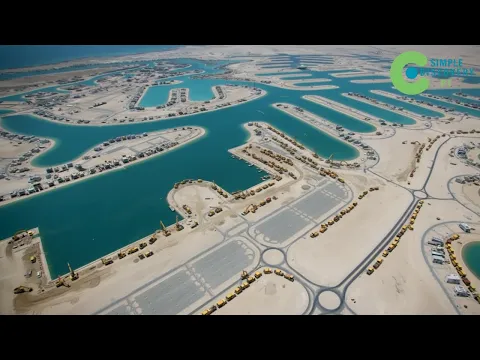

The idea of building an entire city in the desert takes on another dimension when the country takes the opposite movement of the most famous one. Instead of creating islands to “gain sea,” Kuwait attempts to bring the sea in, redesigning the coastline and creating urban areas connected to channels and marinas.
-
With 26 Million Brazilian Families in Substandard Housing, Churches to Launch 2026 Challenge: Each Parish to Build or Renovate a Home for a Local Family

-
Wood-Look Aluminum Emerges as a High-Tech Alternative for Facades and Gates, Offering Sophisticated Aesthetics and Low Maintenance

-
Couple Transforms 1964 Concrete Water Tower into Four-Bedroom Home with Views of London Over Four Years
-
U.S. City Builds Tiny Home Village on Water Company Land to House 136 Homeless People: Inside the Social Housing Units



In practice, this alters the geography: the coastline “multiplies” because each channel creates new water edges and new valuable areas, sold as waterfront.
The Scale That Scares Even Those Who Have Seen Mega Projects
To build an entire city in the desert in this format, the volume of work becomes the story. The excavation mentioned in the base material exceeds 130 million cubic meters of sand, a number described as sufficient to erect about 20 structures the size of the enlarged Christ the Redeemer.
The investment also enters the package as a symbol of ambition: US$ 5 billion to take the project off the ground, with the promise of creating a new urban “map” in an area that reaches temperatures around 50 degrees.
How The Sea Becomes A Neighborhood, And The Neighborhood Becomes A “Private Beach”
The heart of the proposal to build an entire city in the desert is to transform water into city infrastructure. Channels function as liquid avenues, and houses are designed to “lean” against the water, selling the dream of a private beach and resort living.
The promise is seductive: living in the desert, but with the sea at the door, thereby attracting residents, investment, and real estate status. It’s water as urban value, not just as a landscape.
What Can Go Wrong When You Bring The Sea To The Sand
Even with the oasis narrative, building an entire city in the desert this way has obvious tension points.
Permanent Maintenance
Channels do not maintain themselves. Siltation, erosion, the need for dredging, and bank stability become continuous costs.
Extreme Heat And Real Comfort
In the desert, energy and air conditioning bills weigh heavily. Without smart urban solutions, the city becomes beautiful in photos and challenging in daily life.
Water, Salt, And Environmental Impact
Bringing saltwater in alters local dynamics. Depending on the design, there may be impacts on soil, water circulation, and ecosystems.
What This Project Reveals About Power, Image, And Urbanism In The Gulf
When a country decides to build an entire city in the desert, it is not just building. It is trying to prove capability, attract capital, and create an “exportable urban product” in the form of a showcase.
The ambition is clear: if it works, it becomes a reference. If it fails, it becomes an expensive monument to a promise too big.
In the end, I want your direct opinion: do you think that building an entire city in the desert by pulling the sea in is a vision of the future or a risk of becoming a beautiful but hard-to-maintain city?








If you have money everything is possible..
Why did Steve Jobs die then ?
There are no difficulties in a solid frameworks. Embankment. Technology. Ensights and skills. And proper knowledge. Those must be done. So question will be an answer for everyone.
I think it’s a wonderful idea even though our generation might not live to see it’s end just like Dubai it can happen