Portuguese
  Spanish


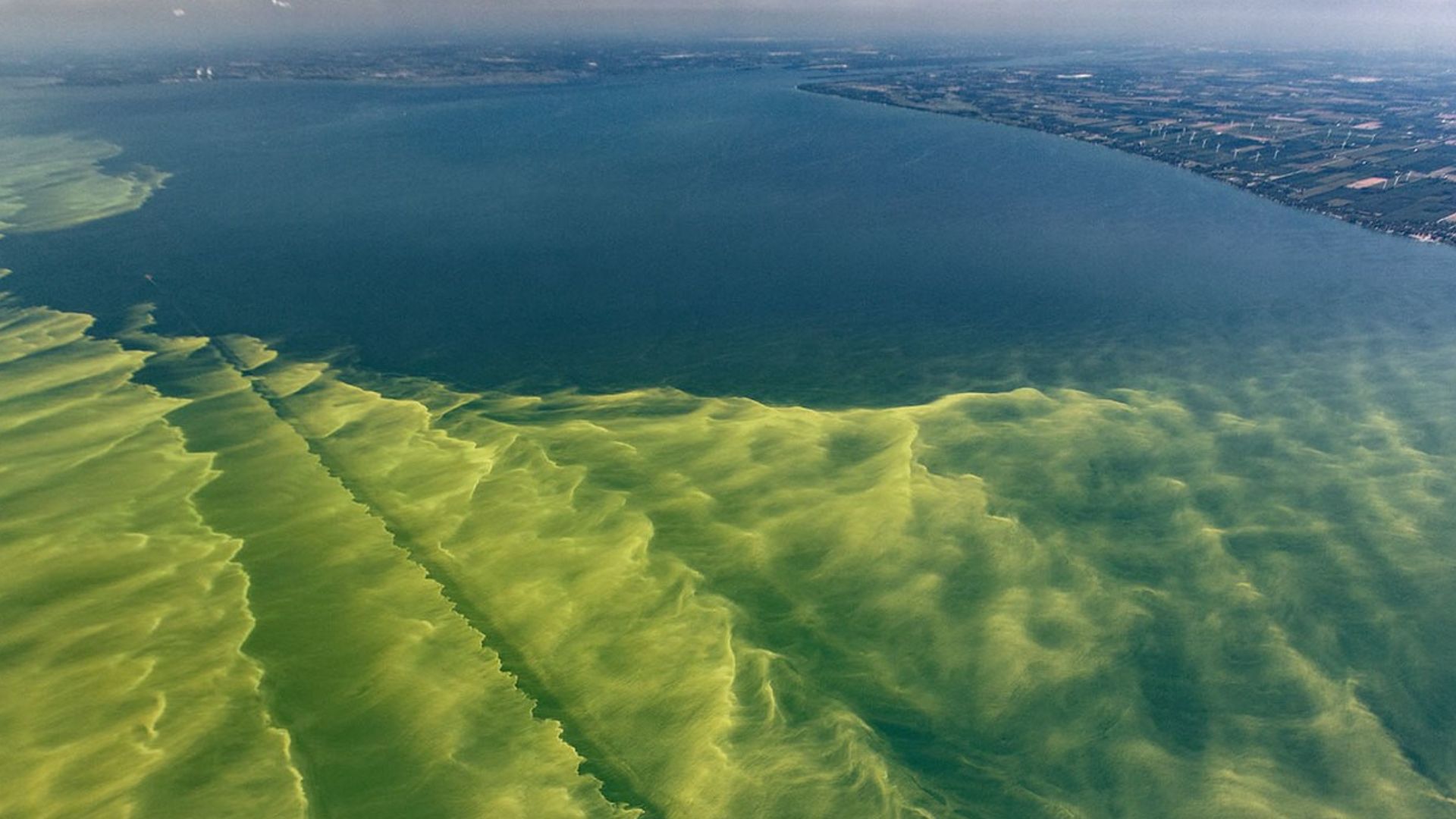


NASA and NOAA satellites recorded the earliest algae bloom ever observed in Lake Erie since monitoring began in 2002.
In the summer of 2024, a huge green patch began to appear in the western part of Lake Erie, one of the five Great Lakes of North America. Seen from space, the coloration resembled paint spread over the water. But the phenomenon caught the attention of scientists for another reason: it was the earliest algae bloom recorded since NOAA began monitoring the lake in 2002. According to the NASA Earth Observatory, the bloom began to be identified on June 24, 2024, remained active throughout much of the summer, and continued to be visible in early September. The phenomenon occurred in the western sector of the lake, a region that historically concentrates the largest episodes of cyanobacteria proliferation.
A green patch visible from space began to grow over one of the largest lakes on the planet
Lake Erie is the fourth largest of the Great Lakes in surface area and supplies millions of people in the United States and Canada. When the Landsat 9 satellite captured images on August 13, 2024, the bloom already covered approximately 830 km². A few days later, on August 22, the area had more than doubled, reaching about 1,700 km², according to NASA estimates.
The image was impressive because it transformed a significant part of the lake into a huge bright green stripe visible from space. To those observing only the satellite photographs, it looked as if someone had poured paint over the water’s surface.
-
Spain Launches World’s Largest Floating Dry Dock: 56-Meter Giant Produces Massive Concrete Structures in A Coruña Using Technology Proven in Brazil

-
AI-powered toys that talk, recognize faces, and collect data face scrutiny from Brazilian government over children’s privacy concerns

-
4,000-Year-Old Child’s Skull Unveils Ancient Burial in 7,500-Year-Old Norwegian Rock Shelter, Impressing Archaeologists

-
Norway Defeats Brazil in World Cup but Invests Billions to Preserve the Amazon, Strengthens Amazon Fund, and Joins Brazil in Leading Global Effort Against Tropical Deforestation




The phenomenon was not common pollution, but billions of microscopic organisms
Despite the unusual appearance, the stain was not formed by oil or industrial waste. It was mainly composed of Microcystis, a group of cyanobacteria often called blue-green algae. These microscopic organisms perform photosynthesis and can multiply rapidly when they find favorable conditions.
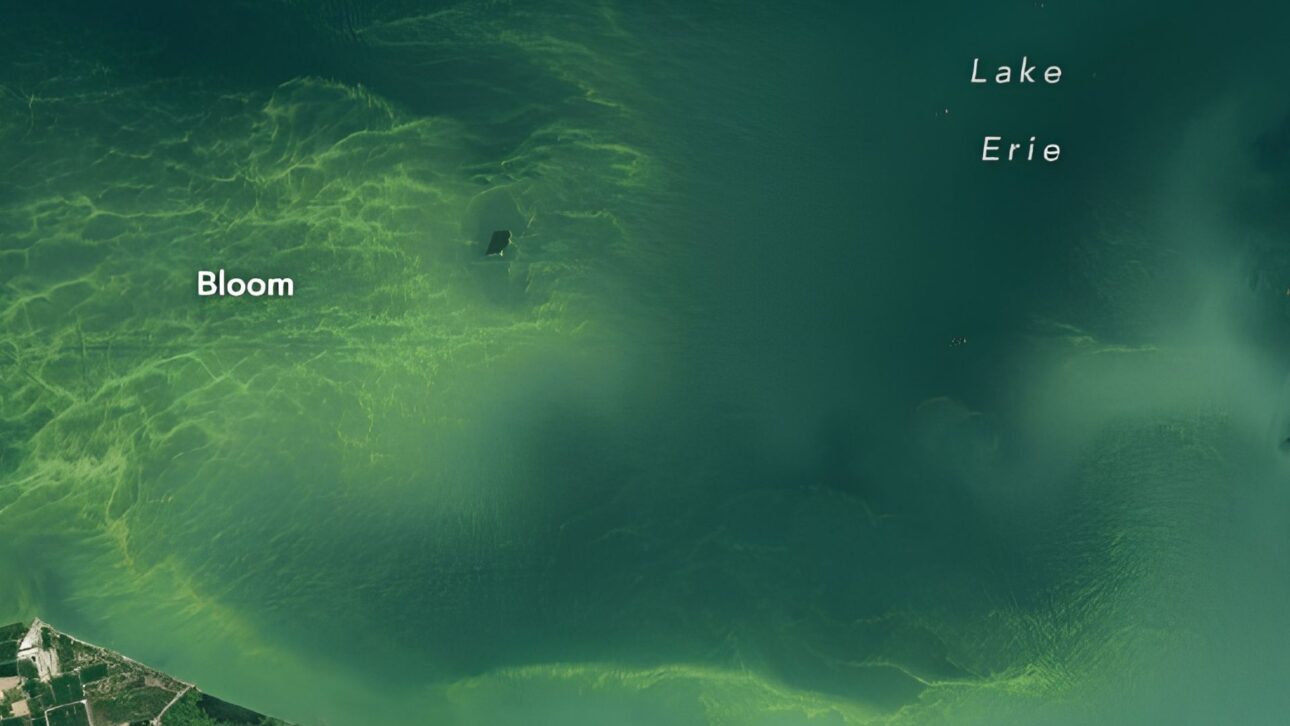
The problem is that some species produce toxic substances. NASA explains that Microcystis produces microcystin, a toxin capable of causing health problems in humans and animals. At high concentrations, exposure can cause nausea, dizziness, vomiting, and liver damage.
The year 2024 recorded the earliest start since monitoring began
The aspect that most caught the researchers’ attention was the start date. According to NOAA, no bloom had been detected so early since the start of the historical monitoring series in 2002. The formation began in late June, surpassing previous records observed in years like 2018 and 2023.


Researchers observed that the bloom initially developed near the Michigan coast and then gradually expanded throughout the summer.
Although it started early, the growth was relatively slow during July, reaching its peak only in August.
Heavy rains and extreme heat helped fuel the algae explosion
Several factors contributed to the phenomenon. Experts consulted by NASA pointed out that the bloom occurred after a period of record rains in April and an intense heatwave during the following months. These conditions increased the influx of nutrients into the water and created a favorable environment for the growth of cyanobacteria.
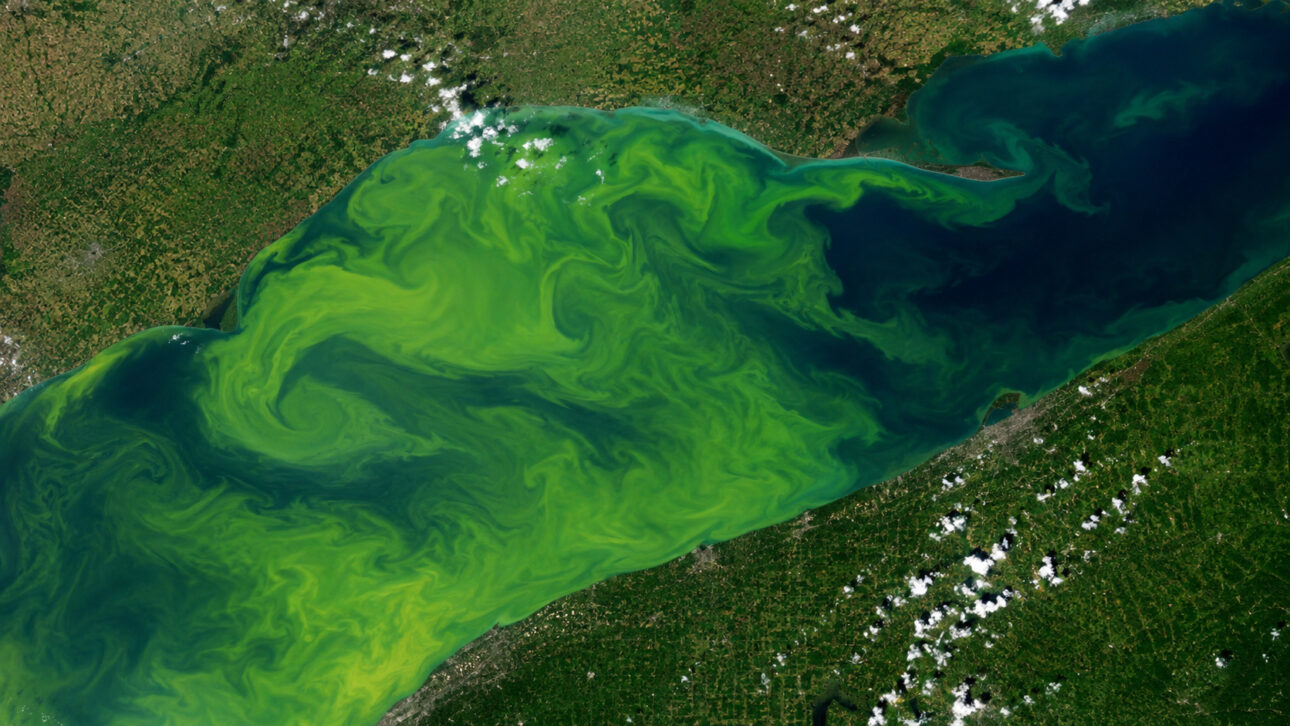
Another important factor was the phosphorus input transported by the Maumee River, considered one of the main contributors to the annual variability of blooms in the western Lake Erie.
When nutrients like phosphorus and nitrogen reach the lake in excess, cyanobacteria find ideal conditions to multiply rapidly.
The peak of the bloom covered an area comparable to that of a large city
NOAA calculated that, at the time of greatest expansion, the bloom covered approximately 550 square miles, equivalent to about 1,424 km².
Although the area estimated by NASA at a certain point reached approximately 1,700 km², scientists emphasize that size does not necessarily mean greater toxicity.
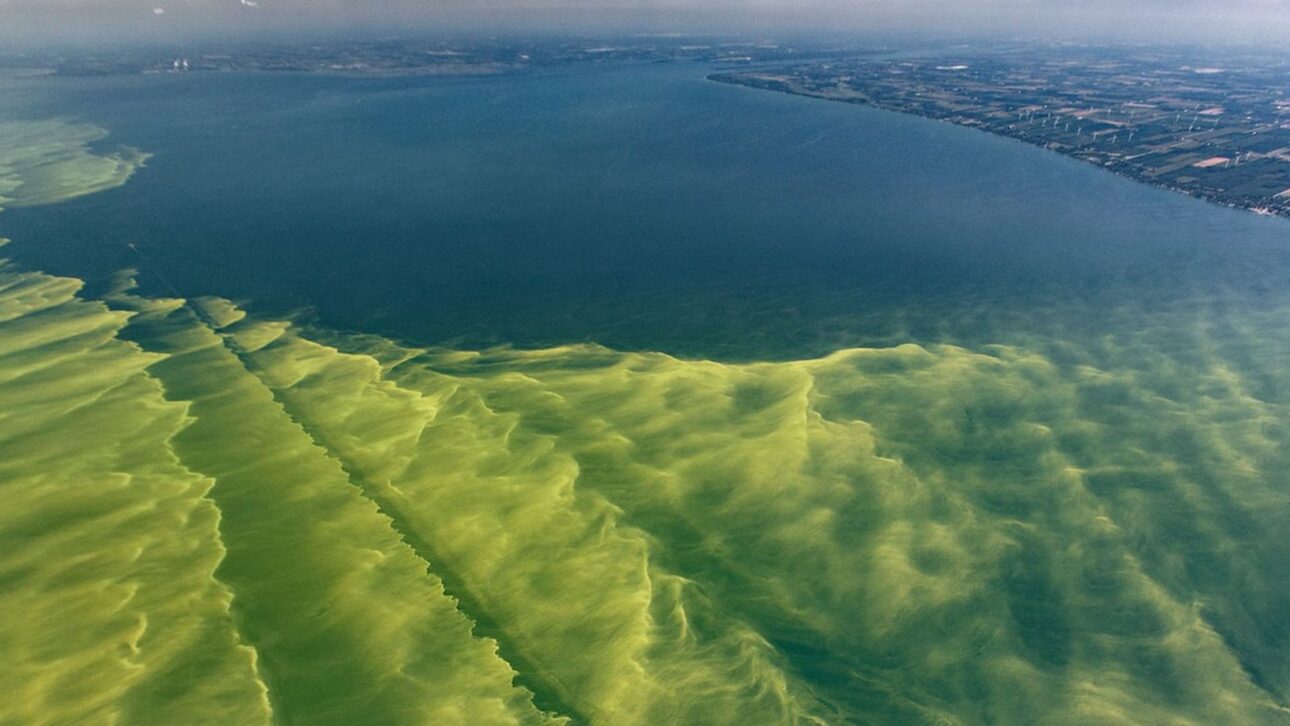
A relatively small bloom can produce more toxins than a much larger one. Therefore, in addition to the covered area, researchers continuously monitor the biological composition and toxin levels present in the water.
NOAA needed to issue alerts for people and animals
During the summer, measurements taken by NOAA identified toxin concentrations above recreational limits in certain areas.
The agency warned that toxins can concentrate in surface scums, areas where cyanobacteria accumulate in high density. Under these conditions, people and pets are advised to avoid contact with the water.
These episodes are closely monitored because Lake Erie plays a fundamental role in water supply and the regional economy.
Satellites have become the main tool to monitor the evolution of the stain
Without spatial observation, it would be impossible to monitor a phenomenon of this scale in real-time. The NOAA uses satellite images to monitor the position, extent, and evolution of blooms. Computational models complement the data and help predict where the stain might move.
NASA also highlighted the role of the Landsat satellites and the PACE mission, launched to enhance the capacity to monitor aquatic ecosystems using hundreds of different wavelengths.
These technologies allow for identifying changes in water quality with much greater precision than was available just a few years ago.
Lake Erie continues to be one of the main natural laboratories to study toxic blooms
The algae episodes in Lake Erie are not new. The region has faced recurring blooms for decades and has become one of the most studied areas in the world when it comes to the proliferation of cyanobacteria.
Researchers use the data collected in the lake to better understand the relationship between climate, nutrients, water quality, and the growth of toxic algae.
Therefore, the green stain recorded in 2024 was much more than a visual curiosity seen from space.
It served as a reminder that climate changes, intense rains, and excess nutrients continue to profoundly influence one of the largest freshwater systems on the planet.
And precisely because it started earlier than any other year since the beginning of modern monitoring, the 2024 bloom ended up becoming one of the most observed events in the recent history of Lake Erie.