Portuguese
  Spanish


Developed by Victoria Zimmer Gomes, from IFRS Campus Feliz, the ceramic ware used rice husk ash and ground glass to replace traditional minerals. According to Mostratec 2024, formulations with up to 60% waste maintained strength, density, and water absorption comparable to conventional pieces in the experimental test.
The ceramic ware developed in Rio Grande do Sul started from a technical proposal: to replace part of the minerals used in conventional manufacturing with rice husk waste and discarded glass. The Sustainware project was presented in the Engineering and Materials area at Mostratec 2024.
The research is authored by student Victoria Zimmer Gomes, from the Federal Institute of Rio Grande do Sul, Campus Feliz, under the guidance of Cínthia Gabriely Zimmer. The focus of the study is not on a decorative piece, but on the feasibility of using waste as raw material to reduce the consumption of natural resources and energy.
Project tested waste in an industry that consumes many minerals
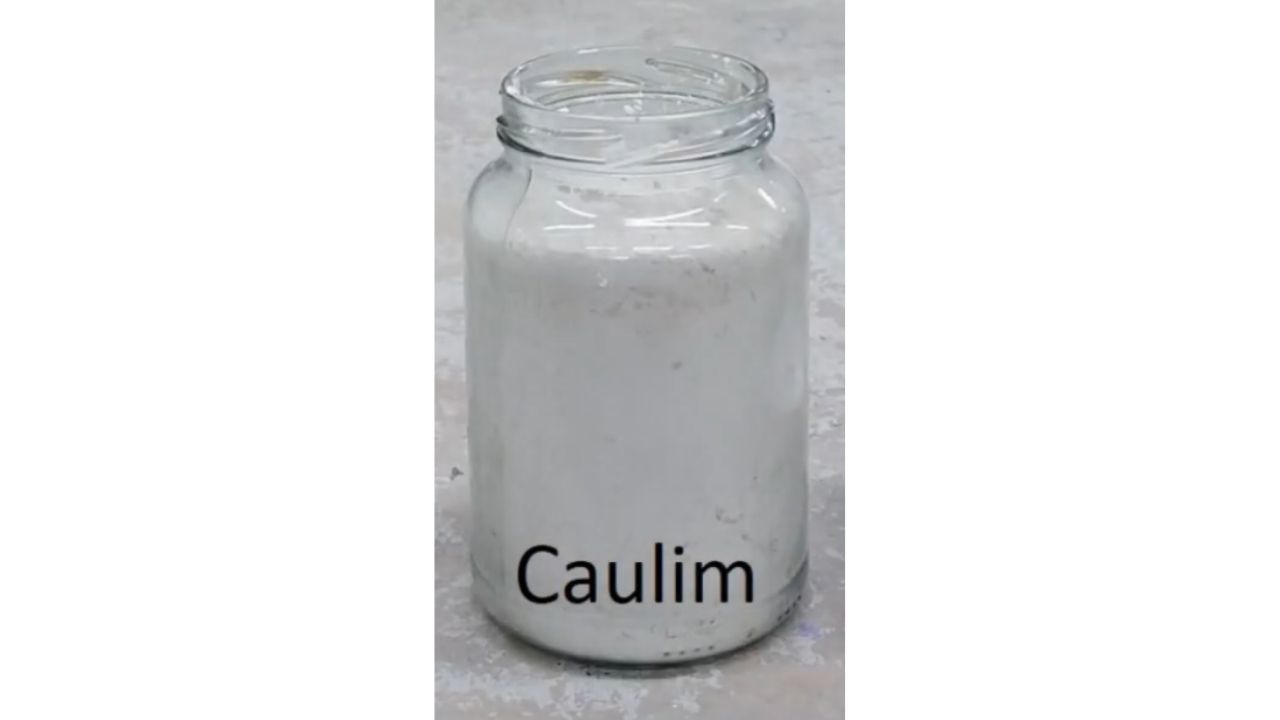
The manufacturing of ceramic ware traditionally depends on mineral raw materials, such as kaolin, feldspar, and quartz. These materials perform important functions in the composition, but also require extraction, transportation, processing, and firing at an appropriate temperature.
-
AI-generated fake doctors deceive elderly in Brazil, health videos go viral with nearly 300,000 views, turning disease fear into a global audience and money machine.

-
Innovative Thermal Battery in Brazil Can Store Renewable Energy for Weeks, Offering Cheap Electricity and Winter Heating

-
High-End Imported Vacuum Targets Pet Hair, Deep Cleaning, and Odors, as Shark Model Gains Popularity in Urban Brazilian Homes with Carpets and Pets

-
Portugal Develops Graphene Coating to Make F-16s Nearly Invisible on Radar, Aiming to Use It for Military Drones and Aircraft



The project presented at Mostratec starts precisely from this point: if part of these minerals can be replaced by already available waste, the production chain can reduce pressure on natural resources. The proposal does not eliminate the need for technical control, but changes the origin of part of the raw material.
In the study, two wastes were chosen for joint evaluation: rice husk ash and discarded glass. The ash came from a thermoelectric plant and was only sieved. The glass, from domestic waste, was ground before being included in the formulations.
The choice is directly related to the regional and environmental context. The project summary states that more than 500 million tons of rice are produced annually worldwide, and Rio Grande do Sul accounts for about 7 million tons, equivalent to 70% of national production.
Rice husk entered as a strategic waste of Rio Grande do Sul
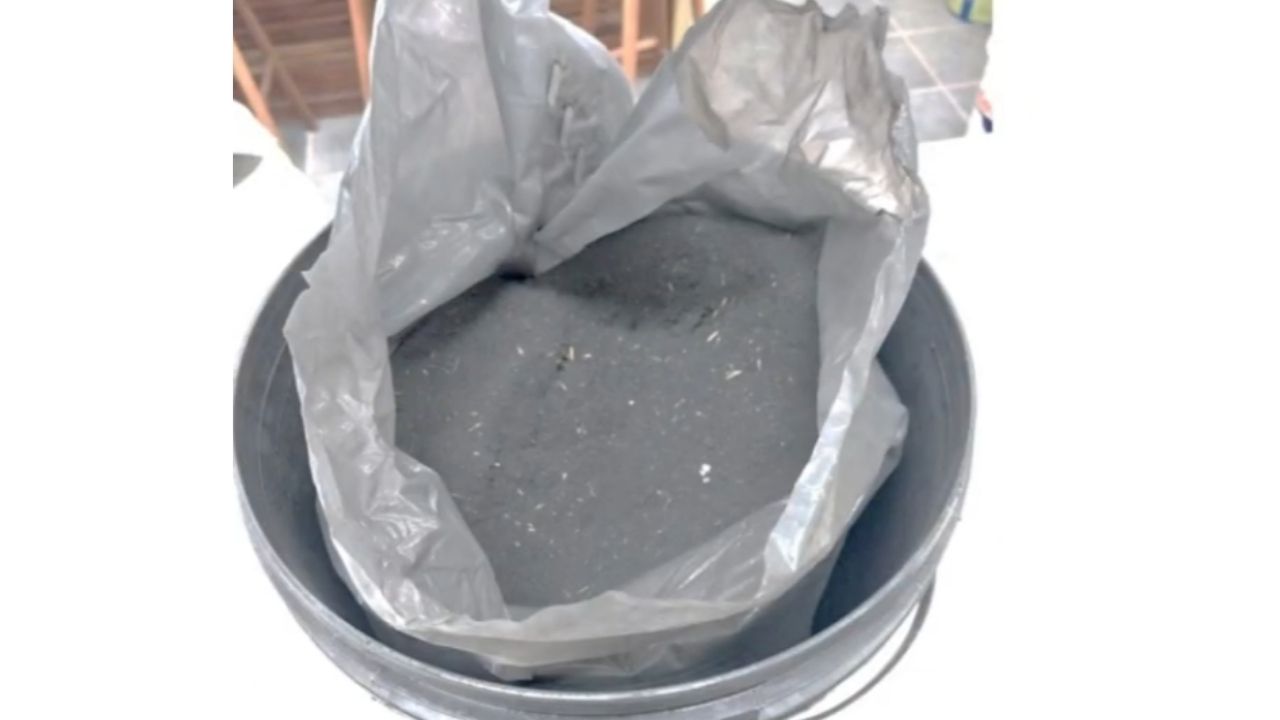
The rice husk is a significant byproduct of the production chain in Rio Grande do Sul. When this waste is not properly disposed of, it can represent an environmental problem and a waste of material with technological potential.
In the case of Sustainware, the research did not use the husk directly, but the rice husk ash. This material already came from a thermoelectric plant, which means it underwent a previous burning process and was reused as input for the ceramic test bodies.
The technical point lies in the chemical composition and behavior of the waste during the ceramic firing. To be part of a ceramic tableware formulation, the material needs to contribute to physical performance and not compromise strength, density, or water absorption.
The relevance of the study increases because Rio Grande do Sul has a strong presence in rice production. By using a waste linked to this chain, the project brings material technology closer to a concrete problem of the regional economy.
Discarded glass also replaced part of the minerals
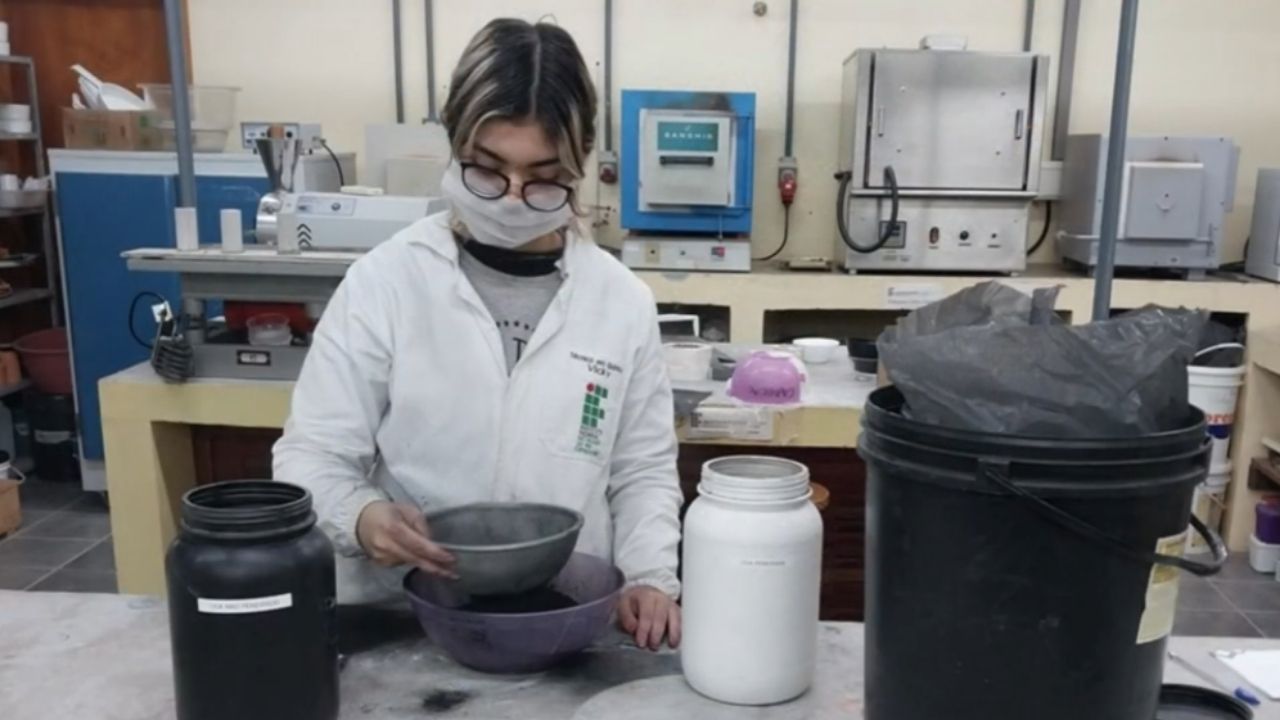
In addition to rice husk ash, the study used discarded glass of domestic origin. The glass was ground before being incorporated into the formulations, a necessary step to allow better mixing with the other components of the ceramic mass.
The Mostratec summary highlights that glass is among the least recycled materials in Brazil. This makes its reuse in ceramics an interesting alternative, especially when the waste can replace part of the minerals extracted from nature.
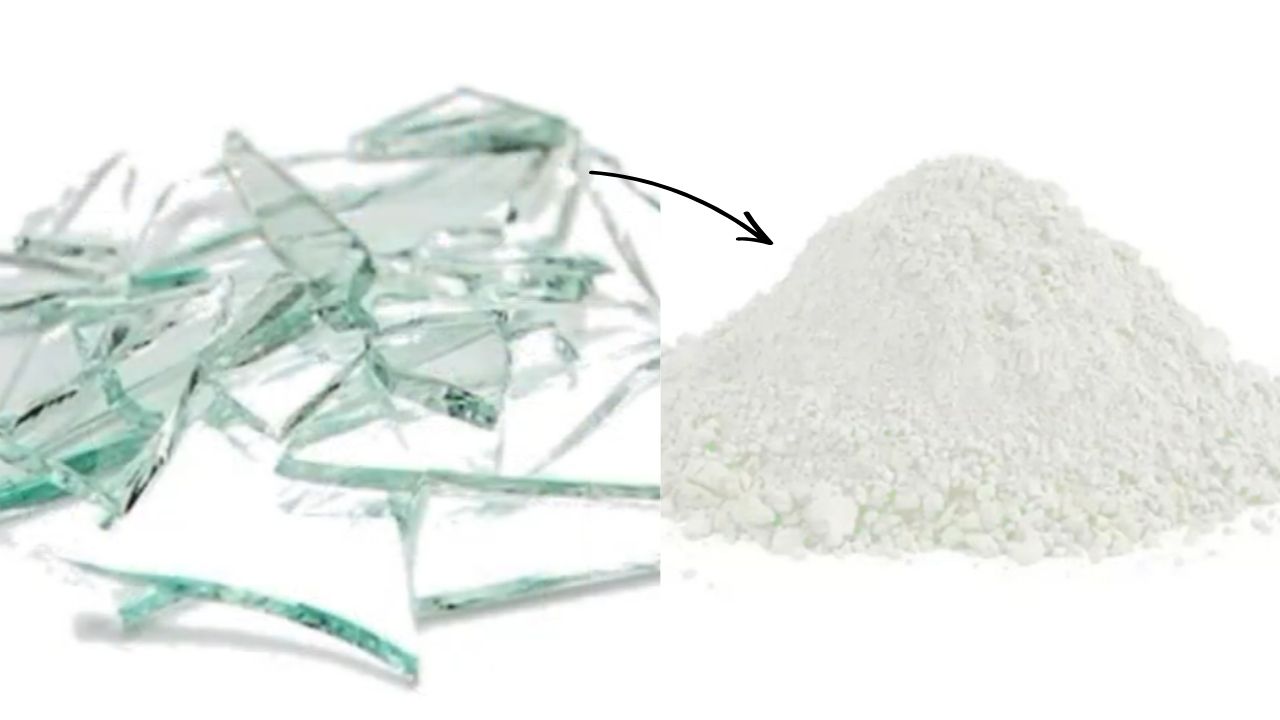
In the tested formulation, glass does not appear as an accessory, but as a functional part of the composition. It enters the study as a material capable of contributing to the production of ceramic ware, provided its behavior is validated in the tests.
The combined use of glass and rice husk ash also broadens the environmental scope of the proposal. Instead of working with just one residue, the research tested a hybrid composition, bringing ceramics closer to the principles of the circular economy.
Formulations reached 60% of residues in the composition
The results presented in the summary indicate that it was possible to manufacture ceramic ware with up to 60% residues in the composition. This proportion was formed by 30% rice husk ash and 30% discarded glass.
This percentage is relevant because it shows a significant substitution of mineral resources. In ceramic materials, altering the composition too much can affect firing, absorption, strength, and stability of the piece. Therefore, the tested proportion needed to be compared with a reference material.
To make this comparison, the study produced conventional test specimens with kaolin, feldspar, and quartz. Then, these materials were evaluated alongside the test specimens with the incorporation of residues.
The direct comparison is what gives technical weight to the result. It was not enough to state that the residues could be included in the mass; it was necessary to verify if the resulting ceramic ware would maintain properties similar to traditional pieces.
Performance was comparable to conventional material
According to the project summary, the sustainable ware showed performance comparable to conventional wares in mechanical strength, density, and water absorption. These three criteria are important because they indicate the physical behavior of the piece after firing.
Mechanical strength shows if the material withstands efforts without losing integrity. Density helps to understand the structure of the piece. Water absorption is an essential indicator to assess porosity and quality of the ceramic material.
The result suggests technical feasibility, not immediate commercial production. The research shows that the formulation with residues can achieve performance similar to conventional in the tests conducted, but does not inform industrial scale, final cost, long-term durability, or commercial certifications.
This care is important to avoid exaggeration. The project points to a concrete possibility within materials engineering, but large-scale application would depend on new stages, industrial standardization, and production evaluation.
Life Cycle Analysis measured the proposal’s impact


To evaluate the sustainability of ceramic ware, the project applied a Life Cycle Analysis, known by the acronym LCA. This type of assessment considers impacts associated with the production process, rather than just looking at the final composition of the material.
According to the summary, the proposal demanded fewer natural resources and less energy throughout the production process. This is because part of the conventional minerals was replaced by already available waste, reducing the need for extraction of virgin raw materials.
The LCA helps separate environmental promise from measurable results. In sustainable materials projects, it’s not enough to use waste; it’s necessary to verify if the exchange truly reduces impacts when the complete process is considered.
In the case of Sustainware, the analysis reinforced that the use of rice husk ash and discarded glass can decrease resource and energy consumption. This is the main environmental contribution of the study within the ceramic ware chain.
Technology connects to the circular economy
The circular economy seeks to keep materials in use for as long as possible, reducing waste and the extraction of new resources. The ceramic ware proposed by the project fits this logic by transforming waste into inputs for a new product.
In the traditional linear model, resources are extracted, transformed, consumed, and discarded. In the study, part of this flow changes: waste from the rice chain and domestic glass disposal return as raw material for a ceramic material.
This type of research shows how traditional sectors can be redesigned without abandoning technical criteria. The ceramic industry needs performance, firing control, and stability, but it can also incorporate lower-impact alternatives.
The proposal is especially relevant because it unites two distinct environmental problems. On one side, the large amount of rice husk in Rio Grande do Sul. On the other, the low utilization of discarded glass in the country.
Project reinforces the role of materials engineering
Sustainware was presented in the Engineering and Materials category at the Mostratec Virtual, within the 2024 edition. The choice of area is consistent with the content of the study, as the work involves formulation, processing, testing, and performance comparison.
The institution informed by Mostratec is the Federal Institute of Rio Grande do Sul, Campus Feliz, in the municipality of Feliz, RS. The authorship is attributed to the student Victoria Zimmer Gomes, under the guidance of Cínthia Gabriely Zimmer.
The technical merit of the project lies in testing a real substitution of raw material and measuring the result. The research is not limited to proposing recycling in a generic way; it evaluates composition, burning, resistance, density, absorption, and life cycle.
For the industry, such studies can open paths for new formulations. For the consumer, they show that everyday materials, like ceramic tableware, can also be rethought from waste and productive efficiency.
What still needs to be investigated
The source does not inform whether the ceramic tableware developed in the project has already undergone industrial-scale production or commercial testing. There is also no data on cost per piece, production time, market acceptance, or compliance with specific usage standards.
These gaps do not reduce the value of the research, but help define its stage. The project proves technical feasibility in test specimens and indicates performance comparable to conventional, but does not yet describe a production line ready for the market.
Between the laboratory and the factory, there are important standardization steps. It would be necessary to evaluate the regular supply of waste, quality control of the ash, glass grinding, repeatability of formulations, and behavior of the pieces under different usage conditions.
Even so, the proposal shows a relevant path to reduce impacts in ceramic production. By combining agricultural waste and domestic waste, the project broadens the discussion on how discarded materials can return to the production chain.
Do you think everyday products, like plates, cups, and tableware, should use more agricultural waste and recycled glass in their composition? Leave your opinion in the comments and tell us if you would buy ceramic tableware made with waste if it had similar performance to conventional.