






 Portuguese
  Spanish


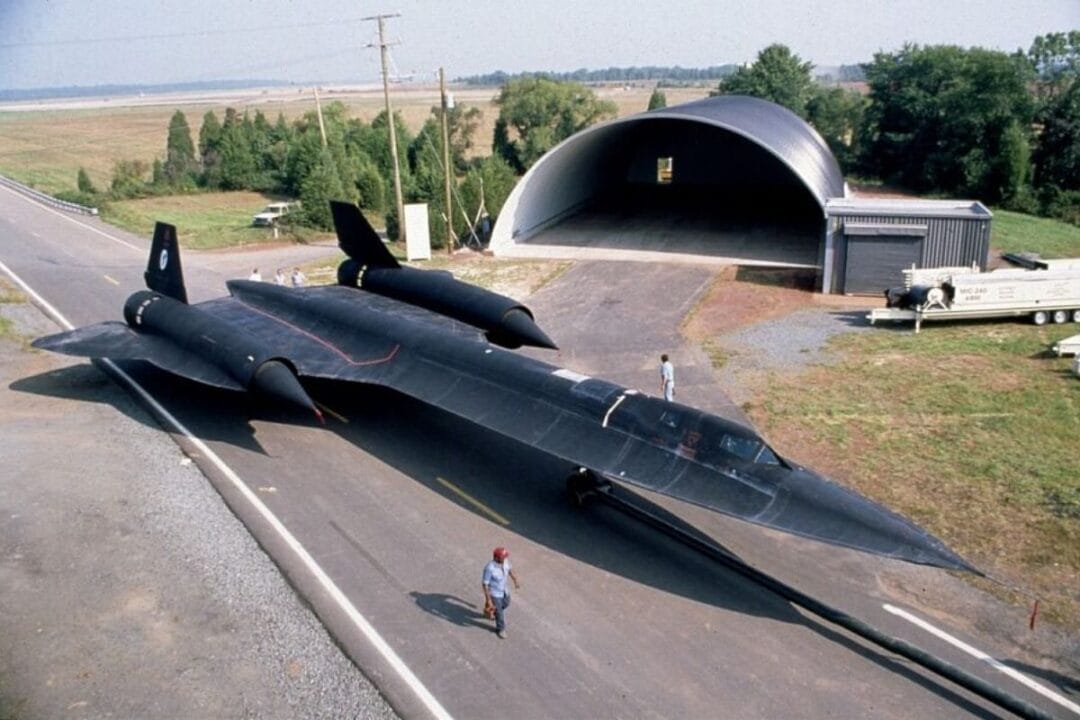


Icon of Military Aviation, The Blackbird Reaches Mach 3.3 and Flies Above 25 Km of Altitude, Surpassing Missiles with Pure Speed
Even 25 years after its official retirement, the Lockheed SR-71 Blackbird still holds a prominent place in the history of aerospace engineering. Capable of flying at over 3,540 km/h (Mach 3.3) and operating at altitudes above 25,000 meters, this reconnaissance aircraft designed in the 1960s by Lockheed Martin represents the pinnacle of design and technological boldness during the Cold War.
Extreme Engineering for Flights Outside Commercial Atmosphere
The SR-71 Blackbird was created to evade enemy missiles not with maneuvers or countermeasures, but with pure speed. It was so fast that, upon detecting a missile launch, all it had to do was accelerate to exit the danger zone.
To withstand the extreme conditions generated by friction at hypersonic speeds, the design had to innovate radically:
-
Pennsylvania Mine Creates Ice in Summer Heat and Melts in Winter, Turning a Mountain Crevice into a Reverse Natural Refrigerator

-
China Accelerates Global Expansion of Robotics: From Smart Vacuums to Industrial and Humanoid Machines, Millions Exported to Over 150 Markets
-
Polar Air Mass to Hit Brazil: Temperatures to Plummet in Nine States, Near Freezing in the South with Frost Risk Until Monday
-
Chinese “dark factories” produce electric cars 24/7 with minimal human intervention, as Zeekr assembles 800 units daily, raising concerns in Brazil.





- 85% of the fuselage was made of titanium, a lightweight metal highly resistant to heat, as aluminum would deform.
- The Pratt & Whitney J58 engines operated as turbojets at low speed and as ramjets at cruising speed.
- The external design employed lines and angles that anticipated stealth technology concepts, reducing radar signature even before the existence of stealth fighters.
- Its fuel tanks were designed with structural leaks on the ground, as the joints only sealed during flight, with the thermal expansion of the material at Mach 3.
Legacy of the Lockheed SR-71 Blackbird for Modern Aviation

According to engineer Heitor Alves Falqueto, who highlighted the Blackbird’s achievements in an analysis published on LinkedIn, “few aircraft represent such a significant leap in aerodynamics and technology as the SR-71”. Indeed, many of the technologies that today equip stealth fighters and hypersonic vehicles originated from concepts developed for it.
The aircraft, which operated from 1966 to 1999, was used in strategic reconnaissance missions during times of geopolitical tension, flying over hostile areas without ever being shot down.
To this day, no manned aircraft in operation has surpassed its achievements in altitude and speed. The SR-71 Blackbird remains the fastest aircraft in history.






