Portuguese
  Spanish



Longi Launched the Hi-MO S10, First Residential Solar Panel with 25% Efficiency, Combining HBC Technology, High Performance, Durability, and Roof-Adapted Design.
Longi, one of the global leaders in photovoltaic technology, launched on Wednesday (7) its newest residential solar panel, establishing a historic milestone for the solar industry: the Hi-MO S10 (EcoLife Pro) model achieves 25% efficiency, the highest rate ever recorded among modules available for sale in the global market.
The announcement took place during Intersolar Europe 2025, one of the leading trade fairs in the sector, held in Munich, Germany.
Innovation for Residential Use: More Power and Refined Design
The new solar panel from Longi integrates the premium EcoLife Series, specially developed for residential consumers seeking to combine energy efficiency, durability, and aesthetics.
-
Solar energy reaches 55 GW, becoming the second largest power source in Brazil’s energy mix

-
Solar energy can increase property value by up to 10% and become a selling point.
-
Solar and wind energy surpass natural gas for the first time in the world and accelerate energy revolution

-
Africa has about 500,000 cell towers and most still burn diesel to operate, while companies rush to cover antennas with solar energy and avoid signal blackouts.

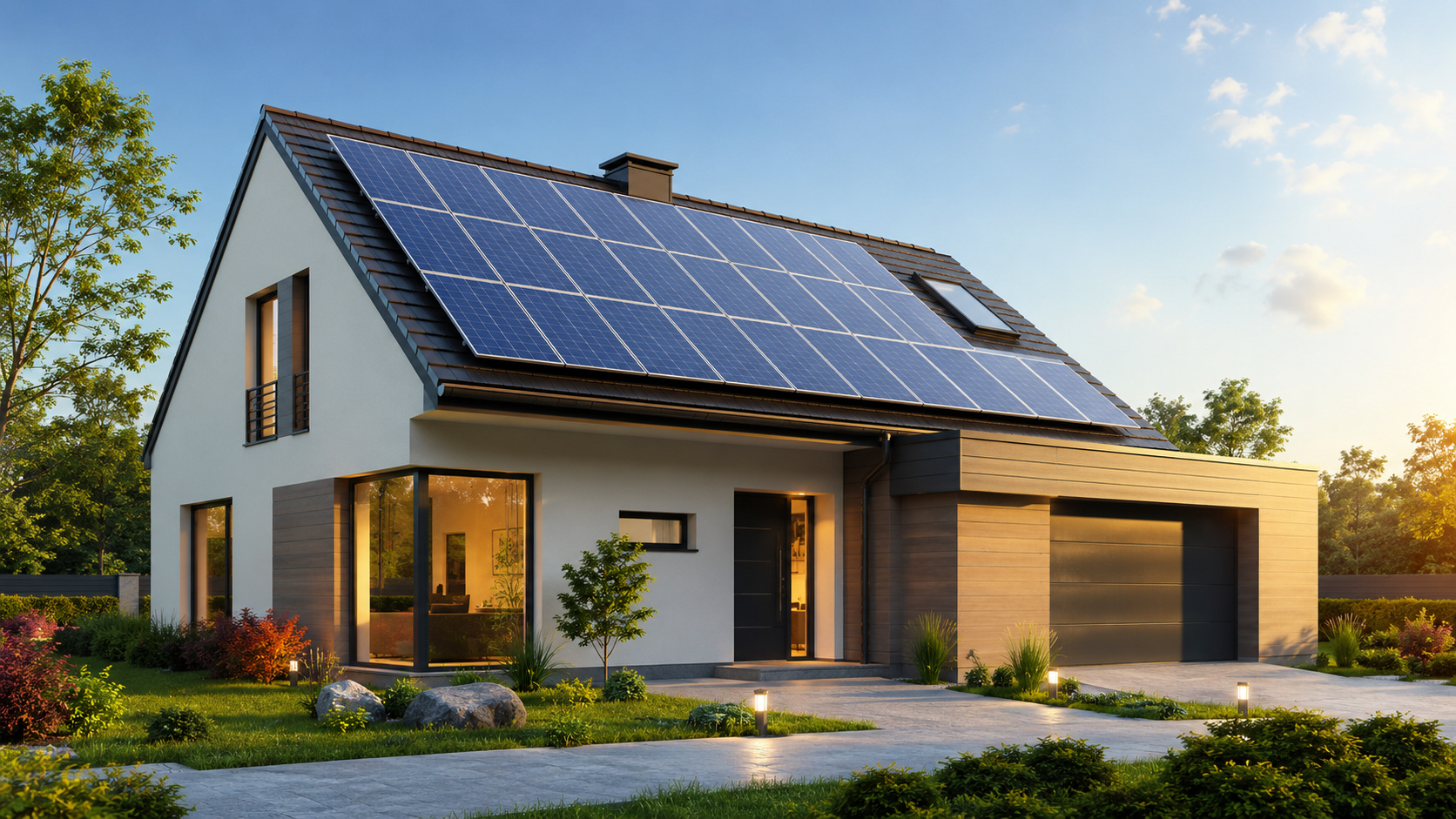


With a maximum power of 510W, the Hi-MO S10 was designed with 54 bifacial cells and dimensions of 1.80 m x 1.13 m, weighing 23.5 kg.
In addition to its high performance, the module stands out for its design adapted to residential roofs, combining elegant aesthetics with structural robustness, meeting a growing demand for energy solutions that do not compromise the architectural style of homes.
Longi’s HBC Technology Uses a Combination of HTJ and Back Contact
The central innovation of the panel lies in the application of HBC technology (Heterojunction Back Contact), which combines heterojunction (HTJ) with a back contact structure.
This engineering allows for greater light capture and minimizes losses, resulting in superior performance compared to traditional models available in the market.
According to the manufacturer, this is the first mass-produced and commercially available solar panel with this technological combination, making it a reference in industrial innovation in the photovoltaic sector.
With an efficiency of 25%, the Hi-MO S10 exceeds the current limit of conventional solar panels sold, which hovers around 24.2%.
Until now, higher numbers were only achieved in laboratory environments, without viability for large-scale production.
Another highlight of Longi’s new solar panel is the ultra-low temperature coefficient of -0.24%/°C, meaning that performance loss caused by heat is significantly reduced—a crucial differential for regions with high temperatures.
Future of Solar Energy: Breaking Technological Barriers
The efficiency of a solar panel determines its capacity to convert sunlight into electrical energy per square meter.
The higher this rate, the greater the energy production in the same area, which is essential for residential applications, where installation space is often limited.
Achieving 25% efficiency on a commercial scale represents a significant advance, considering that the theoretical limit for silicon solar cells hovers around 30%.
To break this barrier, researchers have been exploring new materials, such as perovskite, although its commercial application is still under development.