Portuguese
  Spanish


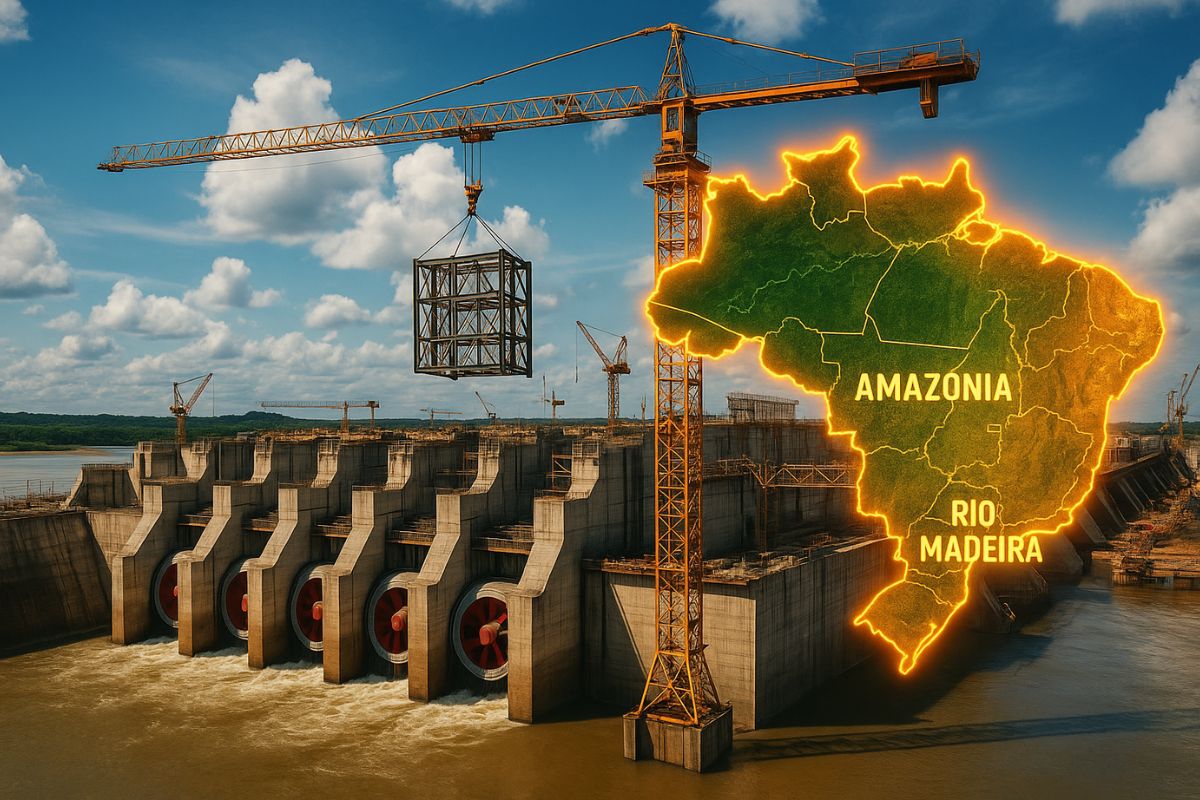


Construction of New ‘Large Hydropower Plant’ in Brazil Is Discussed Between Lula and Silveira. Minister of Mines and Energy Claims Government Is Assessing Project Inspired by Itaipu, Focusing on the Madeira River and the Tapajós Complex.
The Minister of Mines and Energy, Alexandre Silveira, confirmed in an interview with O Globo that he is in dialogue with President Luiz Inácio Lula da Silva about the construction of a new “large hydropower plant” in Brazil, based on the model of Itaipu. The initiative aims to resume investments in large-scale plants, reinforcing the Brazilian energy matrix amid growing demand and the need for stability against intermittent sources, such as solar and wind.
Silveira highlighted that the Madeira River, in partnership with Bolivia, and the Tapajós Complex, in the Amazon, are among the projects under analysis. According to him, the inspiration comes from Itaipu Binational, a global reference in clean energy production and regional integration.
Why Is the Government Talking About a New Hydropower Plant?
The minister argues that Brazil needs to ensure energy security at a time of economic expansion and green transition. Despite the growth of renewables, sources like wind and solar are still intermittent and need constant support. In this scenario, large hydropower plants function as “batteries” for the system, providing stability to the supply.
-
Brazilian Startup Turns Coffee Grounds into Plant-Based Leather, Cutting Water Use by Over 50 Times for High-Impact Sustainable Fashion

-
Eco Invest Auction Aims to Unlock $10 Billion in Investments, Focusing on Green Fertilizers, Critical Minerals, Batteries, and AI for Clean Industry in Brazil

-
Half of Brazilians Prefer Lower Taxes with Private Health and Education, While 44% Opt for Higher Taxes for State-Provided Services, Datafolha Survey Reveals

-
Brazil’s Most Expensive Toll Rises to R$ 40.60 on Route from São Paulo to the Coast, Nearly Matching Bus Fare to Santos



Additionally, international cooperation is one of the central points of the proposal. The agreement already established with Bolivia to enhance the utilization of the hydropower potential of the Madeira River reinforces the possibility of a new binational plant, similar to Itaipu, which currently supplies energy to millions of Brazilians and Paraguayans.
What Are the Obstacles to Construction?
Despite the government’s enthusiasm, the construction of a new “large hydropower plant” in Brazil faces significant challenges. The Tapajós Complex, for example, has been stalled for years due to environmental and licensing obstacles, as the region involves sensitive areas of the Amazon.
Another point is the high cost of investments. According to Silveira, just in small projects the electricity sector has already mobilized R$ 5.5 billion in a recent auction, which will enable 65 plants in 13 states. A large hydropower plant would require much higher amounts, in addition to complex negotiations with local communities and environmental agencies.
How Does This Impact the Energy Future of Brazil?
If the project advances, the expectation is that Brazil will strengthen its position as a power in clean energy, combining large-scale hydropower plants with renewable sources. The bet is that a new plant could, like Itaipu, reduce the risk of blackouts, attract investments, and ensure price stability in the regulated market, which supplies families and small businesses.
However, experts warn that it is necessary to reconcile development and environmental preservation, as large enterprises can impact riverside populations and forest areas.
The possibility of constructing a new “large hydropower plant” in Brazil brings the topic back to the center of the energy and political debate. While the government sees the proposal as an opportunity for regional integration and reinforcement of the matrix, critics point out environmental and financial challenges.
And you, do you think the country should invest in new plants like Itaipu or invest more in decentralized renewable sources? Leave your opinion in the comments.