Portuguese
  Spanish


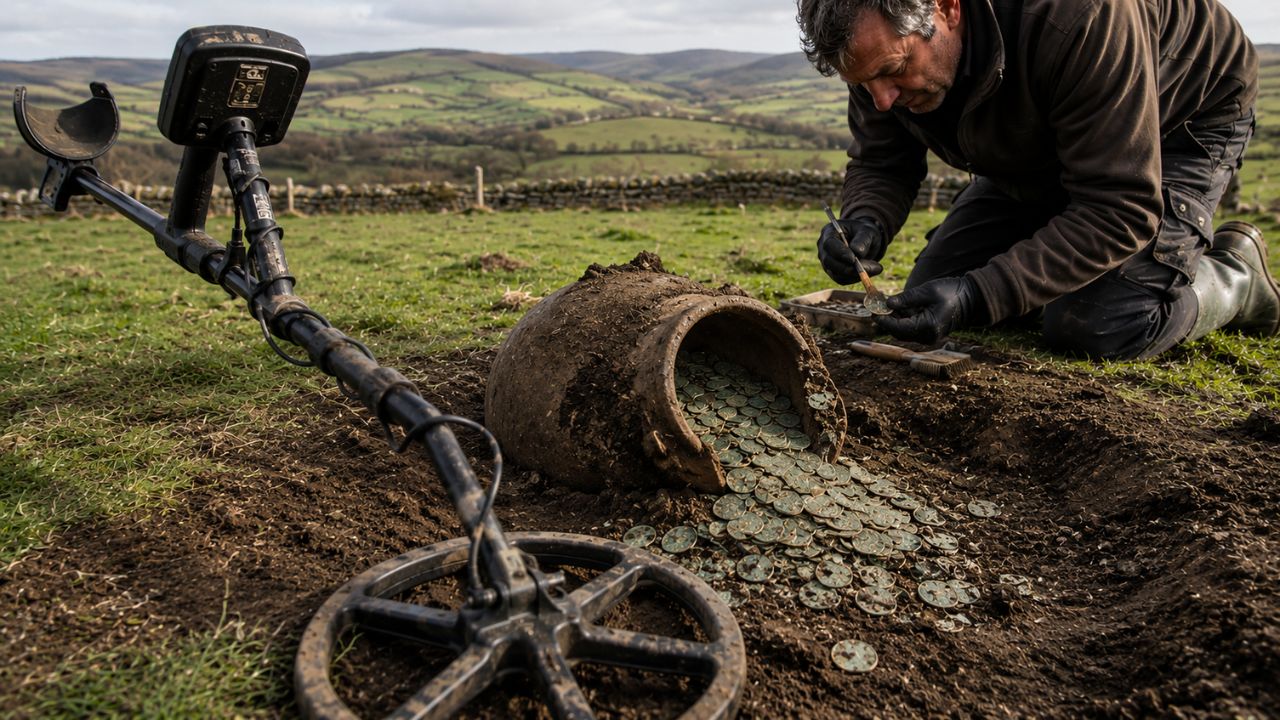


Discovery of thousands of Roman coins in Wales could become the largest ever recorded in the country and mobilizes specialists.
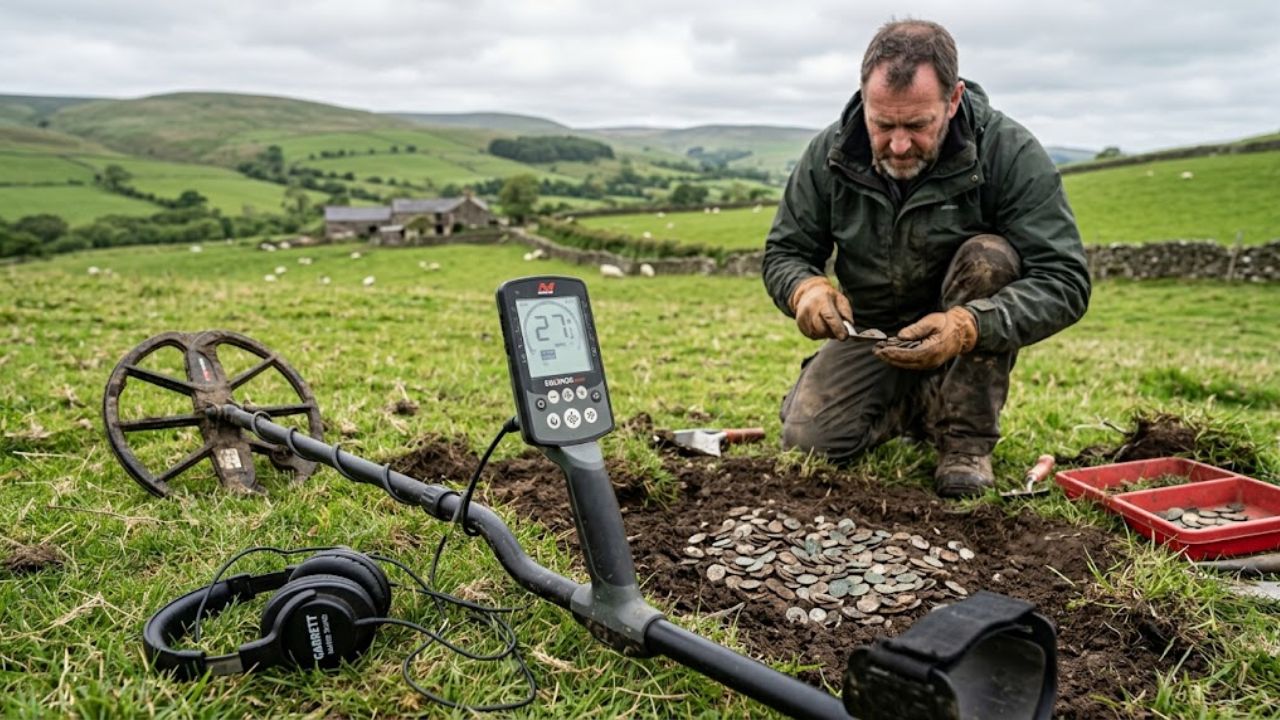
David Moss, a 36-year-old metal detectorist, found a treasure in Wales with about 10,000 to 15,000 Roman silver coins, a discovery that specialists consider one of the most important ever recorded in the country. The material, located in September 2025 according to Wales Online, is being analyzed by the National Museum of Cardiff and could represent the largest set of Roman coins ever found in local history.
The significance of the discovery goes beyond the quantity of objects found. According to specialists involved in the analysis, the volume of coins may surpass historical records previously registered in Welsh territory. The largest Roman treasure previously located in Wales contained approximately 10,000 coins and was found near Chepstow during the 1990s.
The quantity of coins draws the attention of specialists
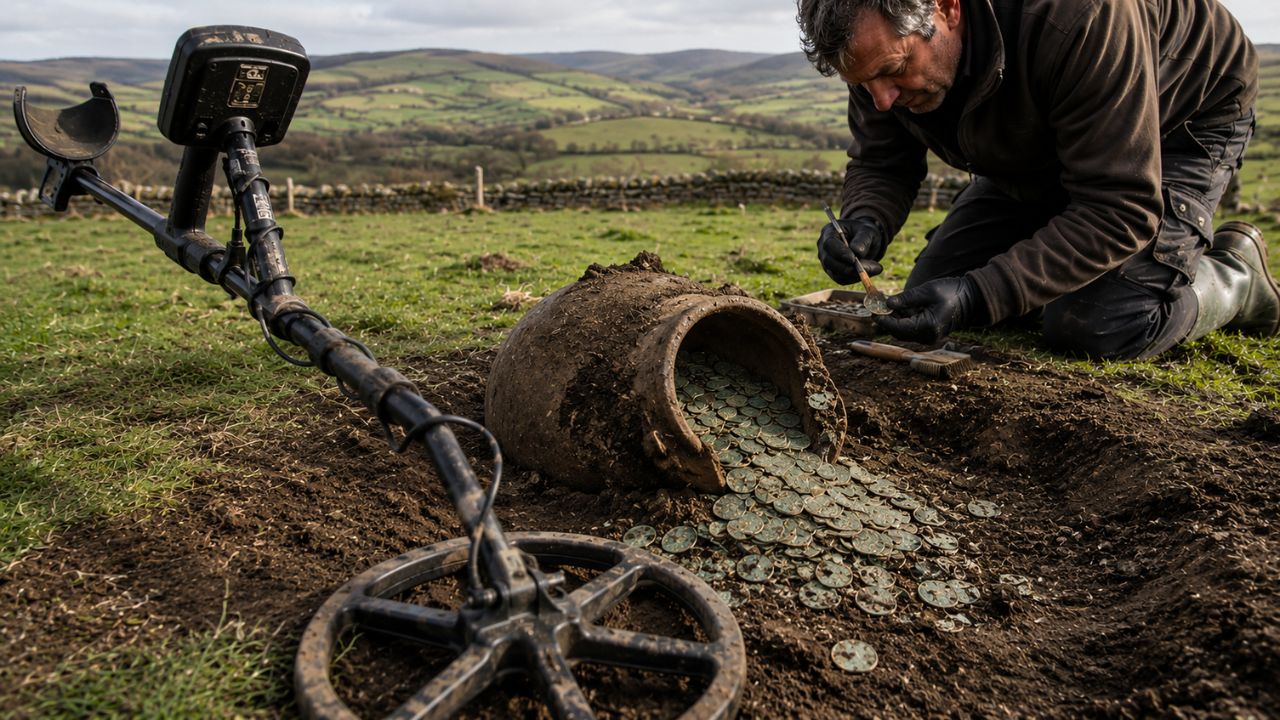
Initial assessments indicate that the treasure comprises Roman denarii and radiate coins coated with silver. All the material was stored in clay pots, found about half a meter deep.
-
Brazilian Lottery Winner Ordered by Court to Share $22 Million Jackpot with Ex-Partner, Sparking Major Legal Battle

-
Why Yellow is the Safety Color for Heavy Machinery: Origins and Benefits Since 1931

-
U.S. Channel Highlights 20 Brazilian Innovations Leading Latin America: From Açaí to Modular Homes and Biogas

-
Dog Goes Viral for Buying Its Own Food and Carrying the Bag Home in Its Mouth

Given the initial numbers, specialists believe that the new set could assume the position of the largest discovery of its kind ever made in Welsh territory. Anthony Halse, president of the South Wales and Monmouthshire Numismatic Society, assesses that the content found could represent the accumulated fortune of a single person.
“I would have thought it was the wealth of a person, who might have been in some section of the army,” he stated.
How the legislation for historical treasures works
Archaeological finds of this nature follow strict procedures provided by British legislation.
According to the Treasure Act of 1996, any discovery that may qualify as a treasure must be reported to the responsible authorities within 14 days of its identification or after recognizing its potential importance.
Among the criteria provided by the standard are:
- Objects at least 300 years old;
- Items containing 10% or more precious metal;
- Sets formed by two or more ancient coins that meet legal requirements.
After the official communication, specialists conduct technical examinations to determine the historical relevance of the material. Then, an inquiry conducted by a coroner defines whether the discovery is officially classified as treasure.
If this happens, the Treasure Valuation Committee establishes a market value for the found set. The eventual financial reward is divided between the discoverer and the owner of the area where the objects were buried.
Care is essential when finding ancient coins
Authorities and researchers emphasize that any improper intervention can compromise valuable historical information.
For this reason, the guidance is to avoid cleaning or altering ancient pieces immediately after discovery. The recommended procedure is to carefully record the location of the find and immediately notify the competent authorities.
The importance of this protocol was highlighted in a case that occurred in 2015. On that occasion, Welshman Layton Davies was arrested after hiding the discovery of Viking coins valued at around £3 million in Herefordshire.
According to the authorities, he failed to report the find and attempted to negotiate the items privately. The episode has since been frequently cited as an example of the consequences for those who ignore the rules related to historical heritage.
The journey of the man who found the coins
The person responsible for the discovery is David Moss, 36, a metal detection enthusiast for almost a decade. His connection with this hobby had already yielded important results previously.
In 2018, he found his first treasure composed of Roman coins, an experience that expanded his interest in archaeological searches. However, nothing prepared him for the scale of the material found recently.


The find occurred in September, during an outing by David alongside his friend Ian Nicholson in a rural area whose exact location was not disclosed. The weather conditions made the work difficult and the two even considered ending the search.
Shortly before the final decision, however, a large rainbow appeared on the horizon. “It really seemed like a sign,” recalled David. The pair decided to stay at the site a little longer and ended up identifying clues that led to the discovery of the buried pot.
Following expert guidance, the two participated in a careful excavation that lasted about six hours to remove the container without damaging the contents.
The weekend dedicated to protecting the treasure
Since the discovery occurred on a Friday and the experts could only take over the work the following Monday, an additional concern arose: ensuring the safety of the material until the responsible teams arrived.
To avoid any risk, David stayed near the area throughout the weekend, sleeping in his own car while waiting for the official procedures to begin. Later, the coins were sent to the National Museum of Cardiff for conservation and study.
Even in light of the impact generated by the find, David claims to see the experience mainly as a contribution to the preservation of local history. “It’s something I’ll never forget,” he stated. “To think that these coins were buried for almost two thousand years — it’s simply incredible.”