Portuguese
  Spanish


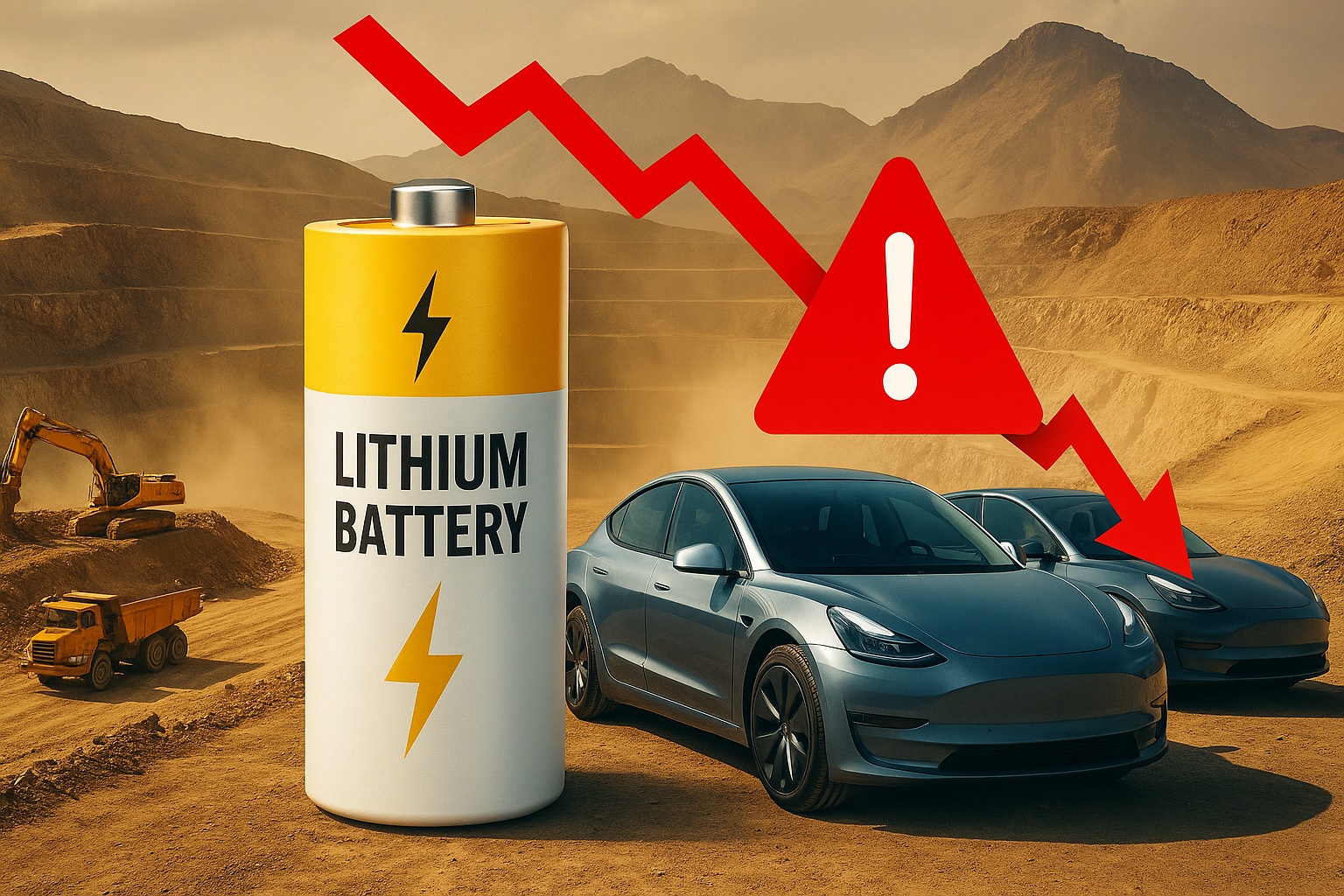

CATL, The Largest Lithium Battery Manufacturer in The World, Suspends Mine in China and Raises Global Alert About Impact on Prices and The Future of Electric Cars.
The expansion of electric cars depends on a strategic input: lithium, called the “white gold” of the energy transition. But the recent decision by CATL, the largest lithium battery manufacturer in the world, to temporarily suspend operations at its main mine in China has raised a global alert. The halt occurs at the Jianxiawo mine, located in Jiangxi, responsible for 6% of global lithium production, and is already starting to generate impacts on prices and supply chain confidence.
CATL and The Jianxiawo Mine: A Shock to The Sector
The mine in Jiangxi province is considered the heart of CATL’s extraction operations, a strategic supplier of batteries for automakers like Tesla, Peugeot, and BMW.
The suspension, determined after the revocation of the license by Chinese authorities, is expected to last at least three months, the period necessary for the company to comply with new administrative requirements.
-
Volvo’s New Loaders Feature Obstacle Detection, Automatic Braking, and 360-Degree Operator View

-
Chinese Manager Accused of Whipping Worker Sparks Protest by 1,200 Employees at Major Brazilian Factory

-
France Revamps 530 Social Housing Units with Large Balconies and Glass Facades Without Demolishing Existing Buildings

-
10-Year-Old Max Makes History with Paris Fashion Show, Launches Own Brand, Hires Staff, and Sets World Record as Youngest Runway Designer





The gravity of the situation lies in the scale: in addition to this mine, others in the region represent another 5% of the global lithium supply. In other words, any prolonged interruption in Jiangxi could have immediate repercussions on the balance between supply and demand.
The reflection was felt quickly: the price of lithium carbonate rose 3% in just one day, reaching its highest level since February 2025.
Largest Lithium Battery Manufacturer in The World Under Pressure
For investors and the industry, the news brought volatility. Shares of CATL’s competitors, especially miners from Australia and other regions in China, surged in reaction to the expectation of reduced lithium supply.
Despite the initial panic, experts believe that, in the short term, CATL, as the largest battery manufacturer, should be able to maintain normal supply to its customers since it has strategic stock and diversified supply contracts.
According to Eugene Hsiao, an analyst at Macquarie Capital, “we do not foresee significant operational impact for CATL as a result of the suspension.” The critical point, he explains, is the risk of imbalance in the global lithium supply chain, should new mines face similar restrictions.
Immediate Impact on Prices and Electric Cars
Although the halt is temporary, the sudden increase in the price of lithium carbonate has reignited concerns about the cost of batteries and, consequently, of electric cars.
Today, the price of batteries accounts for up to 40% of the final value of an electric vehicle. A spike in prices could reduce competitiveness compared to combustion models, directly affecting plans to popularize electric mobility in emerging markets.
Zhang Weixin from China Futures Co. warns: “If production disruptions spread to other mines in Yichun after September 30, the price of lithium could rise even more.”
The Hand of The Chinese Government in The Decision
The suspension of the Jianxiawo mine is not seen merely as an administrative issue. Many analysts interpret the measure as a deliberate strategy by the Chinese government. Citigroup suggests that the decision is part of an effort to control excess production and ensure that lithium is sold at prices more aligned with Beijing’s interests.
This interpretation connects to other recent government measures, such as the temporary suspension of rare earth exports in 2025, which halted European factories. The message is clear: China, responsible for most of the global battery supply chain, seeks to reaffirm its strategic control over essential resources for electric cars.
CATL, China, and The Future of Electric Mobility
The episode reinforces the vulnerability of the global automotive sector to dependence on strategic inputs. While countries like the US, Europe, and Japan accelerate local mining projects and battery recycling, China continues to dictate the pace of the market.
CATL, as the absolute leader in battery production, holds bargaining power over vehicle manufacturers across all continents.
In the long run, this halt could serve as a warning for governments and companies to invest in diversification of lithium sources, new battery technologies, and strategic independence policies. However, in the short term, the market will remain attentive to each decision from Beijing and CATL’s strategies.
Global Alert Amid The Energy Transition
The suspension of the Jianxiawo mine shows that, although the growth of electric cars is an irreversible trend, dependence on critical raw materials can still slow the pace of the energy transition.
The largest lithium battery manufacturer in the world has provided a clear demonstration of how a single administrative decision can shake global markets, raise prices, and generate uncertainties about the future of electric mobility.
And you, do you believe that dependence on Chinese lithium could become the biggest obstacle to the expansion of electric cars worldwide?