Portuguese
  Spanish


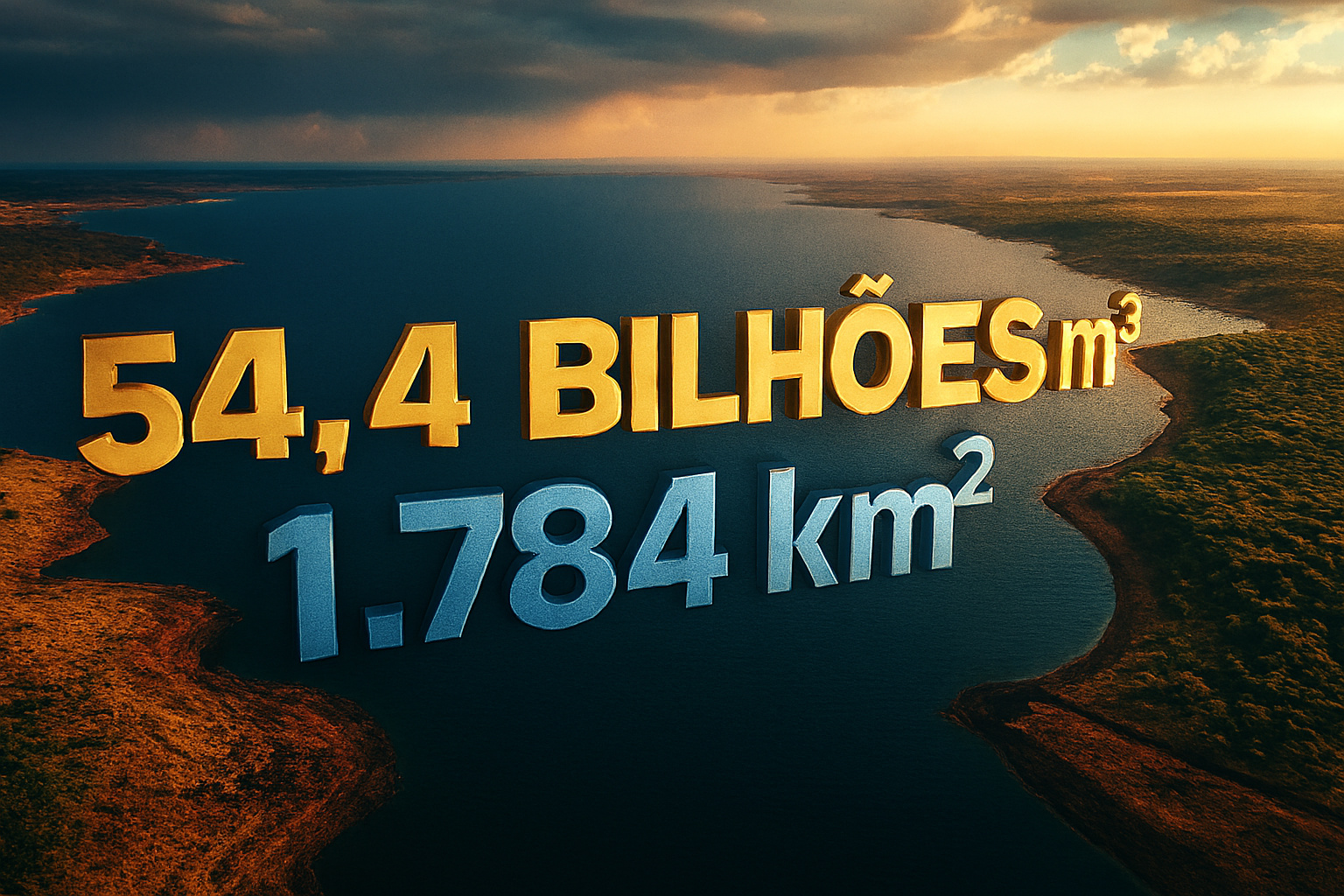

Largest Reservoir in Volume of Water in Brazil Accumulates 54.4 Billion m³, Covers 1,784 km² and Remains Vital Almost 30 Years After Its Inauguration in Goiás.
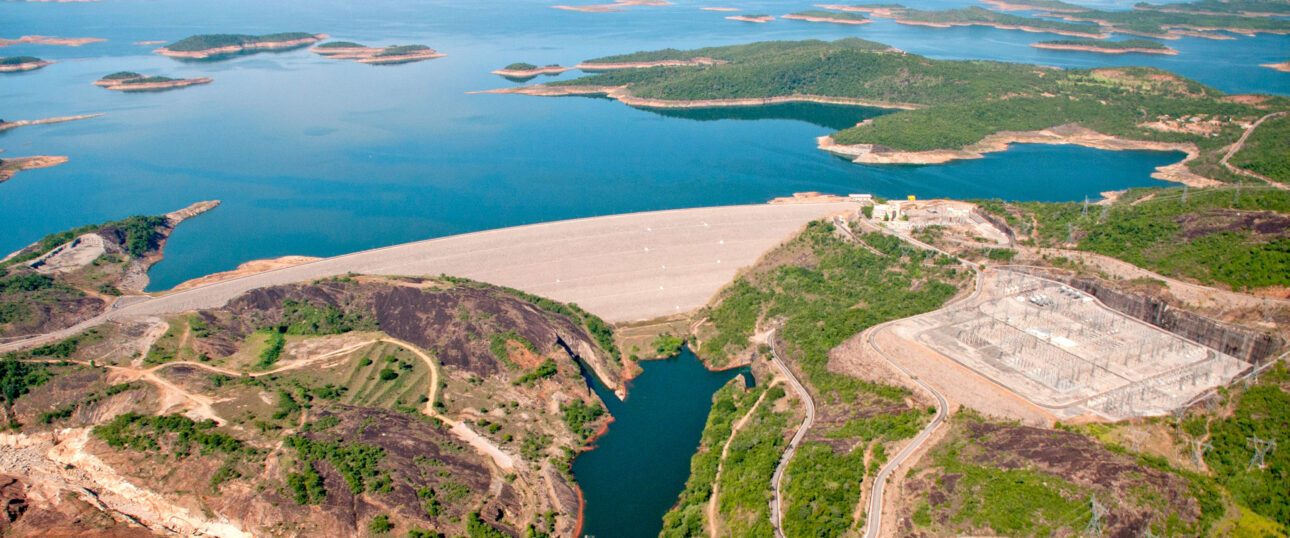
In the heart of Goiás’ cerrado lies a little-remembered giant, but fundamental to the Brazilian electric system: the reservoir of the Serra da Mesa Hydroelectric Plant, located on the Tocantins River, north of Goiás. With an impressive 54.4 billion cubic meters of water, spread over an area of 1,784 km², it holds the title of largest reservoir in volume of water in Brazil.
Inaugurated in 1998, the plant has a total of 1,275 megawatts (MW) of installed capacity, enough energy to supply millions of households. More than two decades later, Serra da Mesa continues to be a key piece for the country’s energy supply, regulating the flow of the Tocantins River and ensuring water and electric security for other hydroelectric plants in the region.
The Giant of the Cerrado
The project for the Serra da Mesa Hydroelectric Plant began to be discussed as early as the 1970s, but its construction gained traction only in the early 1990s, during a period of accelerated expansion of electrical infrastructure.
-
Mother discovers she may have won £12 million in the lottery but faces an agonizing wait after the shopkeeper threw the ticket in the trash.

-
A couple bought a house in Sheffield and, when removing the carpet from the hallway, found a trapdoor leading to a secret 23 m² basement with a 2-meter ceiling height, a discovery that eliminated the need for an expensive extension and, according to them, added £70,000 to the property’s value.

-
A nurse bought for 20,000 a 1955 house abandoned by a hoarder in Texas, and months later, rain revealed a buried pool in the backyard valued at $160,000, which he restored himself for about $10,000, a fraction of the cost of building a new one.
-
The United Kingdom is transforming dog feces left on trails into gas to light a streetlamp through an unlikely and surprising project that shows how even one of the most rejected wastes in cities can generate energy.






The concrete and rockfill dam with a clay core is 1,500 meters long and 154 meters high, forming a monumental wall capable of holding a volume of water equivalent to more than 30 times the reservoir of Furnas, in Minas Gerais.
The filling of the lake transformed the region’s geography, creating an inland sea in the middle of the cerrado and permanently altering the Tocantins River.
Capacity of 1,275 MW
Although its highlight lies in the size of the reservoir, Serra da Mesa also impresses with its energy capacity. With 1,275 MW of installed capacity, the plant can serve millions of people.
But its role goes beyond mere energy generation: the hydroelectric plant acts as a “water lung” for the system. By regulating the flow of the Tocantins River, Serra da Mesa ensures greater efficiency and stability for other downstream plants, such as Cana Brava, Peixe Angical, and Lajeado.
This role of water regulation makes the plant a strategic piece for the energy security of Central Brazil.
The Largest Reservoir in Brazil in Numbers
- Accumulated Volume: 54.4 billion m³ of water.
- Flooded Area: 1,784 km² (larger than the city of São Paulo).
- Length of the Dam: 1,500 meters.
- Maximum Height: 154 meters.
- Year of Operation Start: 1998.
- Installed Capacity: 1,275 MW.
These numbers place Serra da Mesa as the absolute leader in stored water volume, surpassing other giants like Sobradinho (BA) and Porto Primavera (SP/MS).
Social and Environmental Impacts
Like any large hydroelectric project, the formation of the Serra da Mesa reservoir brought deep impacts.
- Displaced Communities: riverside families and small towns had to be relocated.
- Environment: vast areas of the cerrado were flooded, affecting fauna and flora.
- Historical Heritage: archaeological and cultural sites were also covered by water.
On the other hand, the construction stimulated economic growth in neighboring municipalities, generated thousands of jobs during construction, and boosted activities such as nautical tourism and sport fishing, which still drive the region today.
Regional Development and Tourism
The artificial lake of Serra da Mesa has become a tourist attraction due to its crystal-clear waters and almost oceanic dimensions. Cities like Uruaçu and Niquelândia, in Goiás, began to explore the recreational potential of the reservoir.
- Sport Fishing: the region is known for its abundance of peacock bass, attracting anglers from all over Brazil.
- Nautical Tourism: boat rides, jet skis, and marinas have multiplied along the shores of the lake.
- Real Estate and Leisure: condos and resorts have been built, transforming the area around the reservoir.
Thus, Serra da Mesa ceased to be merely an energy enterprise and became part of the economic and cultural life of Goiás’ interior.
The Strategic Role of the Reservoir
More than two decades after its inauguration, Serra da Mesa remains indispensable. Its large volume of water is essential for:
- Regulation of the Tocantins River, allowing for better use of downstream plants.
- Energy Stability, reducing the risks of blackouts and power shortages in central Brazil.
- Water Security, ensuring water supply for local communities and industries.
The reservoir acts as a true water lung, storing water in rainy periods to release it during dry spells, balancing energy production and resource availability.
The Dilemmas of Greatness
Despite its relevance, the plant faces common dilemmas associated with large reservoirs: environmental impacts, gradual sedimentation, and discussions about efficiency in a scenario of energy transition, where sources like solar and wind gain ground.
Still, experts point out that the role of Serra da Mesa is irreplaceable in the short and medium term, given its unique ability to regulate the Tocantins River and support the electric system.
A Monumental Legacy
Almost 30 years after its inauguration, Serra da Mesa continues to stand as a symbol of national engineering and as the largest reservoir in volume of water in Brazil.
Its monumental lake, with 54.4 billion m³, remains vital for energy balance, regional development, and the water security of the country.
It is an example of how grand projects have shaped the history of the Brazilian electrical sector and continue to play a strategic role decades after their construction.