






 Portuguese
  Spanish




Giant Snake Found in Indigenous Territory in Ecuador Described as New Species, Eunectes akayima, and is Already Treated as the Largest Anaconda Recorded by Science. Discovery Reinforces the Role of the Amazon, Including Brazil’s, as a Living Frontier for Biodiversity and Pressures for Greater Protection of the Biome.
The Amazon has returned to the spotlight with the announcement of a snake that is already being called the largest anaconda in the world. It is the Eunectes akayima, registered in Waorani indigenous territory in the Bameno region of the Ecuadorian Amazon, with specimens exceeding 6 meters in length and weighing over 200 kg.
The discovery, made by an international expedition of herpetologists, was described in scientific articles in the journal Diversity and in communications from foreign universities. The studies recognized the so-called “Northern Green Anaconda” as distinct from the traditional green anaconda, which had been treated as a single species, Eunectes murinus.
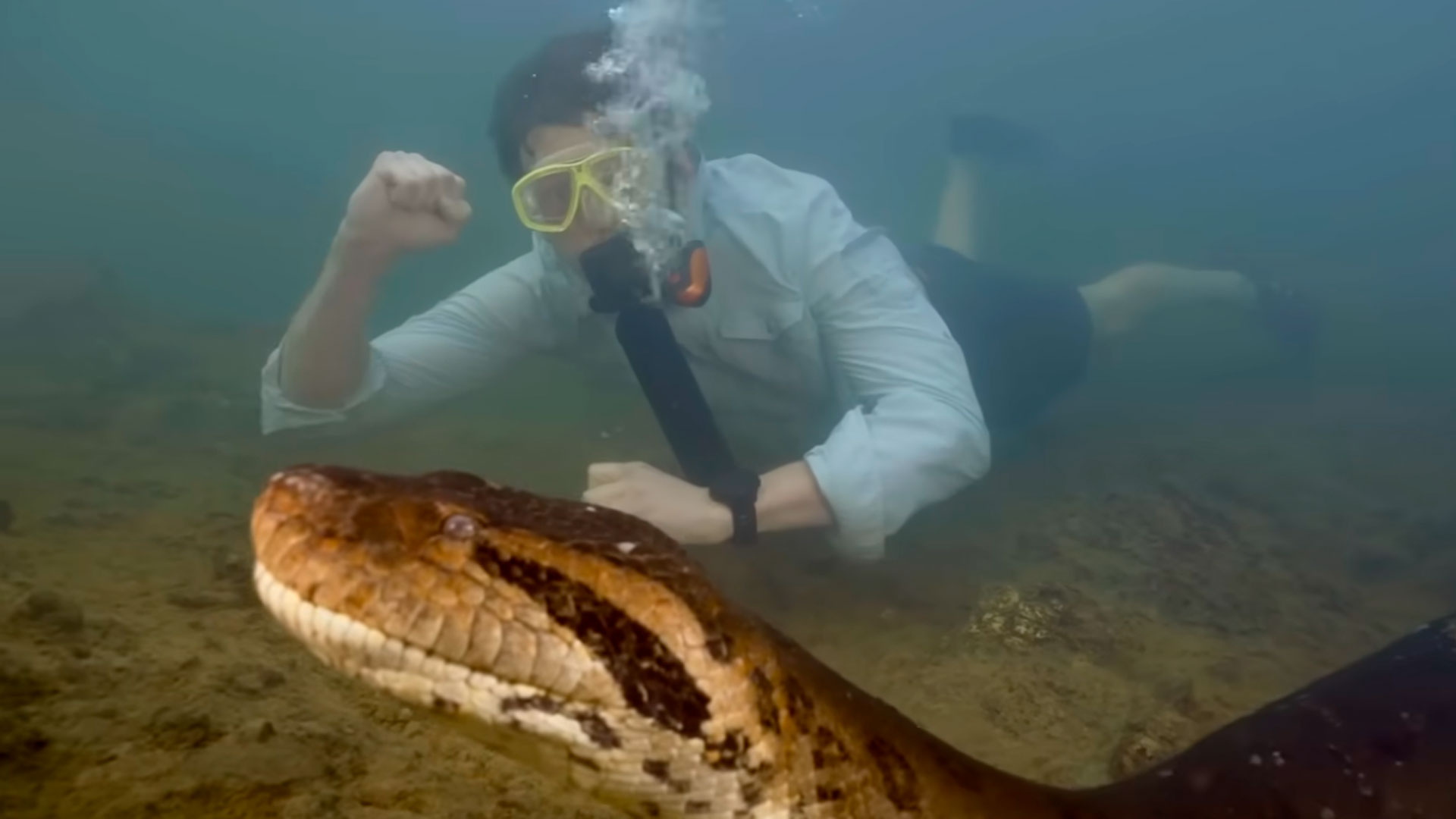
In the following months, videos of the giant snake spread across social media and media outlets, including scenes where Dutch biologist Freek Vonk appears swimming alongside the animal. The size difference between the researcher and the snake helps to illustrate the scale of the reptile, which now holds the title of the largest snake in body mass ever recorded in nature.
-
Former Atacadão Employee Turns Online Cake-Baking Lessons into a Confectionery Brand with Factory, Store, Delivery, and Nearly $400,000 in Revenue

-
Brazilian Startup Sells Nearly 9 Million Surprise Bags of Near-Expiry Food, Prevents Thousands of Tons of Waste, Aiming for $42 Million Revenue by 2026
-
How to Prevent Brown Recluse Spider Bites: Common Hiding Spots and Free Tips to Reduce Risks

-
Natto: The Unusual Japanese Superfood Gaining Popularity on Social Media and Driving Record Exports




The story gained new momentum in 2025 when news portals and specialized websites began to highlight the largest anaconda ever recorded in history and reinforced the role of institutions like the Butantan Institute in disseminating information about anacondas and their ecological importance.
How the Expedition Reached the “Largest Anaconda in the World” in the Ecuadorian Amazon

The discovery of the Eunectes akayima is the result of a ten-day expedition in the Bameno region of the Baihuaeri Waorani territory in the Ecuadorian Amazon. The team was led by Professor Bryan Fry from the University of Queensland, following an invitation from the Waorani people, who had reported the presence of giant snakes in their rivers for years.
The researchers navigated through shallow water river systems, scouring streams and flooded areas in search of the snakes. In various stretches, they reported finding anacondas “lying in wait on the banks,” a typical behavior of ambush predators waiting for prey such as fish, capybaras, aquatic birds, and even caimans.
In the field, the largest specimen measured by the team was a female approximately 6.3 meters long and around 200 kg, considered the largest anaconda ever recorded with robust scientific data. At the same time, the Waorani reported individuals even larger, possibly reaching 7.5 meters and 500 kg, although such measurements still lack formal verification.
Eunectes akayima: What Science Already Knows About the New Green Anaconda
The first genetic studies published in the journal Diversity in February and July 2024 have officially proposed Eunectes akayima sp. nov. as a new species, nicknamed “Northern Green Anaconda.” The research shows a genetic difference of about 5.5% compared to the southern green anaconda (Eunectes murinus), indicating that the lineages separated approximately 10 million years ago.
Despite this genetic distance, the two snakes are visually very similar: large, with greenish coloration and dark spots and extremely robust bodies. According to promotional materials from the Butantan Institute and National Geographic Brazil, green anacondas are considered the largest snakes by body mass on the planet, capable of exceeding 200 kg and surpassing 6 meters, although historical accounts mention individuals even larger.
Indigenous Accounts, Viral Videos, and the Symbolic Power of the Giant Anaconda
For the Waorani, large anacondas are not a novelty: they are part of narratives, myths, and field observations shared for generations. The novelty lies in Western science finally documenting, measuring, and genetically sequencing these snakes, putting into articles what indigenous peoples have been reporting in their own cosmology.
The international expedition was only possible because the Waorani invited researchers into their territory, guiding the group through the rivers and streams they know in detail. In various reports, anacondas are treated as sacred animals that deserve respect and care, emphasizing the importance of collaboration between science and traditional knowledge.
It was in this context that the video of Freek Vonk swimming alongside the anaconda went viral. The scenes, reproduced by outlets like CNN and major international portals, show the biologist serving as a “human ruler” to demonstrate the size of the snake, reinforcing the idea that it is one of the largest reptiles ever recorded in a natural environment.
In Brazil, reports from sites such as National Geographic Brazil, Superinteressante, Terra, and regional outlets helped translate the discovery for the local audience. The articles explain that the new anaconda is not venomous, but a constrictor: it kills by muscular force, coiling around its prey until suffocated, a typical behavior of large anacondas in the Amazon.
This contrast between the “monster” image and the ecological role of the animal fuels the aura of the new species. While it may evoke fear due to its size, the Eunectes akayima has become a symbol of the Amazon’s ability to still surprise science, reminding us that the biome harbors unknown species far beyond giant snakes.
What the Discovery Reveals About Amazonian Biodiversity and Brazil
Although the first confirmed records of Eunectes akayima come from the Ecuadorian Amazon, studies indicate that the species occurs across a broad range in northern South America. There are records or indications in Ecuador, Colombia, Venezuela, Guyana, Suriname, Trinidad, and French Guiana, in areas hydrologically connected to the Amazon basin, which also encompasses Brazilian territory.
From an ecological standpoint, the new anaconda reinforces the status of anacondas as top predators and key species for measuring the health of aquatic ecosystems. Researchers point out that these reptiles can accumulate heavy metals and other pollutants, serving as a “biological thermometer” for the impacts of oil spills, mining, and other vectors of degradation that also affect the Brazilian Amazon.
Scientific Debate, Environmental Threats, and Next Steps in Research
Despite the excitement, the discovery of Eunectes akayima is not without controversy. Recent articles in journals such as Bionomina discuss the validity of the new species, questioning sampling criteria, taxonomic delimitation, and interpretation of genetic data, while some taxonomic lists are beginning to treat the name as a synonym of the classical green anaconda.
Such debates are common in taxonomy and can extend for years until new evidence either consolidates or revises the original proposal. In the meantime, the consensus is that the anacondas in the region remain under intense pressure: habitat loss and fragmentation, deforestation for agriculture, wildfires, dams, and contamination from metals and hydrocarbons increase the risk for populations of long-lived large reptiles.
For Amazonian countries like Brazil, the discussion about the “largest anaconda in the world” goes beyond curiosity and touches on public policy. The discovery, whether consolidated as a new species or adjusted in the future, reinforces the urgency to monitor wildlife, fund long-term research, and strengthen protected areas, especially in border regions where economic pressure is most intense.
When you see an anaconda over 200 kg being called the “largest snake in the world,” do you tend to view it as a threat or as a symbol of the Amazon that still resists? Do you think the fear these images provoke helps engage conservation efforts or merely fuels stigma against large predators? Share your opinion in the comments and participate in the debate about how far humanity can go in exploring the forest without condemning giant species like the Eunectes akayima to extinction.








Encontrar uma espécie de sucuri com esse porte, demonstra o quanto é linda, e rica a nossa Amazônia. Sinalizando para a nossa
responsabilidade, na preservação das espécies. Respeitando a fauna e a flora, mantendo o equilíbrio do bioma, no mandamento da sustentabilidade.