





 Portuguese
  English
  Spanish
  3 min of reading
  0 comments


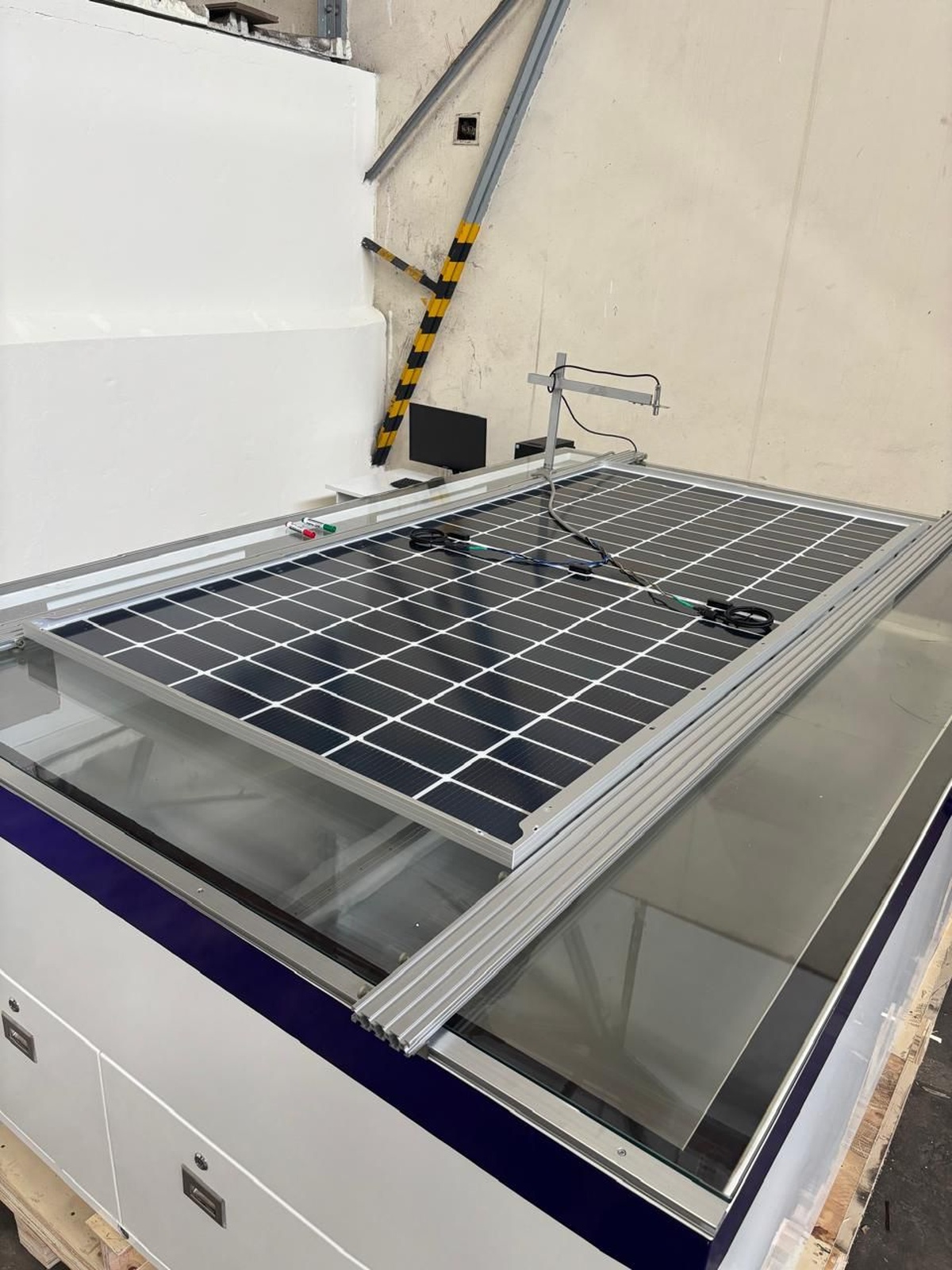
Check Out How State-of-the-Art Equipment Ensures More Efficiency and Confidence for Solar Energy Consumers in the Country
Ronma Solar, a recognized Chinese manufacturer of photovoltaic modules, brought to Brazil, in March 2025, a high-tech resource: the Flash Test Machine.
With it, the company aims to combat “fake power” and reinforce consumer confidence in the national solar energy market.
Installed in Cajamar (SP), the machine conducts rigorous tests that attest to the power and real performance of each panel.
-
How much does it cost to install solar energy at home in 2026? This method of generating energy attracts attention for allowing a reduction in electricity expenses and an estimated financial return between four and seven years, with residential systems costing between R$ 15,000 and R$ 28,000.

-
Surprising study by Scatec reveals that recycling solar panels in Brazil can return R$ 3.18 for every R$ 1 invested, transforming photovoltaic energy waste into a new source of economic value and strengthening the circular economy in the sector.

-
Now it’s law: energy distributors can be penalized for hiding data about solar energy in MS; The measure increases market transparency, reduces barriers for consumers, and accelerates the expansion of distributed generation in the state.
-
How the “solar cat” became a billion-dollar threat to the Brazilian electrical system and put ANEEL on high alert after the explosion of photovoltaic energy, clandestine frauds, and the growing risk of network collapse


Additionally, it provides more safety for distributors, integrators, and end consumers.
Cutting-Edge Technology to Test and Certify Solar Panels
Through the Flash Test machine, Ronma Solar can precisely simulate real solar lighting conditions.
During the process, the power and efficiency of the modules are evaluated in a controlled environment.
Thus, each panel sold in the Brazilian market arrives in perfect working condition.
“The installation of this machine in Brazil demonstrates our commitment to strict quality standards and brand credibility”, states the company.
Moreover, it reinforces the fight against “fake power”, a practice that still compromises part of the national solar energy market.
Positioning and Commitment to Transparency
In addition to being a technical tool of excellence, the Flash Test machine acts as a strategic element for strengthening the brand.
Ronma Solar keeps the equipment open for visitation, allowing interested parties to understand the quality control process.
This way, the company highlights its stance on transparency and seeks to ensure excellence at every stage of production and marketing.
International Recognition and PVEL Certification
Founded in 2018, Ronma Solar has expanded its global presence.
In the 2024 edition of Intersolar Europe, one of the largest trade fairs in the sector, the brand earned the PVEL certification.
This is one of the most respected international recognitions in the performance and reliability of solar modules.
The PVEL evaluates aspects such as:
- Energy Efficiency
- Degradation Rate
- Structural Durability
- Climate Resistance
As the company highlights, “by purchasing a panel certified by PVEL, the consumer is guaranteed to acquire an efficient, durable, and safe system, with international standards”.
Solid Presence in the Global and Brazilian Market
Ronma Solar currently ranks among the 20 largest manufacturers of photovoltaic modules in the world.
Its portfolio includes monocrystalline silicon solar cells and cutting-edge technologies, such as N-Type TOPCon.
This technology offers efficiency of up to 23.25% and ensures linear performance for 30 years.
All products undergo rigorous quality testing and have international certifications such as:
- CE
- CQC
- ISO
- INMETRO
Additionally, the company has three factories in China and is present in over 30 countries.
Strengthened National Distribution Network
The modules from Ronma Solar are available in Brazil through a wide network of partners.
Among the main distributors are:
- Adias Solar
- Sou Energy
- Fotus Solar Distributor
- Helte
- Edeltec
- Grupo Centry
- Izzy Energy
- Techlux Distributor
This way, consumers from different regions can purchase reliable and high-performance products.
Combating “Fake Power” Strengthens the Solar Sector
With the implementation of the Flash Test Machine in national territory, Ronma Solar reinforces its role in combating bad practices in the sector.
The so-called “fake power” not only compromises the efficiency of solar systems but also consumer trust.
This is why the adoption of this quality control technology directly contributes to a more transparent and trustworthy market.
Additionally, it emphasizes the company’s commitment to strictly adhere to current technical standards.






Be the first to react!