Portuguese
  Spanish


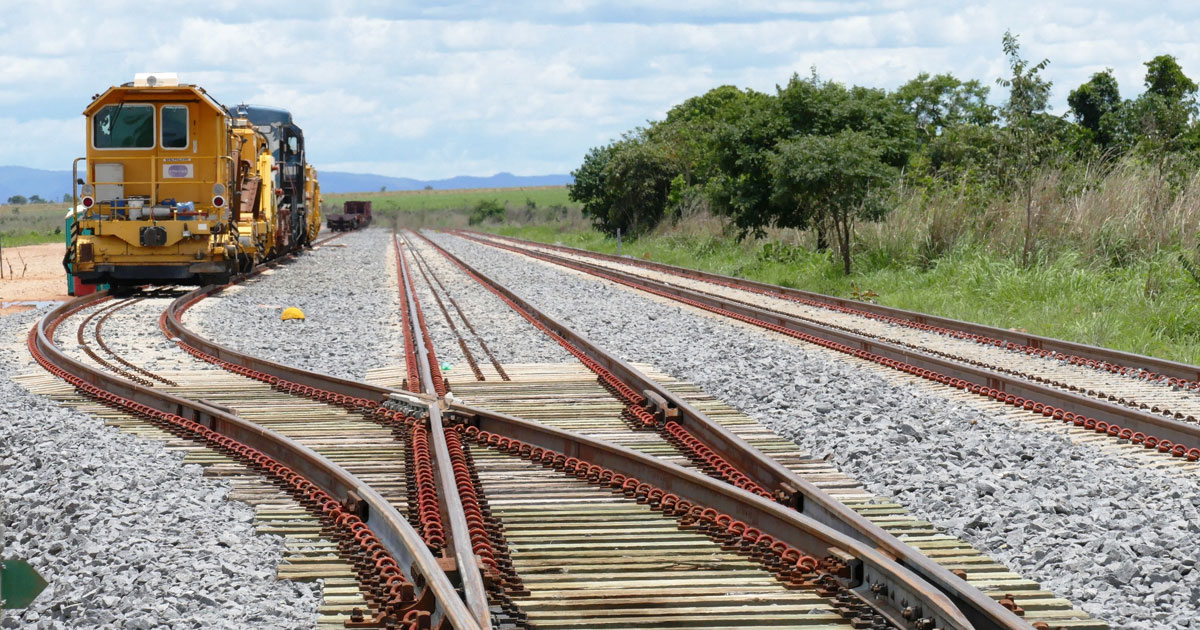

The New Legal Framework for Railways Can Unlock New Projects and Investments. The Measure Reduces Bureaucracy for the Construction of New Railways
Stopped since 2018, the Legal Framework for Railways will result in increased private investments in the railway sector. The measure reduces bureaucracy for the construction of new railways and innovates in the utilization of idle sections and in the provision of rail transport services. One of the changes brought by the provisional measure refers to the permission for the construction of new railways by authorization, similar to what already occurs in the exploration of infrastructure in sectors such as telecommunications, electricity, port, and airport. Check out this news: A section of the Centro-Atlântica Railway in Bahia will receive R$ 3.5 billion in investments
- After an investment of R$ 55 million, the new Itatiaia factory will generate 500 job openings in ES
- New project from Grupo Maratá promises to create 250 job opportunities in the Sergipe region
- ClearSale opens a selection process for remote job vacancies in SP and PR with salaries up to R$ 15 thousand
- Technip starts recruitment for positions in Macaé, Porto do Açu, Rio de Janeiro, and Espírito Santo
- Observatório Social da Petrobras and FNP will sell cooking gas for R$ 60 in SP, PA, and RJ
Attracting New Investments for the Sector
The Minister of Infrastructure, Tarcísio de Freitas, says this current Government has already established itself as the one that has contracted the most railway investment through concessions, amounting to around R$ 30 billion. The time has come to take the biggest leap in the sector since Barão de Mauá. The provisional measure that establishes the Authorized Railways regime in Brazil guarantees jobs and investments where everyone is wanting and looking.
With the Provisional Measure of the Legal Framework for Railways, states, municipalities, and the Federal Government can grant rail transport services that do not belong to the Federal Rail Transport Subsystem, currently constituted by existing or planned railways, belonging to the major inter-state, inter-regional, and international integration axes. It will be up to the Union, however, to establish the guidelines to ensure the system’s efficiency.
-
Brazil to Issue “Panda Bonds” in China, Aiming to Raise Up to 5 Billion Yuan at Lower Interest Rates Than Dollar Debt
-
NATO Faces Internal Tensions as U.S. Pushes for Increased Defense Spending, Targeting 5% of GDP by 2035, with Warnings for Countries Near 2% Level

-
Brazil to Introduce B16 Diesel with Increased Soybean Oil Content for Trucks by 2026
-
Brazil’s July Bolsa Família Payments May Include Extra $150 and $50 for Families with Children, Pregnant Women, and Updated CadÚnico Registration


Projects That Could Be Created with the New Legal Framework for Railways
In public railways, in addition to the current model of granting by concession, granting will be allowed in a simplified manner, by permission. Another novelty of the provisional measure is the simplification of the procedure to provide rail transport services as an Independent Railway Operator. Now, it is enough to present the required documentation to the National Agency of Ground Transport (ANTT), and the authorization will be issued automatically.
The measure also allows current concessionaires, if harmed by the operation of an authorized railway or if they commit to expanding the service, to migrate to the new authorization legal regime. This migration will not harm obligations contained in the current contracts regarding investments and maintaining passenger transport.
Check out this news: R$ 26 billion in investments are planned for the railways of Minas Gerais, with the generation of over 370 thousand jobs
The Governor of Minas Gerais, Romeu Zema (Novo), signed a decree to transfer the administration of 19 railways in the state to the private sector. The expectation is to attract around R$ 26.7 billion to the railway sector. According to the Government, the exploration of shorter lines, known as “shortlines,” can generate over 370 thousand jobs.
The desire, according to the Government, is to enable the first railway section in the country managed under the authorization model, whereby a private company operates at its own risk. With this movement, the state of Minas Gerais anticipates the National Congress, which has yet to approve the bill allowing this type of regime in federal railways.
The Legislative Assembly of the State of Minas Gerais has already approved the model, with only the regulation pending, dispatched this Tuesday by Governor Romeu Zema. Minas has mapped 19 projects that could potentially be operated under the authorization model, with estimated investments of R$ 26.7 billion. The Government of the state of Minas Gerais is already planning which section of railways will debut the new regime: 130 kilometers of tracks between the cities of Lavras and Varginha. The railway project involves VLI Logística, which currently holds the concession for this section but has abandoned its operation, according to state Secretary of Infrastructure and Mobility, Fernando Marcato.