






 Portuguese
  Spanish
  4 min of reading
  0 comments



In September 2023, the Brazilian Navy purchased ten portable VHF marine transceivers IC-M25 for R$ 10,200.00; in November, technicians from the Hydro-Oceanographic Ship Amorim do Valle detected fakes without “Mike” channel, with failing audio plugs and without Anatel certification number, a fact that led the Superior Military Court to convict the supplier for fraud in bidding, raising an alert about vulnerabilities in public procurement and the security of naval communications.
The story began in September 2023, when the Navy launched electronic waiver to acquire 10 portable VHF marine transceivers IC-M25 (ICOM), standard in short-range communications on military vessels. The winning bid, of R$ 10,200.00, promised original equipment certified by Anatel, ensuring interoperability and operational safety.
However, upon arrival at the Hydro-Oceanographic Ship Amorim do Valle in November 2023, the radios raised suspicions. The information was revealed by the Military Society, which detailed the technical investigation conducted by the force itself. Right in the triage, experts verified incompatibility of internal components, audio plug failures, absence of the “Mike” channel (used in military communications) and lack of certification number and Anatel seal. In short: they were not ICOM.
As an aggravating factor, the estimated loss reached R$ 16,680.00 — an amount that could not be reapplied due to the closure of the fiscal year, leaving the ship without the necessary transceivers to carry out its routine of hydrographic missions.
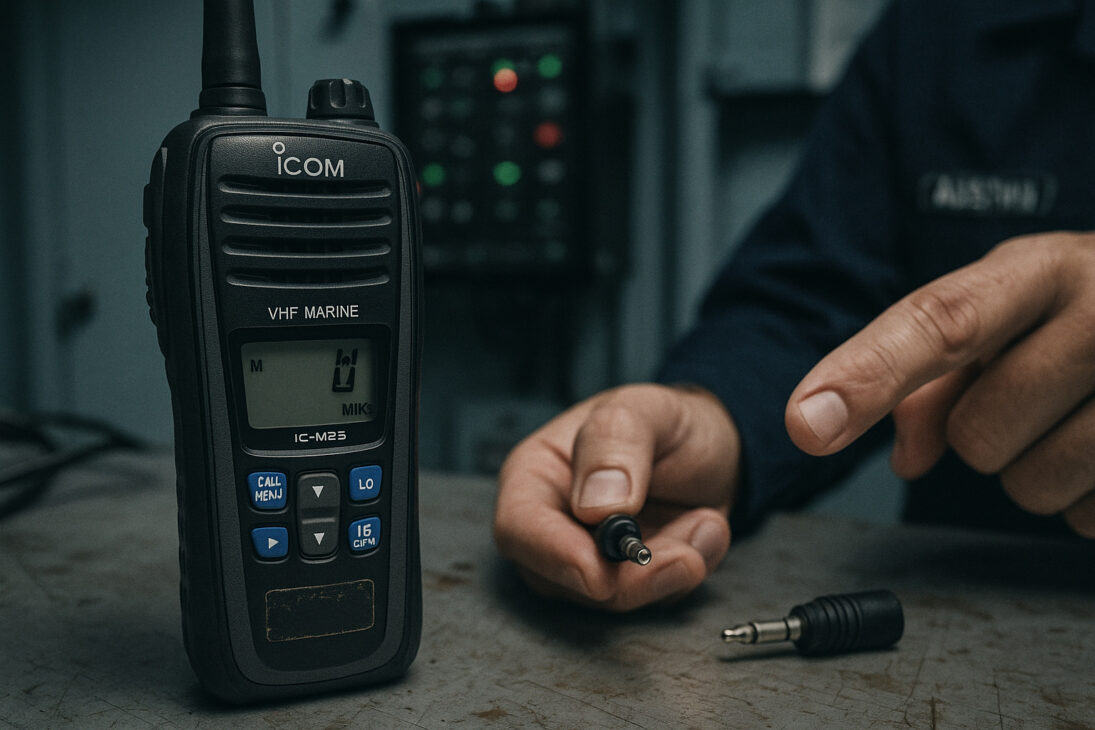
The Confession That Turned the Case: Purchase on AliExpress and Change of Direction at STM
During the interrogation, the representative admitted to having acquired the products from the Chinese site AliExpress, acknowledging the unauthorized origin. The confession weighed heavily: the Military Public Prosecutor’s Office (MPM) appealed the initial acquittal and brought the case to the Superior Military Court (STM).
In the trial, reporting minister Odilson Sampaio Benzi argued that there was a lack of evidence of intent, or that is, of deliberate intention to deceive the Administration. However, reviewing minister Péricles Aurélio Lima de Queiroz disagreed, pointing out that the maintenance of the contract even after questions, the refusal to replace the equipment and the awareness of the non-originality constituted clear intent.
The divergence was decisive: the majority of the ministers sided with the reviewer’s vote, resulting in the conviction of the supplier for fraud in bidding. The ruling also mentions reports highlighting incompatibility with transceivers already in use on the ship, absence of MIKE channels, non-functioning audio plugs and lack of Anatel certification (EVENTO16-INQ1, fls. 10/17), reinforcing that they were counterfeit goods.
The Sentence, Legal Framework, and the Educational Effect of the Conviction
In the sentencing, the reviewing vote set four years of imprisonment, reduced due to attempted fraud — an understanding aligned with the STJ, as payment was suspended before consummation. The final result: 1 year and 4 months of imprisonment, in open regime, with sursis and right to appeal in freedom.
Although lenient in numerical terms, the sentence is symbolic and preventive: it signals that crimes against the Military Administration will have reprimand, even when involving modest amounts. For the MPM, the episode warns against the use of foreign platforms in the acquisition of strategic inputs. As summarized by a prosecutor interviewed in the report, “irregular supply compromises public resources and the security of naval communications.”
Besides the specific case, the STM reinforces a sensitive point: military bids are vulnerable to fraud with imported products without certification, especially when there is overconfidence in supplier declarations and insufficient prior verification.
-
The military spaceplane that almost took the Cold War into orbit: Boeing X-20 Dyna-Soar was designed to re-enter above Mach 20, fly for up to 40 hours, land like a plane, and transform Titan rockets into a gateway to a new era of orbital warfare.

-
FAB bets on national drones and increases investments to strengthen the Brazilian aerospace industry

-
Six times, a luminous crescent the size of the Moon startled the Soviet sky at dusk: it seemed like a wave of UFOs, but it was a secret orbital weapon created to attack the United States via the South Pole and evade Cold War radars.

-
The United States government approved a potential sale of 100 portable Stinger anti-aircraft missiles to the Brazilian Army, in a package estimated at around 330 million dollars that still depends on negotiations between the two countries.




What Is at Stake: Security, Interoperability, and Credibility
More than the loss of R$ 16,680.00, the case exposes strategic risks in a time of electronic warfare and encrypted communications. A single non-certified portable VHF marine transceiver can open critical vulnerabilities — from interception to interferences, through breakdowns of interoperability between vessels, command centers, and other systems.
As a consequence, the STM’s decision tends to reverberate in acquisition protocols: rigorous document checks, demand for certificates of origin and compliance, verification of Anatel certification, technical compatibility tests and supply chain audits. In parallel, tougher contractual clauses can reduce incentives for fraud and facilitate replacements when originality is contested.
Finally, the episode puts credibility on the line. In naval communications, trust is an operational asset: fake equipment is a breach, and breach is a risk. For Brazil, the case serves as a concrete example of how administrative breaches become strategic threats — especially when secure communications are vital for national defense.
From Announcement to Conviction: The Crucial Points
- Sep/2023: opening of the electronic waiver for 10 IC-M25 (ICOM).
- Value of the winning proposal: R$ 10,200.00 (original and certified by Anatel).
- Nov/2023: arrival at the Amorim do Valle and suspicions of counterfeiting.
- Technical findings: internal incompatibility, audio plugs with failures, absence of “Mike” channel, no certification/Anatel number.
- Estimated loss: R$ 16,680.00 (unable to be reapplied due to closure of the fiscal year).
- Confession: purchase on AliExpress.
- Trial at STM: reporter Odilson Sampaio Benzi (no intent) × reviewer Péricles Aurélio Lima de Queiroz (intent present).
- Outcome: conviction for fraud in bidding.
- Final sentence: 1 year and 4 months, open regime, sursis, appeal in freedom — reduction for attempt (payment suspended), in line with the STJ.
- S systemic effect: warn for military public procurement and communication security.
Overall, the facts describe fraud in bidding, delivery of different goods, equipment not produced by ICOM, without Anatel certification, and direct operational impact on an active ship. According to the article published by the Military Society, the conviction serves as a brake on suppliers betting on counterfeits, as well as stimulating governance in defense procurement.







-

-

-

-

7 people reacted to this.