Portuguese
  Spanish


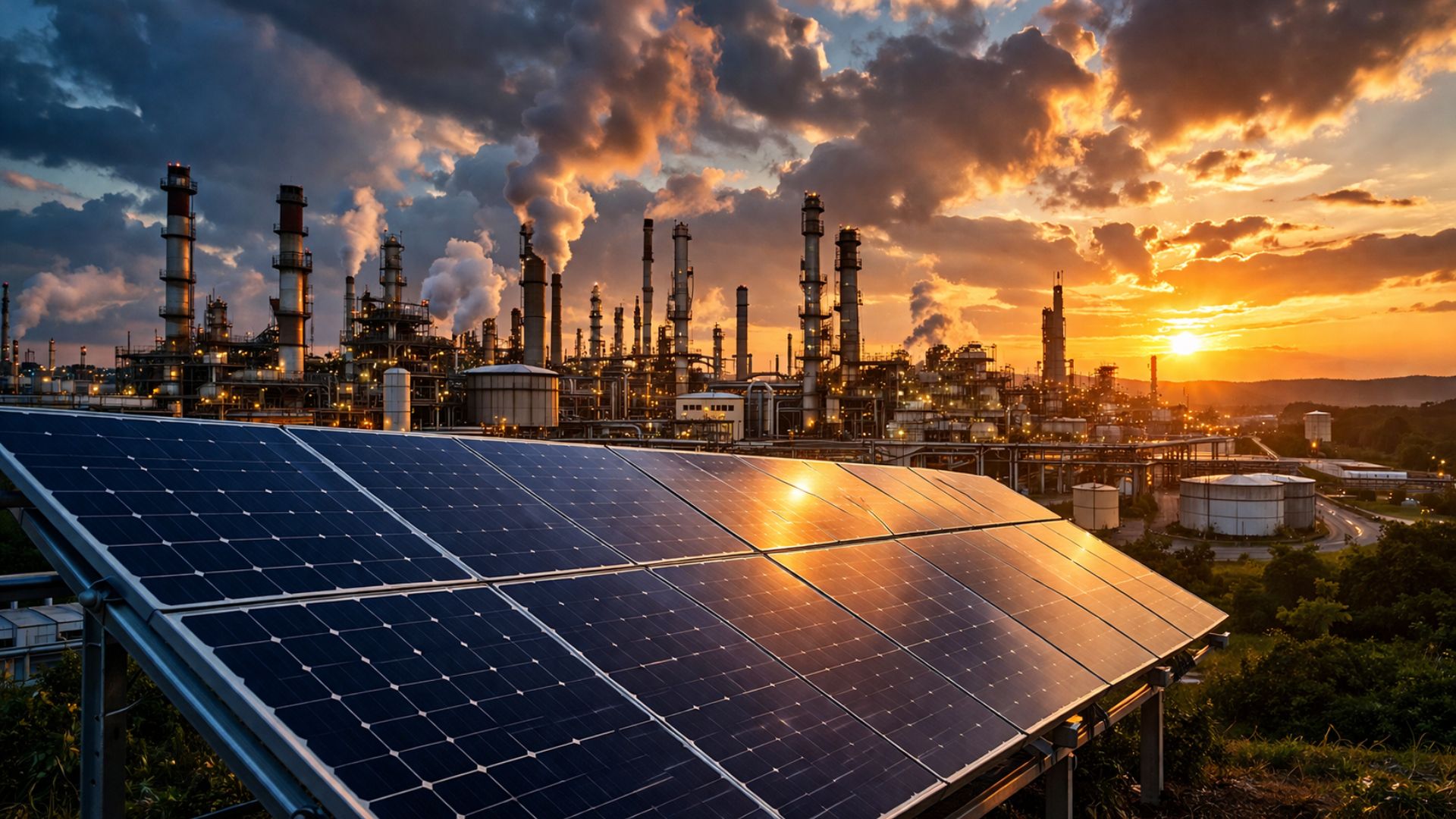

The Mataripe Refinery advances in the energy transition with the strategic use of solar energy, reducing emissions, cutting operational costs, and adopting a sustainable model that can generate impact in the Brazilian refining sector.
The Mataripe Refinery establishes itself as a great example of the energy transition in Brazil by integrating solar energy on a large scale and promoting structural changes in its operation. Located in Bahia and operated by Acelen, the unit managed to reduce total energy consumption by 11% between 2022 and 2025.
According to information from Cenário Energia, the advancement is not limited to energy efficiency. The refinery also reduced its CO₂ emissions, modernized industrial processes, and began operating with 100% of its external electricity demand met by solar sources. This represents a significant change in a sector historically intensive in energy consumption.
Mataripe Refinery advances with solar energy and redefines industrial standards
The transformation of the Mataripe Refinery is directly linked to the strategic use of solar energy within a broader energy transition plan. The company adopted integrated measures ranging from renewable generation to consumption optimization.
-
More than 1,000 residents of a remote island in Kiribati now have clean water and electricity with solar systems operated by the community itself.

-
Island in Brazil Innovates by Installing 184 Solar Panels on Urban Lagoon to Generate Clean Energy
-
Japanese Island of 417 Residents to Test Living Half the Year Solely on Solar Power, Reducing Dependence on Diesel Brought by Ship
-
Brazilian Fishermen Use Solar Power to Produce Nearly One Ton of Ice Daily, Preventing Fish Spoilage Before Reaching Market



The practical result was an 11% reduction in the total energy consumption of the unit, considering steam, electricity, and natural gas. This volume of saved energy is equivalent to the residential consumption of an entire state like Roraima, which helps to gauge the impact of the initiative.
More than just savings, this change creates a solid foundation for a more resilient industrial model. The predictability of energy costs and reduced dependence on fossil fuels increase the competitiveness of the operation in the long term.
How the energy transition is transforming processes within the refinery
The energy transition at the Mataripe Refinery did not happen in isolation. It was built upon significant technical changes, mainly in the way energy is utilized in industrial processes.
One of the main advancements was the gradual replacement of thermal energy with electrical energy. This change contributed to a reduction of approximately 10% in steam consumption, one of the most energy-intensive elements within a refinery.
Additionally, there was a direct impact on emissions. The reduction of about 4% in CO₂ demonstrates that the electrification of processes is an efficient way to decrease carbon intensity in the oil and gas sector.
This type of strategy is aligned with the recommendations of the International Energy Agency, which points to electrification as one of the main tools for decarbonizing heavy industries.
Solar energy ensures autonomy and operational stability at the Mataripe Refinery
One of the most relevant pillars of this transformation was the commissioning of Acelen SolarPark I, considered the largest proprietary solar park associated with a refinery in Brazil in the segment.
Located in the semi-arid region of Bahia, the project has an installed capacity of 162 MWp, taking advantage of one of the regions with the highest solar incidence in the country. As a result, the Mataripe Refinery now has 100% of its external electricity demand met by solar energy.
The impacts of this change are clear and direct:
- Reduction of dependence on fossil sources
- Greater predictability of energy costs
- Less exposure to price volatility
- Consistent decrease in carbon emissions
The project was developed in partnership with Illian Renewable Energies and Perfin Infra, and also integrates the Growth Acceleration Program.
Technological modernization reduces consumption and strengthens energy efficiency
Another important point in the evolution of the Mataripe Refinery was the modernization of internal systems, especially in the lighting area. More than 10,000 fixtures were replaced with LED technology, resulting in a reduction of up to 70% in energy consumption in this specific system.
Although it may seem like a simple change, the impact is significant when applied on an industrial scale. The initiative also helps avoid about 2,900 tons of CO₂ over the lifespan of the equipment.
These actions show that energy efficiency does not depend solely on large projects. Small improvements, when well planned, can yield significant gains both economically and environmentally.
Mataripe Refinery’s Strategy Puts Energy Transition at the Center of Competitiveness
The strategy adopted by the Mataripe Refinery places the energy transition as a central element to ensure competitiveness in the market. In a global scenario of pressure for decarbonization, companies that do not adapt tend to lose ground.
Among the main differentiators of this model are:
- Integration between renewable generation and operational efficiency
- Consistent reduction of structural costs
- Greater resilience to fluctuations in the energy market
- Strengthening of the institutional image linked to sustainability
This combination positions the refinery as a reference in Brazil and creates a possible path for other industrial units.
What This Change Represents for the Future of Refining in Brazil
The advancement of the Mataripe Refinery should not be seen as an isolated case, but as an indication of a broader transformation in the Brazilian energy sector. The adoption of solar energy and the improvement of operational efficiency point to a new standard of operation.
According to the Energy Research Company, Brazil already has one of the most renewable electricity matrices in the world, which favors the expansion of solutions like this.
In this context, the trend is that other refineries and energy-intensive industries will begin to invest in similar models, seeking to reduce costs and emissions at the same time.
In the long term, this could contribute to:
- Increased competitiveness of the national industry
- Reduction of the carbon footprint of the energy sector
- Greater attraction of sustainable investments
- Alignment with global environmental goals
A new path to cleaner and more efficient refining
The recent trajectory of the Mataripe Refinery shows that the energy transition is no longer just a trend but is becoming a reality. The integration of solar energy with energy efficiency practices can generate a more modern, sustainable, and competitive model.
The results achieved, such as an 11% reduction in energy consumption, a 4% decrease in CO₂ emissions, and the adoption of 100% external electricity from solar sources, demonstrate that structural changes are possible even in complex sectors like refining.
More than an operational advance, it is a clear signal of the future. Companies that adopt similar strategies will be better prepared to face the challenges of an increasingly demanding market in environmental and economic terms.
For Brazil, initiatives like this reinforce the potential for leadership in the transition to a low-carbon economy, with direct benefits for industry, the environment, and society.