






 Portuguese
  Spanish
 4 min of reading
  0 comments


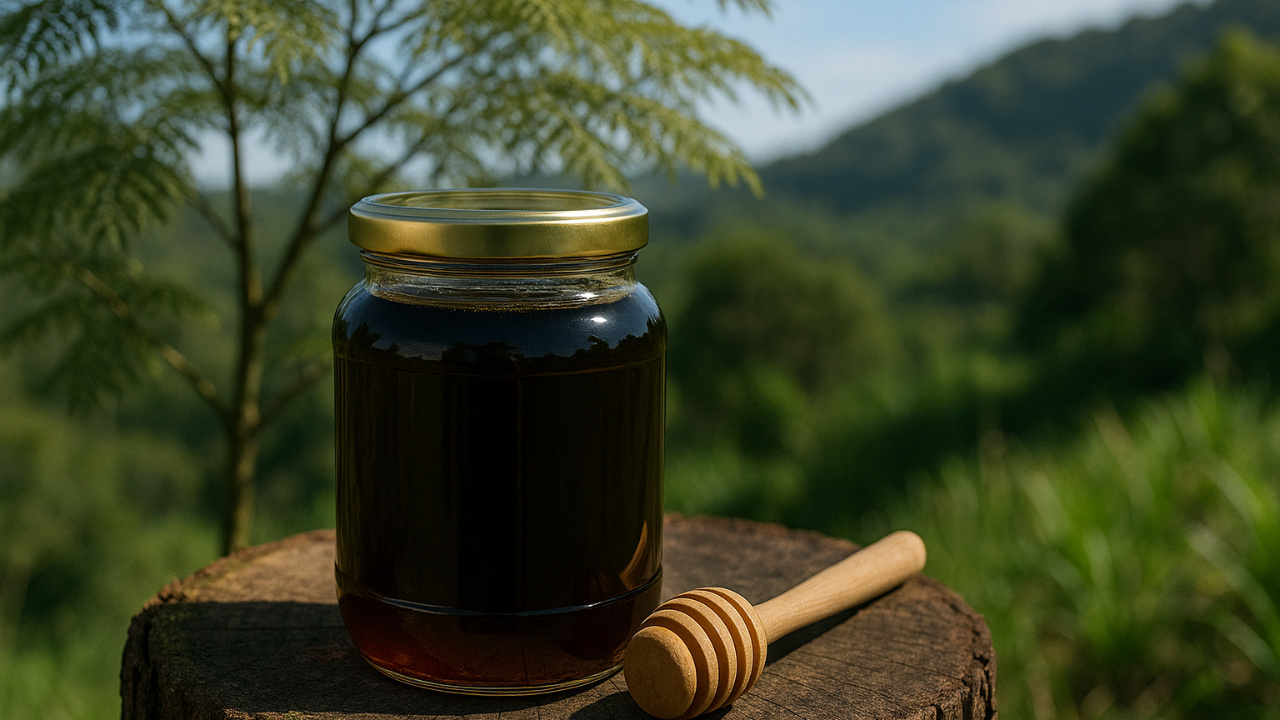
IG Elevated Bracatinga Honeydew to the Top of Brazilian Beekeeping, Making It One of the Most Sought-After Premium Honeys Abroad.
The honey from bracatinga honeydew, previously ignored by beekeepers, has become one of the most valued products in Brazilian beekeeping after international research confirmed its unique composition.
The recognition, which began in the 2000s and was consolidated with the achievement of Geographical Indication (IG), boosted premium honey production in the Southern Plateau, a region that includes municipalities in Santa Catarina, Paraná, and Rio Grande do Sul.
The change occurred when physicochemical analyses conducted by German researchers revealed the unique properties of the honey, which triggered a growing demand abroad, especially in Germany.
-
Brazilian promises his children to save a river, creates an eco-barrier in his backyard, has already removed more than 40 tons of trash from the water, and even inspires the idea in other states of the country.

-
How a Brazilian company created a system that transforms broken pallets of any brand into new assets, recycles 80 tons of plastic per month, and found a profitable solution to a problem that challenges industries across the country.

-
Invasive bullfrog capable of devouring other amphibians and laying up to 20,000 eggs is found in Florianópolis, raising an alert about the threat to native fauna.
-
It looks like a baby, but it’s an adult: meet the Bornean pygmy elephant, the smallest elephant in the world threatened by habitat loss.

In the very first international studies, the market realized that the honey had distinct characteristics, high mineral content, and unique flavor.
The Federation of Beekeepers and Meliponists Associations of Santa Catarina (Faasc) confirms that the transformation of the sector occurred precisely because of this new scientific understanding, which repositioned the product as an item of excellence in the global market.
Bracatinga Honeydew Becomes a World Reference for Premium Honey
The rise of bracatinga honeydew began when German researchers analyzed Brazilian samples and were “enchanted” by the product’s characteristics.
According to Faasc president, Agenor Sartori Castagna, the scenario was completely different before these discoveries.
“Before that, beekeepers wouldn’t even set up hives under the bracatingas when they began to exude, because honeydew comes from the trunk, not the flower, and had no commercial value,” recalls Castagna.
He explains that the change was radical after scientific confirmation: “When the Germans got to know this honey, they were enchanted. Since then, the product has been in demand.”
The Interaction Between Tree and Insects That Creates a Unique Honey in Brazil
The uniqueness of bracatinga honeydew is directly related to the interaction between the native tree Mimosa scabrella and the scale insect Stigmacoccus paranaensis.
While the bracatinga offers nectar and pollen at the end of winter, it is the sugary exudate released by the insects that becomes the raw material transformed by the bees.
This natural combination results in a honey with a dark color and strong flavor. For Castagna, the color is a direct indicator of purity.
“The darker, the purer. Pure honeydew has superior quality […] This honey only exists here,” he asserts.
UFSC Research Reinforces Value and Boosts IG
Starting in 2016, the Food Chemistry Laboratory at the Federal University of Santa Catarina intensified studies to confirm the biochemical differential of the honey.
The results showed high levels of amino acids, citric acid, and mineral salts, indices higher than those found in regular honeys.
The official recognition came on July 21, 2021, with the approval of the Geographical Indication (IG) Origin Denomination.
Production ranges between 3,000 and 3,500 tons every two years, following the scale insect cycle. Nearly all of it goes to a single destination: “It’s 99% for Germany.”
<p"They value it highly because it's a special honey, with more proteins, less sugar, and medicinal properties," emphasizes Castagna.
IG Strengthens the Production Chain and Professionalizes Beekeepers
The Geographical Indication reorganized the sector by demanding technical standards, traceability, and rigorous physicochemical analyses, ensuring product authenticity.
For this, Faasc received support from Sebrae in implementing the regulations.
The apiaries need to be georeferenced, reports must prove the absence of mixing with floral honey known as “bugio honey,” and audits are conducted at the packaging units.
Starting in 2026, an automated system will strengthen control over origin and quality.
Currently, ten companies and 43 beekeepers are officially registered. The impact is direct: the share of honeydew honey in fair sales jumped from 40% to 60% after certification, according to IG manager Caroline Maciel da Costa.
Bracatinga Preservation and Tourism Strengthen the Territory
To increase production and conserve the biome, technical events have been guiding producers on bracatinga management, dormancy breaking, and seedling planting.
Additionally, municipalities that lost native areas received donations of seedlings for schools, integrating environmental education.
Another expanding initiative is the “Lambedor Route,” created in Lages, which connects artisanal producers, inns, and tourist trails dedicated to bracatinga honeydew.
The combination of conservation, certification, and professionalization confirms that Brazilian beekeeping in the Southern Plateau is experiencing a new cycle.








Be the first to react!