






 Portuguese
  Spanish


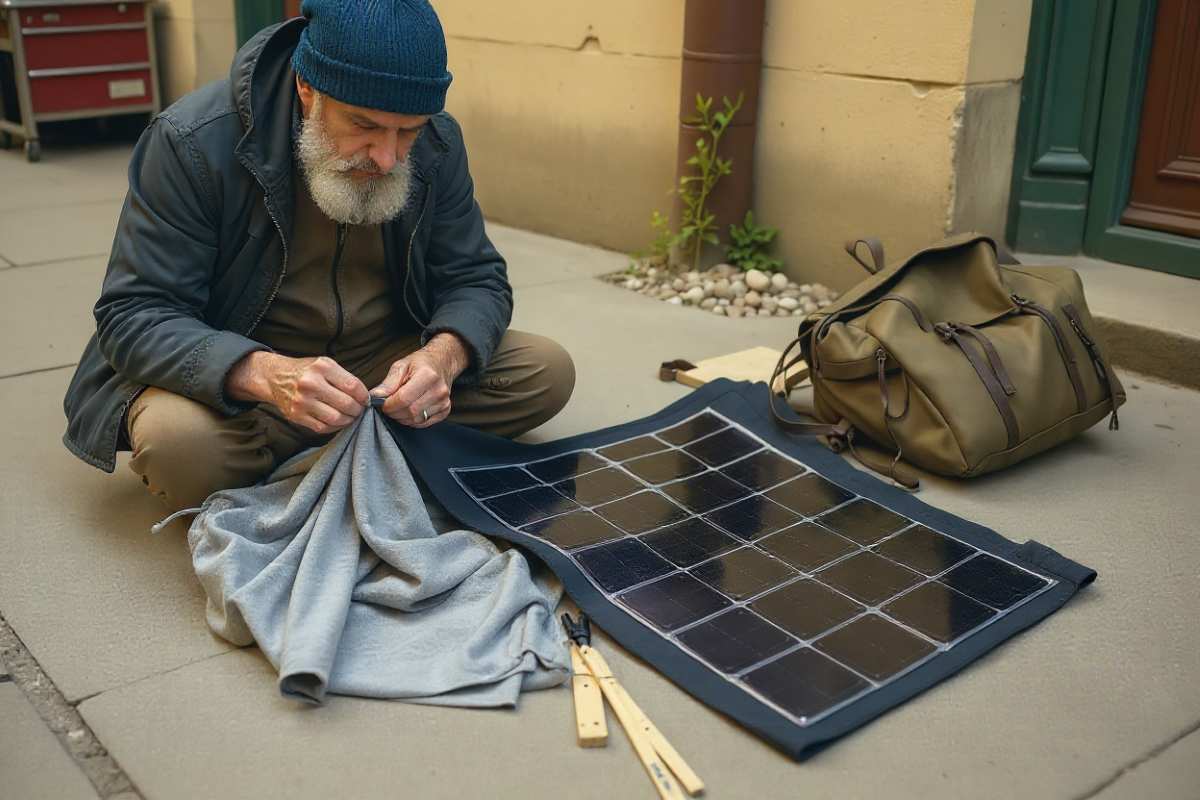


A 12-Year-Old Student Decided To Face The Cold Of The Streets With An Innovative Idea. Inspired By The Reality She Saw Daily In Glasgow, Rebecca Created A Solar Thermal Blanket That Works Without Electricity, With The Support Of Engineers And Focus On Sustainable And Human Solutions.
Rebecca Young, a Scottish student just 12 years old, managed to turn a simple idea into a practical innovation with the potential to save lives. She developed a solar-powered thermal blanket that keeps homeless people warm for up to eight hours overnight.
The most important thing is that the invention has already been brought to life and has become a functional prototype, with the support of engineers and specialized companies.
The project combines solar panels, smart batteries, and thermal sensors. Everything has been designed to be portable, efficient, and easy to use in street situations where there is no access to conventional electricity.
-
World’s Largest Particle Accelerator Begins Four-Year Hiatus for Magnet Overhaul, Aiming to Hunt Dark Matter by 2030

-
“Sahara Dust Turns Rain Red, Startling Residents Across Europe”
-
Stanford Scientists Develop 20-Cent Paper Centrifuge Inspired by Ancient Toy, Spins at 125,000 RPM Without Electricity, Separates Plasma in 1.5 Minutes, Aiding Diagnostics in Remote Areas

-
World’s Largest Vaccine Manufacturer, Immunizing Two-Thirds of Global Infants, Originated in a Pune Horse Farm





The structure, similar to a sleeping bag, offers thermal protection, moisture resistance, and can be transported like a backpack.
Idea Inspired By The Streets Of Glasgow
Rebecca studies at Kelvinside Academy in Scotland. Every day, she saw people sleeping on the cold streets of Glasgow. This reality troubled her. Instead of ignoring the situation, she decided to take action.
She created a solution that could provide constant warmth throughout the night, without relying on outlets or electrical cords.
The student had a simple and efficient idea: to use sunlight during the day to charge batteries that, at night, heat the blanket.
The closed design helps to retain body heat for a longer time, which is essential for protection against intense cold, especially on damp and windy nights.
From School Project To Real Prototype
With the help of the British Primary Engineer educational program and the Thales company, Rebecca’s invention came to life. The Thales team, made up of apprentices and young engineers, took on the task of making the idea real.
They focused on three main points: ensuring energy autonomy, maintaining heating efficiency, and facilitating use.
The group developed an automatic control that activates heating when the outside temperature drops. This allows the battery to last longer since the system doesn’t stay on all the time.
Additionally, the backpack was designed with a rigid structure, allowing the solar panels to continue capturing energy even while the person is moving.
The parts of the prototype were made with 3D printers after being designed in digital modeling programs. The system underwent thermal simulation tests and its performance was evaluated under different conditions.
Active Participation Of The Young Inventor
Rebecca closely followed the development of the prototype. During a visit from the engineering team to the school, she saw the fruits of their labor up close.
The team presented thermal cameras, explained the mechanisms used, and showed that the project remained true to its initial idea.
The young girl was satisfied. For her, the most important thing was to see that her proposal became something useful, without losing its essence: to provide concrete help to people experiencing homelessness.
Applications Beyond The Street
Although created with the homeless in mind, Rebecca’s invention can be useful in other contexts.
The Thales team believes that the solar blanket can be used in emergency situations, such as natural disasters or rescues in mountainous areas. It can also serve travelers, backpackers, and people camping outdoors.
Another important point is that the blanket does not rely on pollutant fuels, such as gas or kerosene.
Therefore, it also represents a contribution to the fight against the climate crisis by harnessing a clean and renewable source: the sun.
Education That Transforms Ideas Into Solutions
Rebecca’s case shows the value of educational programs that encourage creativity and connect students to the real world.
The Primary Engineer does exactly that. By providing guidance and access to engineering tools, these programs help young people transform social concerns into practical innovations.
With technical support, students learn more than just theories. They see how their ideas can come to life and make a direct impact on people’s lives.
Technology With Purpose And Real Impact
Rebecca’s creation proves that the combination of empathy and knowledge can generate important solutions. Her solar blanket is more than just a product.
It represents a new way of thinking about technology: a tool in service of human dignity.
The proposal can also pave the way for humanitarian organizations. NGOs, for example, could distribute the equipment in refugee camps or regions affected by conflicts.
In rural areas without electricity, both in developed countries and isolated regions, the blanket would also be useful.
A More Just Future Can Begin With A Simple Idea
Rebecca’s work shows that sustainability is not a distant concept.
It is a responsibility that anyone can take on. The young Scot provided a clear example: even at the age of 12, it is possible to create something innovative, functional, and purposeful.
Her solar thermal blanket is more than an invention. It is a concrete response to cold, inequality, and the urgent need to think of sustainable and accessible solutions.


