






 Portuguese
  Spanish


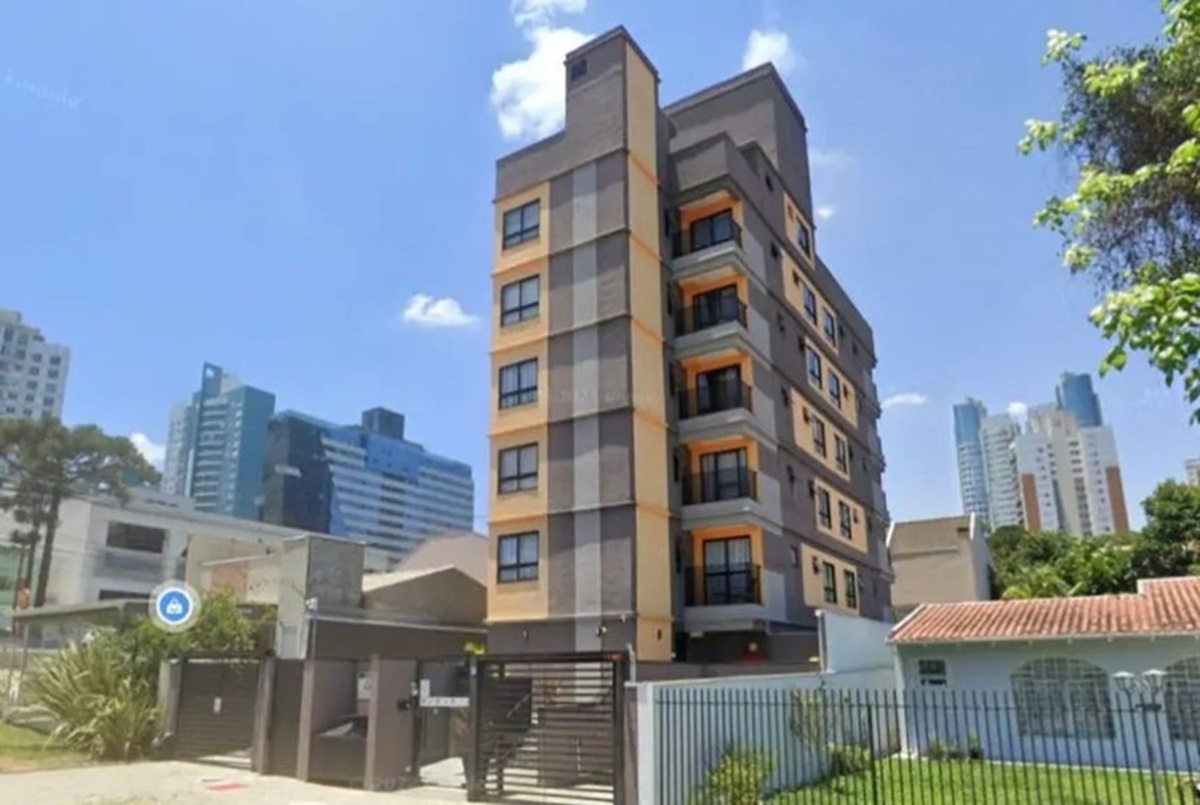


Amid The Rapid Growth Of Large Cities, The Search For More Compact And Affordable Housing Is Transforming The Brazilian Real Estate Market. With Land Increasingly Valued And The Increase In Demand For Practicality, Developments Are Emerging That Reduce Space To A Minimum, But Promise Strategic Location And Lower Maintenance Costs
The search for housing in Brazil’s large urban centers is transforming the concept of an apartment. Today, we will talk about what could be the smallest apartment in Brazil.
With high prices, increasingly scarce land, and a population seeking practicality in central regions, the so-called micro apartments have emerged, betting on extremely reduced spaces.
In this scenario, two developments have gained national attention: Vivart, in Curitiba, with units of just 9.8 m², considered the smallest apartment in Brazil, and VN Higienópolis, in São Paulo, which for years was a reference for offering homes of 10 m².
-
Abandoned warehouse hid a giant collection of rare computers, with over 2,000 artifacts from the 1930s to the 1980s.

-
Scientists warn that melting ice is triggering an alarming chemical transformation in preserved areas, and the first signs are already concerning researchers worldwide.

-
China placed 198 robotic legs under a 7,600-ton school and made the building walk 62 meters in 18 days, rotating the historic structure as if a concrete structure had gained feet to escape demolition.

-
Distributor confirms the premiere of ‘Dark Horse’, Bolsonaro’s film, in 650 cinemas with 99% of copies dubbed.



The Case Of Curitiba
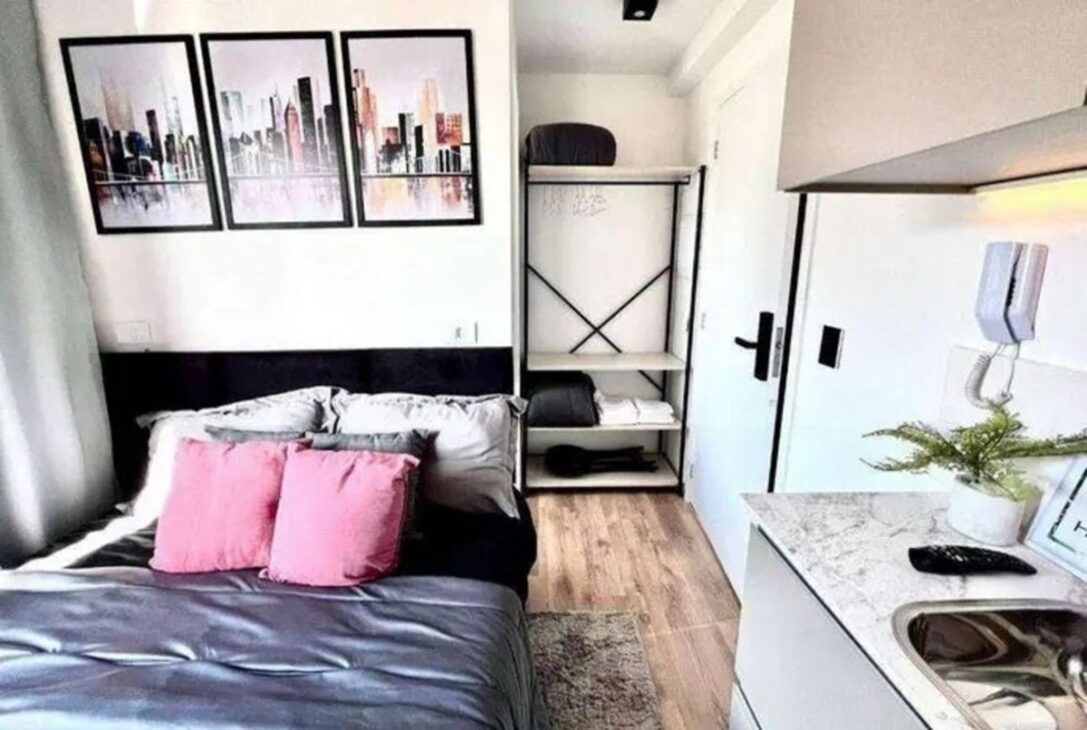
In Curitiba, the construction company Basesul launched in 2023 the Vivart development in the Rebouças neighborhood, featuring apartments of 9.8 m².
The announcement caused controversy because it surpassed the psychological barrier of 10 square meters, something that already seemed too cramped.
The units are equipped with a foldable bed, compact kitchen, full bathroom, and space that can transform into a study or dining area.
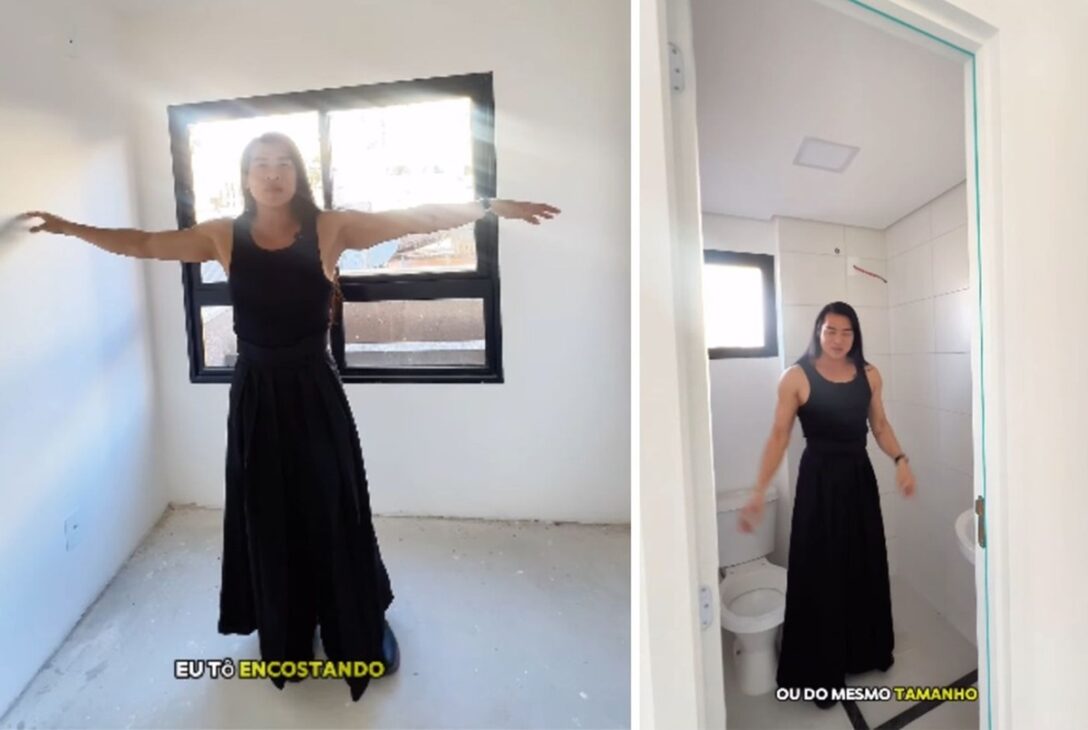
The company’s bet is on the so-called versatility of smart furniture, a concept already popular in countries like Japan and Hong Kong, where tiny apartments are common.
Despite the reduced size, the properties feature large common areas to compensate for the private limitation.
Vivart offers a gym, shared laundry, coworking spaces, and social areas aimed mainly at young professionals, students, and investors looking for profitability in short-term rentals, such as Airbnb.
The price, on the other hand, is not so compact: units of this type have been advertised in the range of R$ 100 thousand to R$ 120 thousand, which represents an extremely high price per square meter compared to larger apartments in the same city.
Last year, a unit was advertised for R$ 150 thousand. Rental costs around R$ 1,200 per month and the condominium fee is approximately R$ 400.
Video shows in detail the smallest apartment in Brazil.
The Pioneer Of São Paulo: 10 m² In Higienópolis
Before Curitiba took the lead in “miniaturization”, the title of smallest apartment in Brazil was attributed to the VN Higienópolis development, in the Santa Cecília neighborhood, in São Paulo.
The project offered units of 10 m² — slightly larger than those in Curitiba, but still considered micro apartments by any standard.
Located in a central and valued area, the VN Higienópolis was designed to cater to young singles, professionals in transit, and even foreigners seeking temporary support in the São Paulo capital.
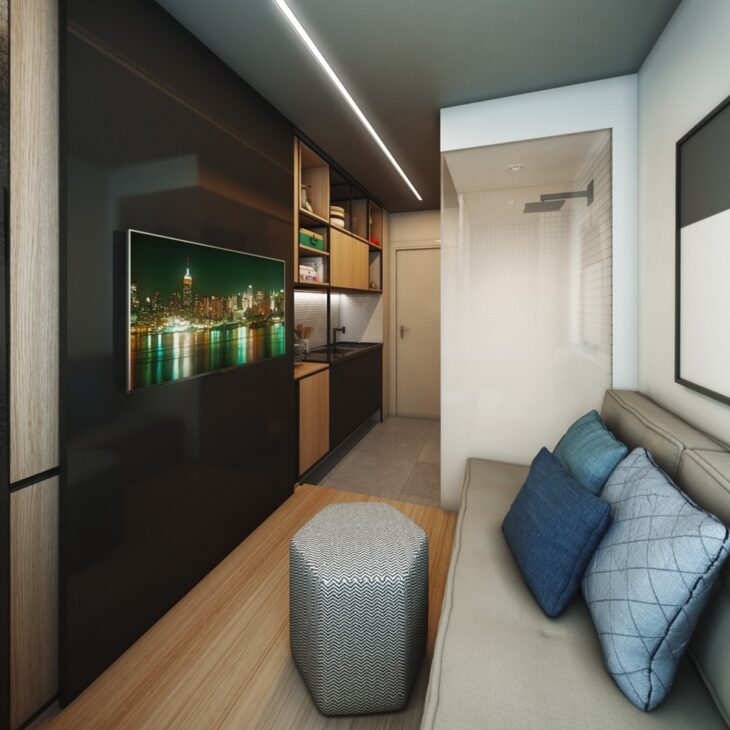
Just like in Curitiba, the design solution was to explore multifunctional furniture, with a foldable bed, built-in shelves, reduced kitchen, and compact bathroom.
The development stood out for its proximity to universities, subway and for the proposal of a practical, connected, and centralized life.
At the time of the launch, each unit cost around R$ 200 thousand, equivalent to more than R$ 20 thousand per square meter — a value considered extremely high by national standards, but justified by the premium location and the appeal of novelty in the real estate market.
The Logic Of Micro Apartments
The emergence of such small properties is not by chance.
It reflects a global urbanization movement in which the price per square meter skyrockets in prime areas, and the solution found by construction companies is to reduce private footage to make the investment feasible.
According to urban planning experts, this type of project caters to a very specific audience:
- Young students seeking to live close to universities.
- Single professionals prioritizing location over space.
- Real estate investors looking to turn these units into passive income with quick rentals.
Moreover, micro apartments are often associated with a minimalist lifestyle, in which residents carry few belongings and prioritize experiences outside the home, such as restaurants, coworking spaces, and cultural areas.
Criticisms And Controversies
Despite their appeal, micro apartments also generate intense criticism. Psychologists and urban planners warn about the impacts living in such reduced spaces can have on mental health.
Cramped environments with little ventilation can lead to stress, anxiety, and feelings of confinement.
Another controversial point is the artificial appreciation of the price per square meter, which may make this type of property a risky bet in the long term.
Some experts argue that instead of solving the housing problem, micro apartments may deepen housing exclusion, as they cater to a restricted audience and do not offer solutions for families or low-income workers.
Trend Or Limit?
In Brazil, the legislation of each municipality defines the minimum size allowed for an apartment.
While in Asian countries micro apartments are a consolidated reality, in Brazil the novelty is still in the experimental phase.
Some see these developments as a modern, practical alternative aligned with the future of cities.
Others, however, consider them an excess of the market that compromises quality of life in the name of profit.





E os **** mentais a cada dia em maior número
Complexo. Eu morava em 135 m, mudei para a Praia 70m.tive que desfazer de muitas coisas. Na verdade estou bem, descobri que tinha mais coisas do que precisava.
Que vergonha isso e um absurdo.