





 Portuguese
  English
  Spanish
  3 min of reading
  0 comments


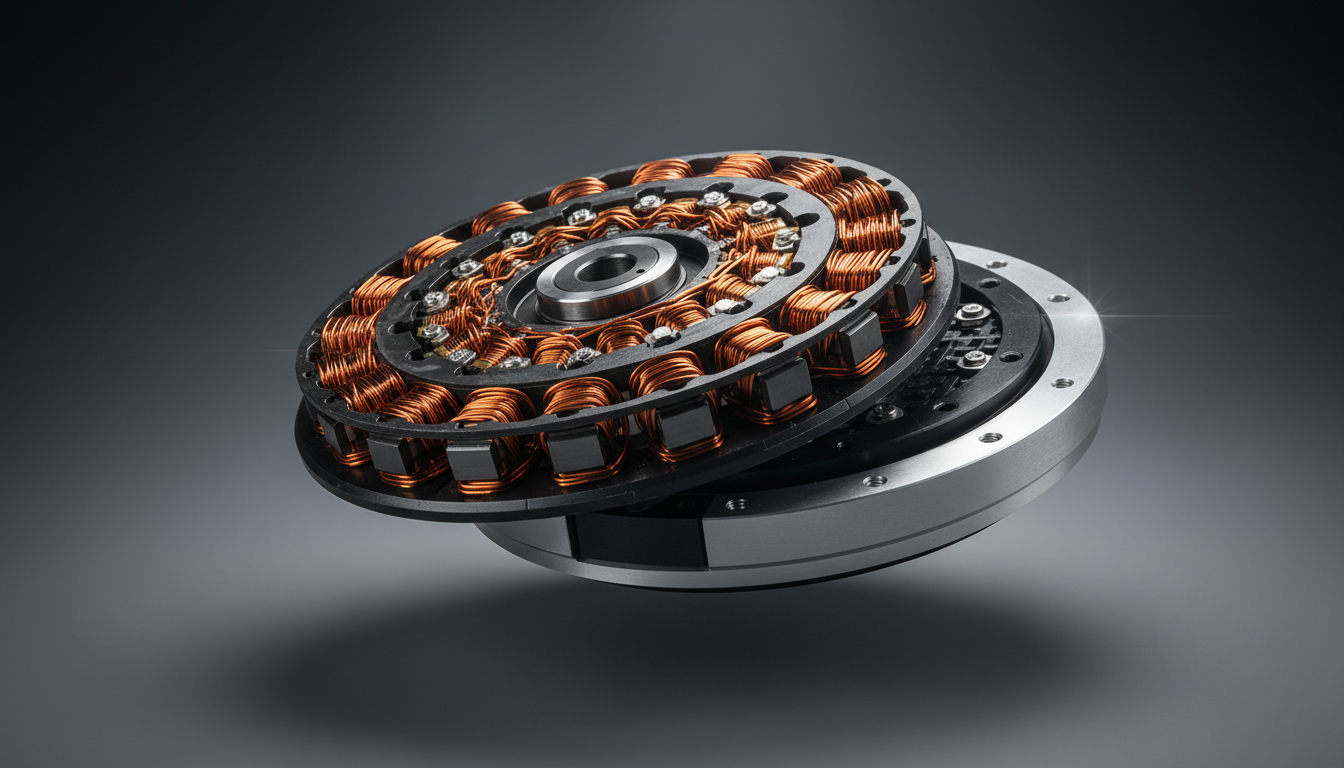
YASA prototype, British subsidiary of Mercedes-Benz, achieves 1,013 hp peak power with dimensions of a plate — axial flow technology promises to revolutionize electric sports cars
The Mercedes-Benz has just shown the world what could be the future of electric sports cars. An engine with over 1,000 horsepower that weighs only 12.7 kilograms.
To put it in perspective: 12.7 kg is less than a full suitcase. And this engine generates enough power for a hypercar.
The prototype was developed by YASA, a British company controlled by Mercedes-Benz since 2021. It is intended for the Mercedes-AMG division.
-
Used Honda Civic: 3 versions of the Japanese sedan with naturally aspirated engines of up to 155 hp, fuel consumption of up to 13.8 km/l, robust automatic transmission, and a reputation for reliable mechanics still dominate the used car market in Brazil.

-
Toyota Hilux becomes a ‘cargo truck’: automaker declares a new era for the pickup with greater capacity, reinforced chassis, 2.8 turbodiesel engine, raised suspension, 1,525 kg load capacity, and targets Ford Ranger Super Duty, which tows an impressive 4,500 kg.
-
Could the invasion of Chinese cars in Brazil be destroying the country’s automotive industry? Analysis points to problems

-
New Fiat car replacing the Siena in Brazil has a range of up to 760 km, a trunk capacity of 525 liters, and a reduced price in a surprising campaign that makes the automatic sedan leave Chevrolet’s rival, the Onix Plus, behind among PcD buyers.


The exact peak power is 1,013 horsepower. It is the highest power density ever recorded for an electric motor.
The secret lies in the axial flow technology. Unlike traditional radial engines, the magnetic field runs parallel to the axis of rotation.

How axial flow works
Traditional electric motors use radial flow. The magnetic field moves perpendicular to the axis. They are larger and heavier.
In axial flow, the magnetic field is parallel to the axis. This allows for a flattened disk shape — like a large plate.
The result is a much more compact and lighter motor. With the same power, it occupies a fraction of the space.
Energy efficiency is also superior. Less material means less losses due to heat and friction.
YASA was acquired by Mercedes in 2021. Since then, the focus has been on developing engines for the high-performance AMG line.
The impressive numbers
- Peak power: 1,013 hp (over 1,000 horsepower)
- Engine weight: 12.7 kg
- Technology: axial flow (magnetic field parallel to the axis)
- Shape: flattened disk, comparable to a plate
- Developer: YASA (Mercedes-Benz subsidiary since 2021)
- Destination: Mercedes-AMG division (sports cars)
- Record: highest power density ever recorded
The power-to-weight ratio is surreal: almost 80 horsepower per kilogram. Conventional engines deliver 5-10 hp/kg.
It’s like having the power of a Formula 1 inside a shoebox.

What changes in electric sports cars
Current electric sports cars use motors that weigh 30 to 50 kg. The YASA motor weighs a quarter of that.
Less weight in the motor means better mass distribution. The car becomes more agile and responsive.
There is also room for larger batteries. More range without increasing the size of the vehicle.
Mercedes-AMG may use the technology in future fully electric hypercars. The expectation is for application in the next generation.
Those who follow the automotive market know that electric vehicles are in a full technological revolution.

Promising prototype, but still no production date
The motor is a prototype. There is no confirmed date for mass production or application in a commercial vehicle.
The transition from laboratory to assembly line involves cost and durability challenges in the long term.
Axial flow motors require extreme precision manufacturing. The production scale is still an open challenge.
Information based on analyses from AutoEvolution and technical data released by YASA. Motor in prototype phase with no commercialization forecast.







Be the first to react!