






 Portuguese
  Spanish
  7 min of reading
  0 comments



Even After the Strong Drop in the Price of Milk in Brazil and Increase in Supply with Rain and Imports, 10 Well-Managed Cows Can Still Yield Almost R$ 5 Thousand in Monthly Profit, Provided That the Producer Cuts Costs, Adjusts Management, and Sees the Activity as a Business.
The big question today in the field is whether the strong drop in the price of milk has definitively killed the profitability of dairy farming. In several regions, the price per liter has plummeted, supply has increased with the rainy season, and there is still pressure from imported milk, mainly from Uruguay. In this challenging scenario, a producer decided to open up the books and show, on paper, that even with a strong drop in the price of milk, 10 cows can still generate a profit close to 5 thousand reais per month, as long as management is rigorous.
At his property, 10 dairy cows produce an average of 200 liters per day. In 30 days, that’s 6,000 liters per month, resulting in a gross income of around 13 thousand reais. From there, he details cost by cost, shows where savings can be made, where cuts cannot be made, and proves that the strong drop in the price of milk does not automatically make the activity unviable, but forces the producer to rethink silage, feed, management, and even the type of cattle raised.
How the Strong Drop in the Price of Milk Changed the Game
Previously, many people accepted a more relaxed management style, with more expensive silage, little cost control, and a greater focus on production rather than profit. With the strong drop in the price of milk, this model has collapsed in many places.
-
Family trades chayote for 100,000 chickens, abandons agricultural tradition after decades, and transforms property in the interior of SP into a reference for demanding exports like those to China and other global markets.

-
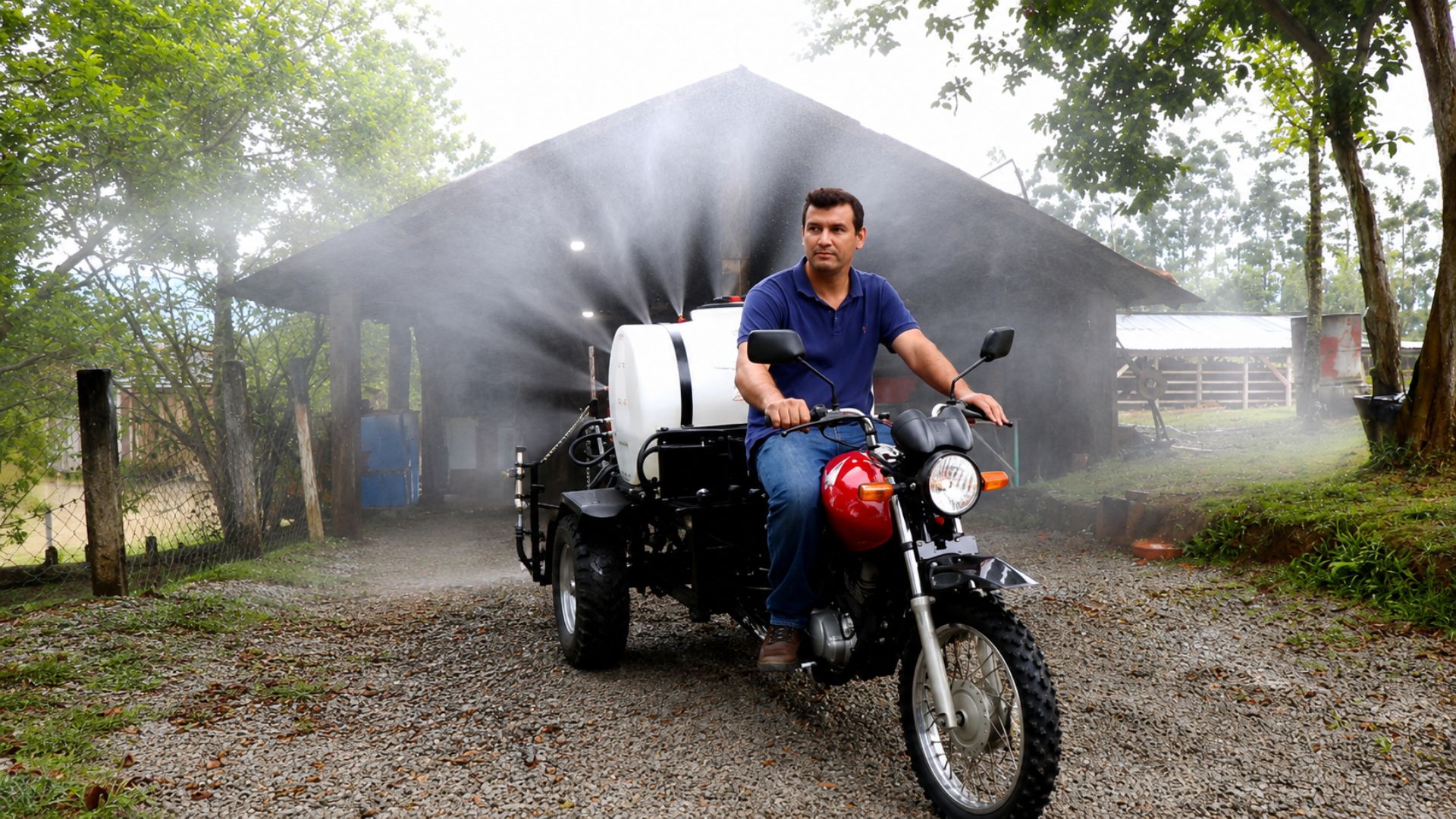
Without money for a tractor or Tobata, a farmer from Presidente Getúlio bought an old motorcycle from an auction and created an agricultural tricycle that carries up to 900 kg of fertilizer in the field; in five years, he has already sold eight to neighbors.
-
A single tank in the lake of a plant yields 90,000 kilos of tilapia every six months, and the company wants to multiply this by 500 to take Mato Grosso do Sul from 11th place to the top in the country.
-
Russia recognizes Brazil as free from foot-and-mouth disease without vaccination on June 10, 2026, strengthens Brazilian agribusiness, and paves the way for more meat, fish, nuts, and new business with a billion-dollar market.




The producer explains that milk prices are falling throughout Brazil, more in some regions than in others. Additionally, the increasing imports pressure domestic remuneration. At the same time, the end of the year tends to be a rainy season in much of the country, with more pasture and less dependence on conserved volumous. This increases supply just when prices are already pressured.
In this context, the question from followers is direct: does milk still yield profit? His answer, with real numbers from the farm, is that the strong drop in the price of milk has significantly tightened margins, but has not eliminated the viability of the activity for those who organize themselves.
10 Cows, 200 Liters per Day and 6,000 Liters per Month


The calculation starts simple. In the presented system, 10 dairy cows produce about 20 liters each per day. This results in:
- 200 liters of milk per day
- approximately 6,000 liters of milk per month
- gross income of around 13,020 reais monthly with these 10 cows
He emphasizes that this average is perfectly achievable with well-chosen, high-quality, and productive cattle, without requiring extremely top-tier cows. This is not a laboratory situation; it is a field average, although with management adjusted for productivity.
From this income, it enters the critical part to survive the strong drop in the price of milk: putting all costs on paper, including those that many producers ignore, such as fence maintenance, energy, cleaning products, and medications.
Silage, Pasture, and the Weight of Voluminous in the Cost
One of the most discussed points after the strong drop in the price of milk was corn silage. Many producers started to consider reducing or even completely cutting silage to lower costs.
In the account of the 10 cows, the producer considers:
- average consumption of 25 kg of corn silage per cow per day
- 10 cows, 250 kg of silage per day
- in 30 days, 7.5 tons of silage
- production cost of silage around 0.25 reais per kilo
This results in an approximate monthly cost of 1,875 reais for corn silage for this group of 10 cows.
He reminds us that if the producer moves to a system with more grazing, grass, or capiaçu, they can reduce this amount, but they need to consider the cost of labor, cutting, grinding, energy, and infrastructure. Savings on silage helps, but it’s not a miracle, and the impact on cow performance depends a lot on the type of cattle and pasture management.
In high-production herds, such as Holstein cows, abruptly removing corn silage can drop milk production by more than 50 percent. In hardier animals, such as Girolando, adaptation to pasture tends to be better, but still requires planning.
Feed: The Biggest Cost of the Activity

If silage is a significant cost, feed is an even bigger one. In the system presented, feed is the item with the greatest impact on total costs, especially in scenarios of strong drop in the price of milk.
The farm’s calculations are:
- cost to produce 1 kg of feed around 2.40 reais
- each cow, to produce 20 liters per day, consumes about 6.6 kg of feed daily
- the 10 cows, in 30 days, consume approximately 2 tons of feed
- total cost for feed during this period around 4,800 reais
The practical rule adopted is simple: for every 3 liters of milk, 1 kg of feed, which helps the producer quickly gauge the investment in concentrates. He highlights that for those who buy ready-made feed, the cost per kilo is often even higher, which further reduces margins in low price scenarios.
Even so, it is not possible to simply cut feed when there is a strong drop in the price of milk, because that reduces production, harms cattle health, and in the end, may worsen financial outcomes.
Invisible Costs That Eat Into Milk Profit
Besides silage and feed, the producer reminds us that there are a number of costs many forget when calculating if 10 dairy cows yield profit:
- Energy, Labor, and Milking Routine
Costs for milking, refrigeration, equipment maintenance, and energy consumption add up to around 400 reais per month in this system. - Maintenance of Facilities
Fences, corrals, water sources, paddocks, feeding drums, and minor construction fall under maintenance. His estimate is to set aside around 300 reais monthly, knowing that there are months with almost zero spending and months with heavier investments in new fencing or renovations. - Medications and Cleaning Products
Materials such as disinfectants, iodine, pre and post-dipping solutions, medicines, and even anti-venom serum come into play. Here, the reference is around 400 reais per month for the group of 10 cows.
When everything is summed up, he arrives at an approximate total cost of 7,775 reais per month to keep the 10 cows producing 6,000 liters of milk. Result: even with a strong drop in the price of milk, there is a profit of around 4,845 reais a month, which equates to approximately 500 reais per cow.
Milk Yields Profit, but Requires Heavy Routine and Discipline

The producer makes it clear that these almost 5 thousand reais in profit do not come out of nowhere. Those who deal with dairy cows know it’s a job from Monday to Monday, with no holidays, no vacations, and a lot of responsibility regarding feeding, health, and management of the herd.
He points out that, in the city, earning 5 thousand reais net per month is not easy, but also highlights that in the field, this amount comes with a heavy routine, with cattle to care for, pastures to maintain, calves to tend to, and infrastructure to keep up all the time.
Furthermore, he reinforces that the numbers shown are averages. There are months when production exceeds 200 liters per day, and others when cows dry off or go out of peak lactation, which reduces production. In some periods the producer can sell calves and improve cash flow, while at other times they will incur more expenses with rearing, silage, and feed for heifers.
Therefore, the secret to staying in the activity even with a strong drop in the price of milk is to treat dairy farming as a business, with cost control, record-keeping, planning for volumous, and focus on productivity per cow, not just on the number of animals in the corral.
Dairy Farming is Still Viable in Brazil
At the end of the analysis, the message is direct: dairy farming remains viable, even with a strong drop in the price of milk, but not for every type of producer. It is viable for those who:
- choose cattle compatible with the feeding system
- plan the production of volumous well
- rigorously control feed, medication, and maintenance costs
- accept the intense and constant routine of the activity
With this, 10 cows can support a family, pay for rural property rent, and still leave some money for personal expenses, even in a tighter market scenario.
And you, looking at this account of 10 cows and the strong drop in the price of milk, do you think it’s still worth investing in dairy farming or would you prefer to look for another activity in the field to ensure income every month?








-

2 people reacted to this.