Portuguese
  Spanish


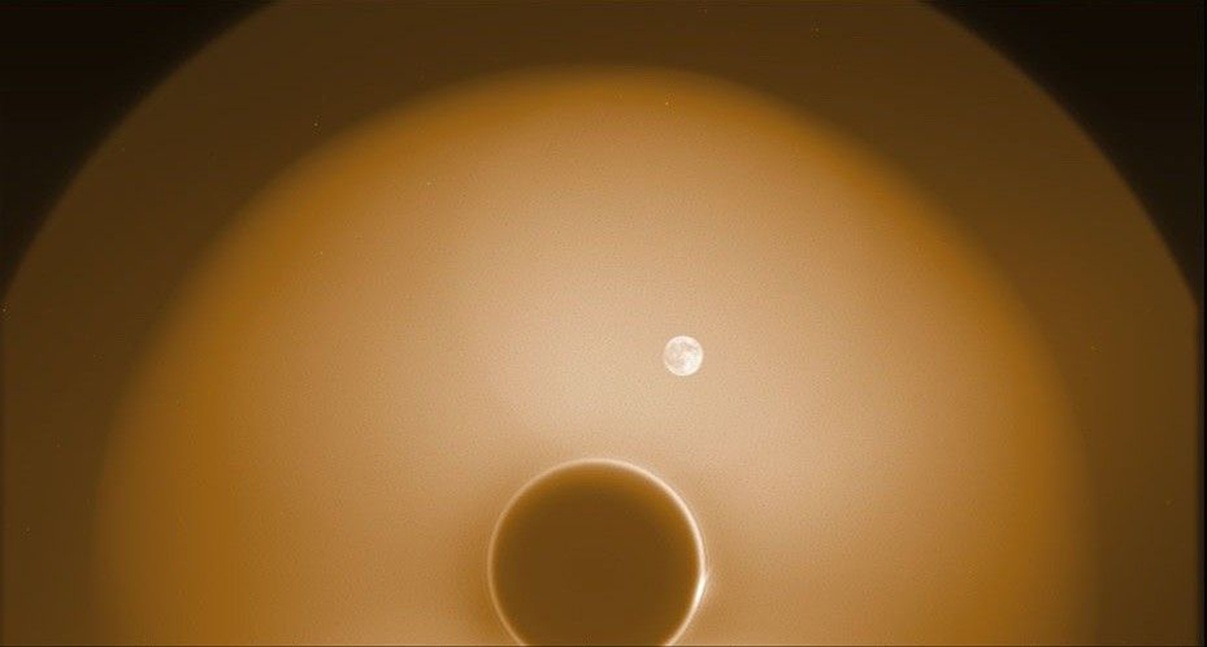

First Images From the PUNCH Mission Show the Moon Illuminated by Earth, Colorful Zodiacal Light, and Constellations, Confirming the Proper Functioning of NASA’s Instruments.
A new NASA mission has recorded impressive images of the Sun, the Moon, and deep space.
Launched on March 11, 2025, the PUNCH (Polarimeter to Unite the Corona and Heliosphere) mission has begun sending its first visual records.
NASA states that the instruments are operating normally, and the initial results are already considered promising.
-
Engineers Develop Jacket That Converts Air Humidity Into Drinkable Water, Producing Up to 900 ml Daily for Hikers, Campers, Rescuers, Rural Workers, and Military in Remote Areas

-
NASA Plans to Repurpose Mars Rover for Lunar Mission, Sending a 1-Ton Nuclear-Powered Vehicle to Explore the Moon’s South Pole Without Solar Dependence
-
Early Humans Made Beds Nearly 200,000 Years Ago in African Caves, Study Reveals

-
Japanese Smart Bike Detects Cyclist’s Intent to Turn and Potential Falls


Distinct Instruments for a Single Objective
The mission comprises four satellites, each equipped with a specific type of camera.
One uses a narrow field image generator (NFI), while the other three use wide field sensors (WFIs).
Each technology was designed to capture different aspects of the solar atmosphere and the so-called solar wind — the flow of particles that the Sun continuously releases throughout the Solar System.
The NFI uses a special type of camera called a coronagraph.
This equipment has a component called a occulter, which blocks the center of the image where the Sun is located. This allows the camera to capture fine details of the solar corona, the outer part of the Sun’s atmosphere.
In the first image recorded by this instrument, the occulter was not perfectly aligned. This caused some sunlight to leak around the edge of the blocker.
The result was a curious image, with a bright ring of diffracted light and a large halo around it. In the middle of this scene, the new Moon appears, illuminated by sunlight reflected off Earth.
Deep Space Images Reveal Star Clusters
The wide field cameras captured fascinating images of distant space. All three identified known star clusters, such as the Pleiades and the Hyades.
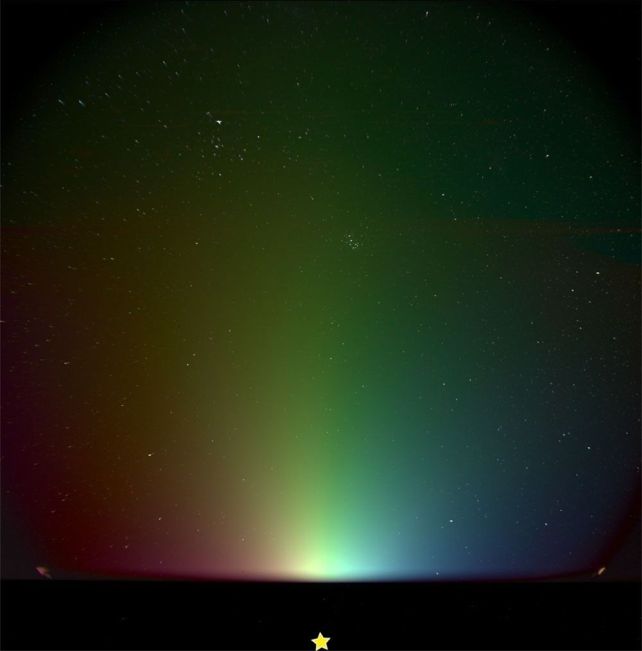
The images were recorded through filters that detect the polarization of light — a technique used to understand how light interacts with matter.
The WFI-2 sensor produced one of the most colorful images of the mission to date.
This image shows the so-called zodiacal light, a faint glow generated by the scattering of sunlight by interplanetary dust. This phenomenon is usually visible from Earth during equinoxes, in dark skies.
The camera’s filters were able to show the direction and intensity of the polarization of this light. Thus, the hues and visible colors are not artificial: they represent real information about how light is behaving as it traverses the dust-filled space.
Pleiades, Hyades, and Cassiopeia Among the Highlights
The images recorded by the WFI-1 and WFI-3 sensors also captured the zodiacal light. The photos have slightly different angles but bring similar elements.
The Pleiades, for example, appear in both images, as do the Hyades and the constellation of Cassiopeia.
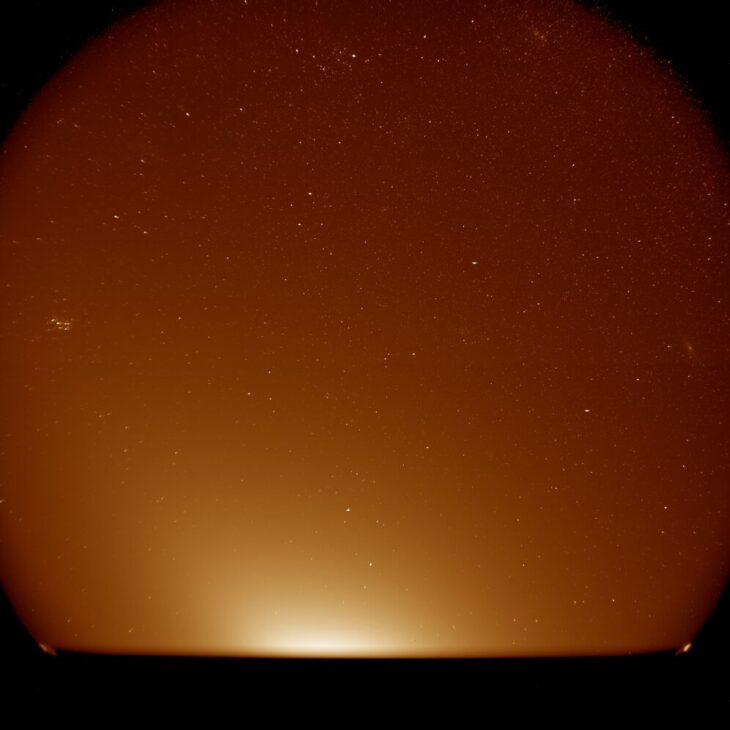
These records show that all the instruments of the PUNCH mission are functioning correctly. The NASA team is now preparing for the next step: the calibration of the sensors. Only then will the more detailed scientific work begin.
Even so, the U.S. agency believes that these first images can already bring important clues about how the Sun produces the solar wind — the phenomenon that helps to form the “bubble” of the Solar System in the Milky Way.