






 Portuguese
  Spanish


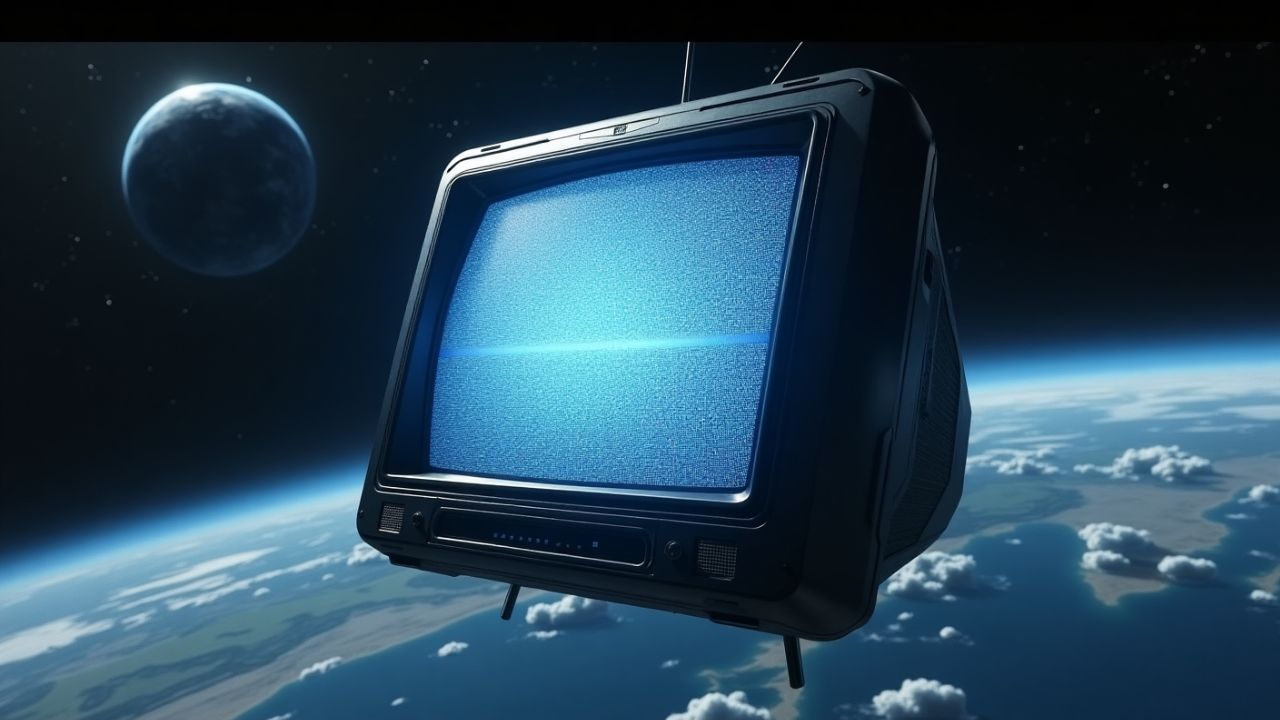
The Universe Is Full of Intriguing Phenomena, and Scientists Are in Search of Signals That May Reveal More About the Vastness of Space. However, No One Expected That, While Studying the Skies with the Murchison Widefield Array Radio Telescope, Located in Australia, Astronomers Captured Something Totally Unexpected: An Unusual Television Signal Coming from the Sky.
Designed to Study the Origins of the Universe and Analyze Transient Signals from Space, the Murchison Widefield Array Was Strategically Built in a Radio Silence Zone, Meaning a Location Free of Terrestrial Interference. This Allows for Accurate Observation of the Cosmos Without Interferences Caused by Humanity.
When the Unusual Television Signal Was Detected, the First Suspicions Were That It Might Be a Technical Error or External Interference. However, This Hypothesis Was Soon Discarded, Since the Location of the Radio Telescope Prevents Conventional Radio Signals from Reaching It. The Discovery Left Scientists Perplexed: Where Was This Signal Coming From? And How Did It Manage to Invade a Radio Silence Zone?
An Unusual Television Signal in a Radio Silence Zone

The Discovery of the Signal Caused a Stir in the Scientific Community. The Idea That a TV Transmission Could Be Coming from Space Led to Many Theories, Including the Possibility of Extraterrestrial Communication.
-
Russia and India Lift 320-Ton Pressure Vessel into Kudankulam Nuclear Plant Reactor, Advancing Project That Has Already Prevented 112 Million Tons of CO2 Emissions

-
Brazilian Student Wins Global Science Fair in the U.S. with Sound Wave Method to Alter Alzheimer’s-Linked Genes
-
Bosch Unveils Revolutionary 2.3 kg Hub Motor for E-Bikes with 45 Nm Torque and 400 Watts Power, Eliminating Resistance Above 25 km/h in Historic Shift for German Manufacturer
-
Brazilian Engineer Develops Marine Bacteria from Ubatuba into a Mini Power Plant Generating 227 mW per Square Meter, Cleans Air by Capturing CO₂ and Releasing Oxygen


Besides the Improbability of Receiving This Type of Transmission in the Location, There Was Another Curious Detail: the Signal Seemed to Be Moving Across the Sky. This Further Increased the Mystery, Raising Hypotheses About a Possible Unknown Transmitting Object.
For Five Years, Various Theories Were Proposed, Ranging from Atmospheric Interference to Artificial Signals Emitted by an Unknown Satellite. Resolving This Enigma Became a Priority for Scientists, and the Answer Finally Came with the Help of Researchers from Brown University.
The Answer After Five Years of Study
After Much Investigation, Brown University Finally Managed to Decipher the Origin of the Unusual Television Signal and, to the Surprise of Many, the Explanation Was Much More Down-to-Earth Than Imagined.
The Team Used Advanced Signal Processing Techniques to Isolate Interferences and Determine the Exact Origin of the Transmission. This Revealed an Interesting Fact: the Captured Signal Was Within the Frequency Band of Channel 7, an Australian TV Channel.
With the Collected Data, Researchers Calculated the Altitude and Speed of the Object Responsible for the Interference. The Results Indicated That It Was Moving at an Altitude of 11.7 Kilometers and at a Speed of 792 km/h. The Culprit? A Commercial Airplane.
The Metal Fuselage of the Aircraft Was Reflecting the Television Signal and Directing It to the Radio Silence Zone, Where the Murchison Widefield Array Radio Telescope Captured It. The Phenomenon, While Curious, Highlighted a Growing Problem in Astronomical Research.
Human Influence on Astronomical Research
While the Discovery Solved the Mystery of the Unusual Television Signal, It Also Brought to Light a Much Bigger Problem: Signal Pollution from Terrestrial Sources Is Making Space Research Increasingly Difficult.
The Advancement of Communication Technologies Has Created a Real “Noise” in the Electromagnetic Spectrum, Which Makes It Difficult to Observe Legitimate Signals Coming from Space. As Scientists Explain, This Type of Interference Is Comparable to Trying to Hear Someone Whispering While a Child Is Yelling in Your Ear.
The Future of Space Research and the Construction of Telescopes on the Moon
In Light of This Scenario, A Possible Solution Is Gaining More and More Ground: Build Telescopes in Locations Free from Terrestrial Interference. NASA Is Already Planning the Construction of a Radio Telescope on the Far Side of the Moon, Where There Is No Interference from Human Signals.
This Could Be the Future of Space Exploration, Ensuring That Genuinely Cosmic Signals Are Studied Without Pollution from Terrestrial Transmissions.








-

-

-

-

-

16 people reacted to this.