






 Portuguese
  Spanish


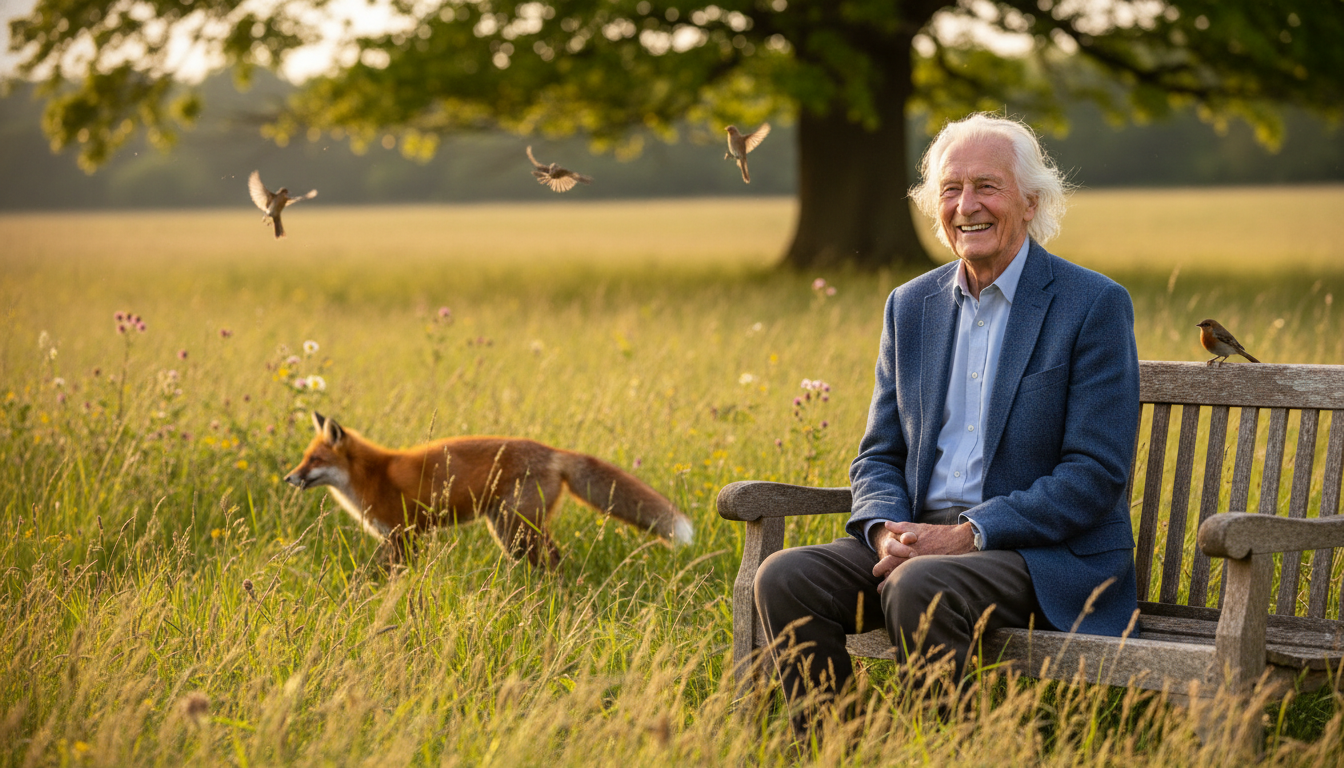


The Natural History Museum in London announced in May a new species named in honor of the British naturalist David Attenborough, who turns 100 on May 8, 2026, as the 53rd creature, plant, or fossil described by science to receive the BBC presenter’s surname.
The Centennial Attenborough Honoree was celebrated at an institutional ceremony at the Natural History Museum in South Kensington, London.
According to the Natural History Museum, more than 50 species already bear the Attenborough surname.
According to the museum, the naturalist reached a century of life on May 8, 2026.
-
China Develops Custom 140-Ton Electric Mining Truck with 770 kWh Swappable Battery, Deploys 290 Units in Xinjiang’s Largest Zinc Mine

-
Meta to Launch Arena, a New Prediction App Targeting 3.56 Billion Users, Competing with Polymarket and Kalshi

-
Scientist Challenges Famous Human Evolution Theory, Argues Homo Sapiens Evolved Gradually Over Thousands of Years
-
15-Year-Old American Builds Ocean Generator with PVC Pipe and 3D-Printed Propeller for $12, Wins National Prize, Presents at White House, and Makes Forbes 30 Under 30 List




Compared to other British scientists, Attenborough has the highest number of living species honored that are on record.
On the other hand, Charles Darwin received only 30 biological honors in his lifetime.
Subsequently, the museum’s curation published a complete inventory of the species in a public commemorative event.
List of the 53 Attenborough species covers plants, fish, fossils, and even bacteria
According to the official inventory, there are 53 species that carry the Attenborough surname.
According to the museum, 22 are living animals, 18 are plants, 11 are fossils, and two are bacteria.
First, the carnivorous plant Nepenthes attenboroughii was described in the Philippines in 2007.
Second, the abyssal fish Materpiscis attenboroughi became famous for being the first known vertebrate to give birth to live young.
Subsequently, in 2017, the frog Pristimantis attenboroughi was found at 3,500 meters altitude in Peru.
As reported by the BBC, in 2018 the jumping spider Prethopalpus attenboroughi was described in Australia.

The career of the Centennial Attenborough Honoree began at the BBC in the 1950s
Sir David Attenborough was born in Isleworth, London, on May 8, 1926.
According to the BBC, he joined the broadcaster in 1952, at the age of 26.
According to BBC archives, he presented the first documentary in 1954, titled “Zoo Quest”.
Subsequently, he led the team that produced “Life on Earth” in 1979, watched by more than 500 million people.
Compared to other documentarians, Attenborough is the only one to have professionally visited all six inhabited continents.
Similarly, he has been presenting documentaries for the BBC for seven decades without pause.
Scientists say the tribute reflects pressure for conservation of threatened habitats
According to the World Wildlife Fund, 1 million species are threatened with extinction in 2026.
According to the IUCN, 38% of reptiles and 41% of amphibians are critically endangered.
According to Sir David Attenborough, “science has shown that we are in the midst of the planet’s sixth mass extinction”.
First, he advocates for the creation of marine reserves in 30% of the ocean by 2030.
Second, he supports a moratorium against seabed mining in the Arctic and Pacific.
On the other hand, some consider the naturalist’s conservationist discourse to be too politically engaged.
- 22 animals with the Attenborough surname (mammals, birds, fish, reptiles, amphibians, invertebrates)
- 18 plants (orchids, ferns, carnivorous plants)
- 11 fossils (dinosaurs, fish, extinct plants)
- 2 bacteria named in the laboratory
- 1 homonymous documentary: “Attenborough Life” covering six continents

The energy sector enters the agenda because Attenborough recently attacked the oil industry
In an interview with the Guardian in April 2026, Attenborough stated that “the oil industry needs to deliver the transition before it’s too late”.
According to the statement, he demands emission reduction targets compatible with the Paris Agreement.
According to the Climate Action Tracker, European oil companies have reached only 60% of voluntary targets for 2025.
In comparison, Petrobras, Equinor, and TotalEnergies have invested in CCS (carbon capture and storage).
Subsequently, Shell announced a target of neutrality in direct emissions by 2050.
Therefore, Attenborough used the interview to pressure both governments and private companies.
The CPG collection covers the debate on energy transition and biodiversity
CPG recently published on the biodiversity of the Amazon and the oil sector, in the site’s collection.
Subsequently, the site also published an analysis on the Brazilian energy transition in 2026, with data from the IEA.
In other words, the tribute to the Centennial Attenborough is not an isolated event: it is part of the global climate agenda.
On the other hand, some see the British ceremony as a way to pressure leaders of COP31, scheduled for Belém in November.

Next steps: the program for the 100 years of the Centennial Attenborough Honoree
First, the BBC will air an unprecedented documentary called “Attenborough: the life we have left”.
Next, the United Kingdom will launch a series of commemorative stamps in July 2026.
Finally, the Royal Society of Arts will present an honorary medal in September.
However, some question the fact that the museum did not include Brazilian scientists in the ceremony, despite the role of the Amazon in the climate discourse.
Nevertheless, the curation responds that international partners are being invited in phases. Still, Attenborough’s centennial becomes a symbolic milestone for the global conservation agenda.






