





 Portuguese
  English
  Spanish
  4 min of reading
  0 comments



Scientists Reveal The Secret Behind The Impressive Durability Of Roman Concrete That Withstood Millennia
The inhabitants of Ancient Rome were true masters of construction and engineering, with works that still fascinate and inspire modern engineers and architects. Among these works, aqueducts stand out for their lasting functionality.
However, one of the great secrets behind these constructions is pozzolanic concrete, an incredibly strong material that allowed many of these structures to survive for millennia.
The Discovery Of The Secret Of Ancient Roman Concrete
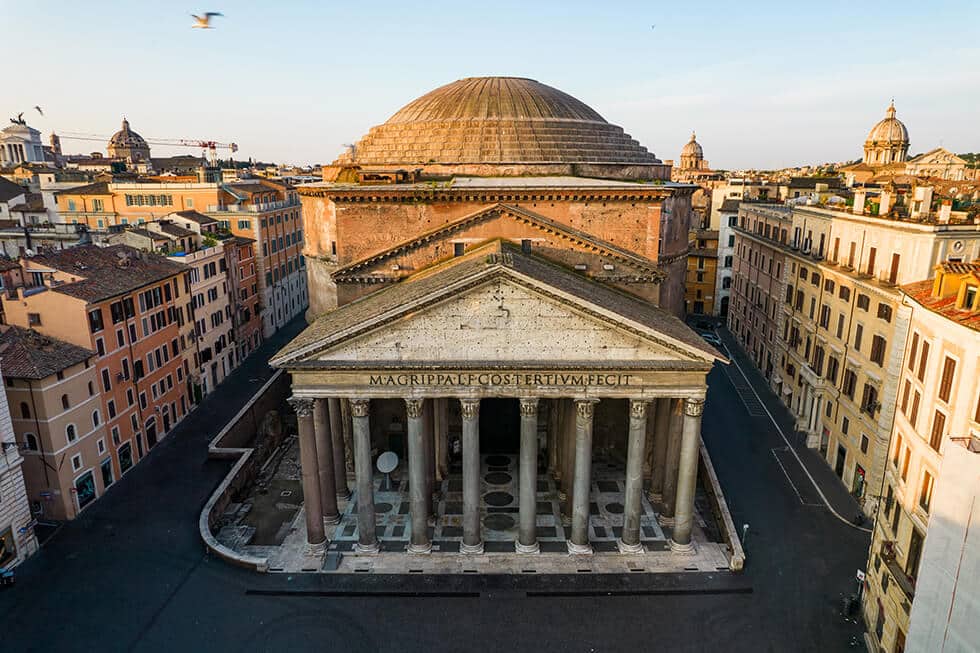
The Pantheon in Rome, for example, stands tall and intact after nearly 2,000 years, being the largest unreinforced concrete dome in the world. But what exactly made this material so durable? Traditionally, scientists believed the strength of ancient Roman concrete was solely due to its composition: a mixture of volcanic ash, called pozzolana, and lime, which when mixed with water, formed an incredibly robust compound.
-
Mali wants to open a path to the ocean by digging a 900 km waterway through the Senegal River: an $800 million project promises to reduce logistics costs by up to 60%, create a direct route to the Atlantic, and transform gold exports from one of Africa’s most isolated countries without relying on roads or railways.

-
How much does plastering cost per square meter? Professionals quote an average between R$ 25 and R$ 30.
-
A study in China revealed that the rubber seals that seal the submerged tunnels under the sea degrade much faster than previously thought when salinity and constant compression act together, losing up to 67% of their sealing strength over their lifespan, although existing structures are not at immediate risk.

-
The Lobito Corridor, a railway that cuts through Africa to transport copper from the interior to the Atlantic, is starting to take shape.





However, in 2023, a team of researchers led by the Massachusetts Institute of Technology (MIT) made a surprising discovery. The study revealed that the composition and method of mixing the ingredients of ancient Roman concrete differ from what was previously thought.
These scientists observed small white particles, known as lime clasts, in the concrete, which were previously seen as a sign of poor mixing. Admir Masic, a materials scientist at MIT, always found it strange that such a detail-oriented civilization would make such a basic error.
“The idea that these limestone clasts were a result of a lack of quality control always bothered me,” Masic said in January 2023. “If the Romans were so dedicated to creating an exceptional material, following detailed and optimized recipes over centuries, why would they make such a slip? There had to be something more there.”
Masic and his team, along with civil engineer Linda Seymour, also from MIT, studied concrete samples taken from a 2,000-year-old archaeological site in Privernum, Italy. The samples underwent a series of tests, such as scanning electron microscopy and X-ray spectroscopy, which allowed for a detailed analysis of the lime clasts.
Benefits Of Hot Mixing And Self-Healing
One of the main questions was about the nature of the lime used. The traditional theory stated that pozzolanic concrete was made with hydrated lime, obtained by mixing quicklime with water.
However, the team’s analyses showed that the lime clasts in the studied samples did not fit this model. Instead, the researchers concluded that the Romans used a process called “hot mixing,” which involved mixing quicklime directly with pozzolana and water at high temperatures.
According to Masic, this method brought a number of benefits. “The hot mixing promotes chemical reactions that cannot occur with hydrated lime, generating compounds associated with high temperatures that reinforce the material’s structure,” he explained. In addition, this approach accelerated the curing and setting process of the concrete, allowing for faster construction.
Another interesting aspect is the self-healing ability of ancient Roman concrete. When cracks appear in the structure, they tend to propagate toward the lime clasts, which have a larger surface area than the other particles.
When water comes into contact with the lime, it forms a calcium-rich solution that hardens as it dries, repairing the crack and preventing it from spreading.
This hypothesis was confirmed in other studies, such as those conducted at the Tomb of Caecilia Metella, where cracks filled with calcite were found. This helps explain why Roman structures like the seawalls have survived so well over the centuries, even facing constant assault from the waves.
To test their findings, Masic’s team reproduced the concrete using both ancient and modern recipes, with and without the addition of quicklime. In tests, the concrete that included quicklime was able to self-repair in two weeks, while the control concrete could not recover.
Now, the team is seeking to commercialize this formula, offering a more sustainable and durable alternative to modern concrete. “Thinking that we can apply this knowledge to extend the lifespan of materials and improve the durability of 3D-printed concrete is extremely exciting,” Masic said.
The complete study was published in the journal Science Advances, offering a new perspective on the wisdom of Roman engineering and its application in a modern world that increasingly seeks sustainable solutions.




Be the first to react!