






 Portuguese
  Spanish
  3 min of reading
  0 comments


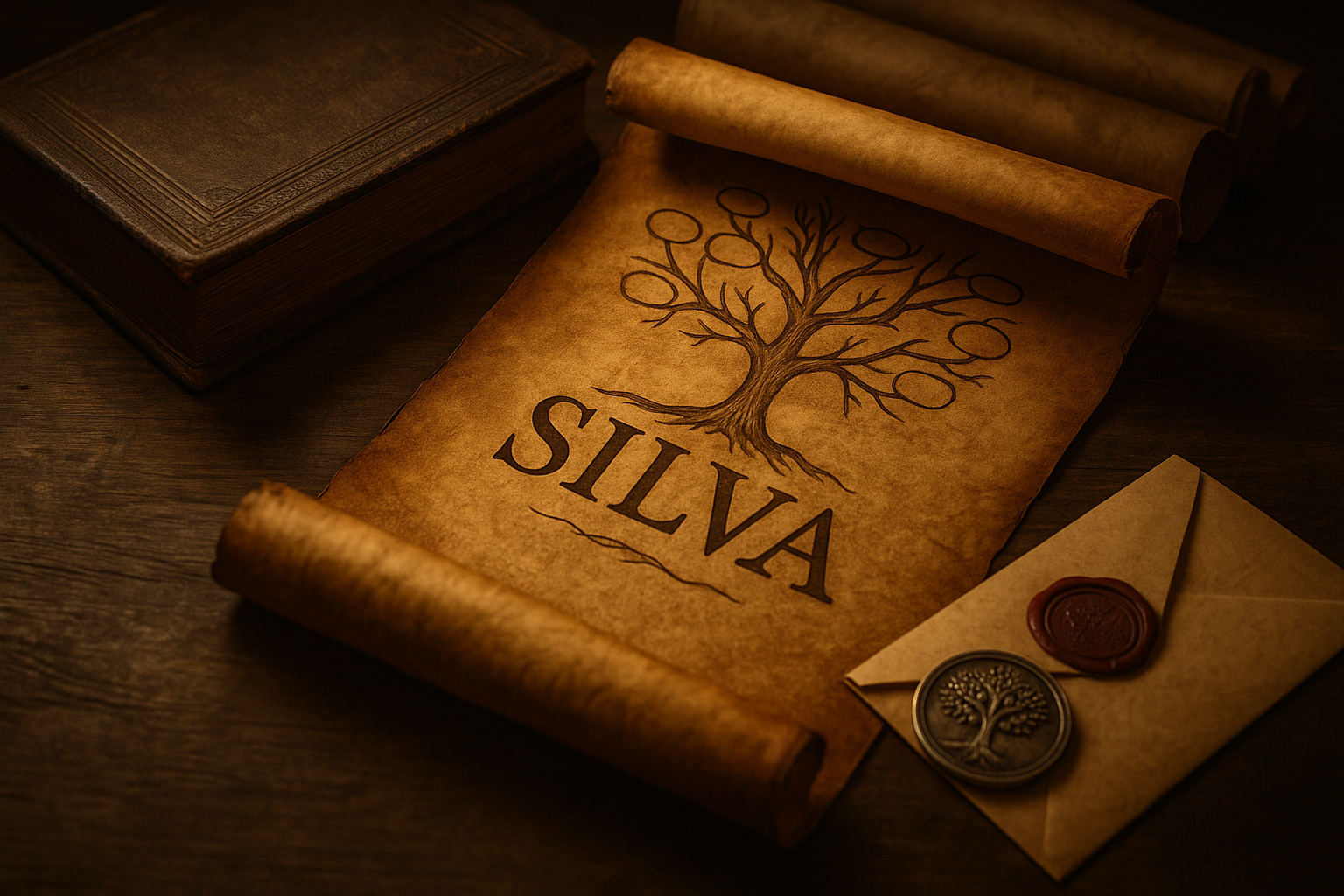
Surname Silva Dominates Brazil; Discover Facts, History, and Tradition Behind the Country’s Most Famous Name.
Facts About the Surname Silva: What Explains Its Strength, Who Carries It, and Why It Became a Symbol of Brazil
The surname Silva attracts attention as the most common in Brazil, and now new information reinforces the magnitude of this tradition.
What happened? The Brazilian Institute of Geography and Statistics (IBGE) released an unprecedented survey listing the most popular surnames in the country.
Who leads? Silva, with about 34 million Brazilians, or 16.76% of the population.
-
How Romania became Hitler’s “gas station,” supplying about half of the oil used by Nazi Germany, and surprised the world by abandoning the Axis in 1944, just when the fuel shortage was beginning to suffocate the Third Reich.

-
Adored by more than 1.5 million fans and famous for crossing deserts and mountains with its owner, a famous dog is stolen and ends up being served in a restaurant in China.

-
Son of a Chinese immigrant who sold tea in the countryside of São Paulo, Zhang Ye almost went bankrupt in 2021 and today, at 28 years old, claims to earn 1 million reais per day and has become the number 1 on TikTok Shop in Latin America.
-
A shipbuilder created a wooden boat so ingenious that it turns into a wheelbarrow and crosses hundreds of meters of beach on its own when the low tide takes the water away.



When were these data revealed? This Tuesday (11/4). Where is it concentrated? Mainly in Alagoas and Pernambuco, with rates above 34%.
How did this name spread so much? Through historical processes, miscegenation, and anonymity strategies adopted by Portuguese colonizers.
Why does this matter? Because the facts and the history behind the most common surname in the country reveal cultural, social, and even painful traits of Brazilian formation.
Thus, more than a simple family name, Silva represents deep roots, identity, and a narrative that spans centuries.
Brazil Has Millions of People With the Surname Silva
According to IBGE, there are 34,030,104 people with the surname Silva in Brazil. Santos follows closely with 21.4 million, followed by Oliveira, Souza, and Pereira.
Additionally, Alagoas (35.75%) and Pernambuco (34.23%) concentrate the highest proportion of Silvas in the country. Meanwhile, Belém de Maria, in the interior of Pernambuco, leads at the municipal level: 63.90% of residents have Silva in their name.
Facts and Tradition: Origin of the Surname Silva
The origin of the surname Silva involves history, Latin roots, and relationships with nature. According to the Dictionary of Brazilian Families, the name likely originated in ancient Rome, meaning “jungle” or “forest”. Initially, it identified people from forested areas.
However, the surname disappeared after the fall of the Roman Empire, reappearing only in the 11th century in the Iberian Peninsula. After that, Portuguese who came to Brazil began to adopt it to maintain anonymity. This habit, in turn, expanded its presence in the country.
Moreover, many enslaved people were given the surname Silva as a mark of ownership, often with the preposition “da.” Therefore, the name also carries memories of the enslavement period.
Silva Surpassed Borders
Although it is a strong symbol in Brazil, Silva appears in other Portuguese-speaking countries, as well as in some regions of Spain and Italy. Thus, its international presence reinforces its Iberian tradition.
Why Do We Have Surnames? Historical Facts Explain
Surnames arose out of the need to identify people as populations grew. In medieval Europe, first names were followed by personal characteristics, professions, or geographical origins. This led to examples like Smith (blacksmith), Baker (baker), and Taylor (tailor).
Additionally, patronymic names, which indicate filiation, became consolidated over time. In Portuguese, “es” indicates descent, as in Gonçalves (son of Gonçalo). In Spanish, Martínez follows the same principle. In Russian, Ivanov means “son of Ivan.”
Researcher Rosana Coelho de Alvarenga e Melo states:
“Over time, many of these names became fixed as permanent surnames, even when the original meaning ceased to be considered.”
Therefore, surnames began to reflect lineages, territories, and social status.
Tradition and Creativity: How Surnames Arise in Brazil
In addition to historical rules, Brazil experiences unique situations. Genealogist Gilberto de Abreu Sodré Carvalho listed 60 categories of surnames in Luso-Brazilian culture, including references to places, animals, trees, and even free inventions.
Thus, cases like parents registering children with “Kennedy” without genealogical connection show that creativity is also part of Brazil’s naming history.
The Surname Silva Remains a National Symbol
Although there are thousands of options, few carry as much weight as Silva. Therefore, whether through its Latin origin, Portuguese heritage, or the marks of slavery, the name continues to be a living portrait of Brazil’s social construction.
And, as time goes by, Facts, Tradition, and History continue to define how the country understands its identity — and the surname Silva remains at the heart of this narrative.








-

-

-

5 people reacted to this.