






 Portuguese
  Spanish


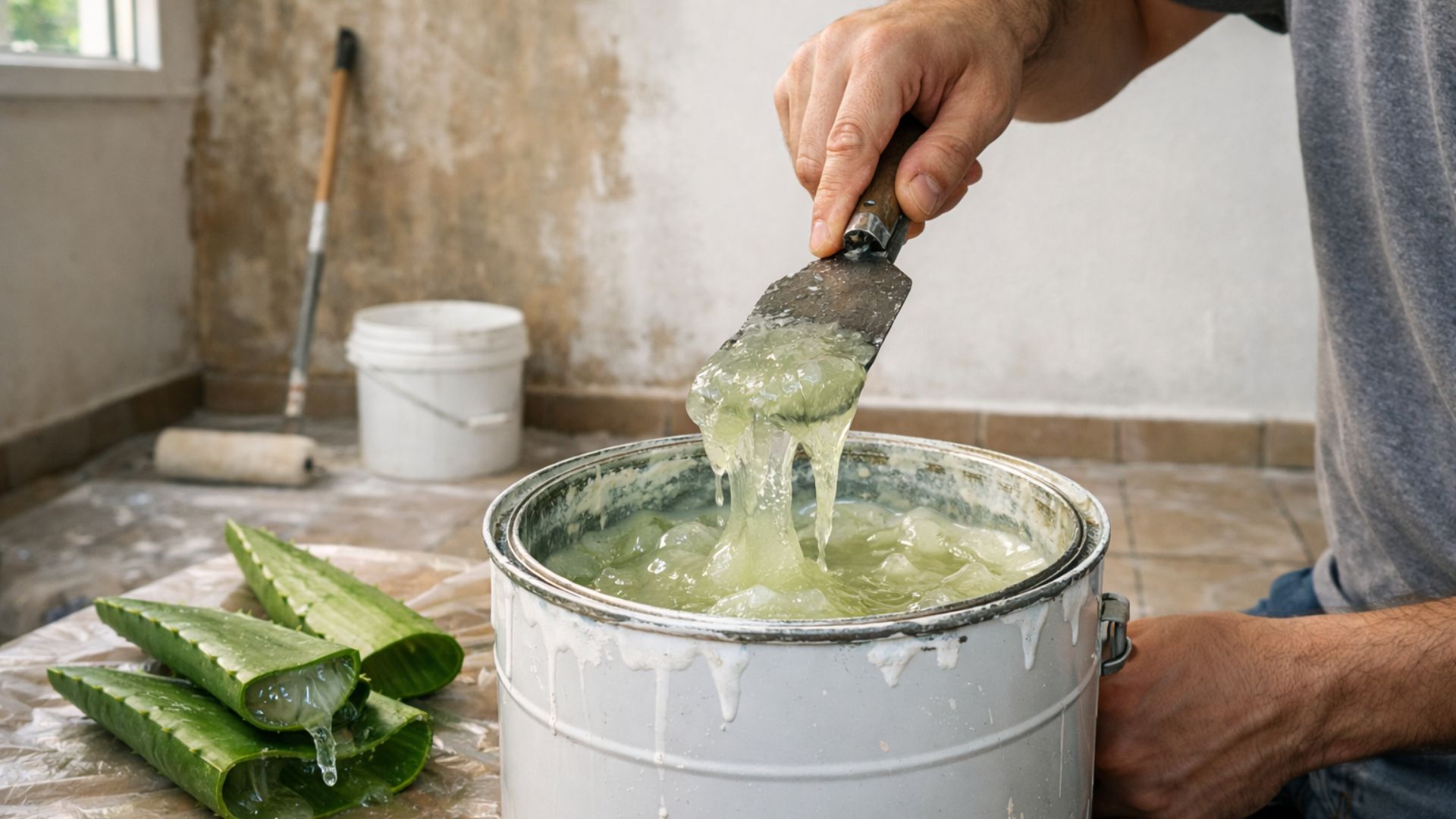

Traditional Architectural Conservation Technique in Mexico Combines Hydrated Lime and Gel Extracted from the Nopal Cactus to Protect Old Surfaces, Reduce Infiltrations and Preserve Historical Facades. Academic Studies and Institutional Records Indicate That the Practice Has Crossed Centuries and Remains Present in Restoration Works.
The mixture of hydrated lime with nopal mucilage, gel obtained from cacti of the genus Opuntia, remains associated with the conservation of historical buildings in Mexico and continues to be present in restoration interventions documented by public agencies and technical literature.
Academic research and records from the National Institute of Anthropology and History of the country indicate that the formulation has been used for centuries to protect old coatings, especially due to its relationship with lower water penetration, control of cracks, and better performance on traditional surfaces.
What Is Nopal Mucilage and Why Is It in the Mixture
In the field of conservation, “mucilage” and “gel” often appear as similar terms, but they are not identical.
-
Creative Uses for Toilet Paper Rolls That Will Change Your Perspective

-
Crab Trapped in Plastic Bottle for 62 Days Near Okinawa Highlights Little-Known Impact of Marine Pollution on Small Animals
-
Esperanza’s Bamboo Barrier in Oaxaca Redirects River and Reduces Erosion by 85% in Five Years

-
Family Builds Homemade Wind Turbine to Power Off-Grid Home, Video Reaches 555,000 Views on Ngô Thị Huyền’s Channel


In a study published in the INAH journal, mucilage is described as a gelatinous substance extracted from the tender shoots of the nopal, while mucilage corresponds to the white, viscous tissue rich in polysaccharides located inside mature and thicker cladodes.

This distinction helps to understand the use of the material in restoration works since the plant composition directly affects viscosity, moisture retention, and application on fragile substrates.
More than a handcrafted resource, the nopal appears in scientific works as an organic additive incorporated into mortars and lime paints.
In the article published in the Journal of the Professional Association for Cactus Development, the authors report that nopal juice has been used for centuries in Mexican historical buildings and point to improvements in performance against infiltration and cracks.
The same study asserts that the additive acts as an organic adhesive, prevents excessively rapid drying, and helps maintain the moisture necessary for the proper setting of the mixture.
Compatibility with Old Walls Explains the Permanence of the Technique
This point is crucial for heritage restoration.
Instead of forming a thick and impermeable film, lime paint with plant additive preserves mineral characteristics and tends to be more compatible with traditional plasters, adobe, and old mortars.
In the researchers’ own article, cement is cited as a problematic material in restorations of this type due to being too rigid, incompatible with adobe, and restricting transpiration, which increases the risk of moisture-related damage.
The international technical literature reinforces the same direction.
In a paper published in the journal Construction and Building Materials, researchers from the University of Barcelona analyzed organic additives historically used in lime mortars, including Opuntia, and found improvements in mechanical properties and water resistance, as well as changes in carbonation, porosity, and texture.
The study also notes that these traditional compounds remain relevant precisely because of their compatibility with old construction materials, a scenario different from the expected behavior in modern coatings based on synthetic products.
Institutional Use in Restoration Works in Mexico
The technique has not been restricted to empirical reports or domestic repertoire.
The INAH survey indicates that restorers, archaeologists, and architects have begun to apply nopal mucilage as a waterproofing agent for walls and roofs in archaeological zones and historic monuments, with mentions of interventions in Chichén-Itzá, the Natividad de María convent in Tepoztlán, and in buildings in the historic center of Villahermosa.
The same study also records a recommendation from the Ministry of the Environment of the State of Mexico for its use as a natural waterproofing agent in walls and roofs of historical monuments.
Administrative documents related to works approved by the institute itself show that the procedure continues to be incorporated into formal restoration specifications.
In public authorizations consulted in the INAH transparency database, recipes for lime-based paint made with previously hydrated paste, nopal mucilage, and powdered pigments in the same tone as existing coatings appear.
In another record, the text determines “two coats of lime paint, alum, and nopal mucilage,” while another guideline prohibits vinyl paint and demands a finish compatible with historical substrate.
Mineral Finish and Preservation of Historical Facades
In practice, the interest in this combination also extends to the visual result.
Lime paint with nopal mucilage does not produce high shine nor the common thickness of acrylic paints, but offers a matte, mineral, and breathable finish, a characteristic valued in old facades that react poorly to overly impermeable layers.
In the restoration documents of INAH, the final tone is not presented as a secondary detail.
The pigments must match the authorized color so that the reintegration does not distort the historical reading of the building.
Nonetheless, the serious conservation technique is far from being presented as a universal solution.
The INAH study warns that many field reports do not accurately detail the state of conservation of the substrate, the type of nopal used, the method of extraction, preparation, application methods, and the extent of the results.
In other words, the efficacy of the material depends on the construction system, prior diagnosis, and the suitability of the mixture to the context, especially on earth surfaces, adobe, old joints, and coatings with loss of cohesion.
Tradition Preserved by Technical Performance
This set of records helps to explain why nopal mucilage has endured through time without disappearing from Mexican heritage works.
What sustains its permanence is not an exotic appeal or a recent trend from social media, but the combination of construction tradition, technical evidence, and documented institutional use.
When associated with lime and mineral pigments, the substance continues to be linked to the recovery of walls, roofs, and facades that require compatible materials, less rigidity, and better response to moisture.


