






 Portuguese
  Spanish


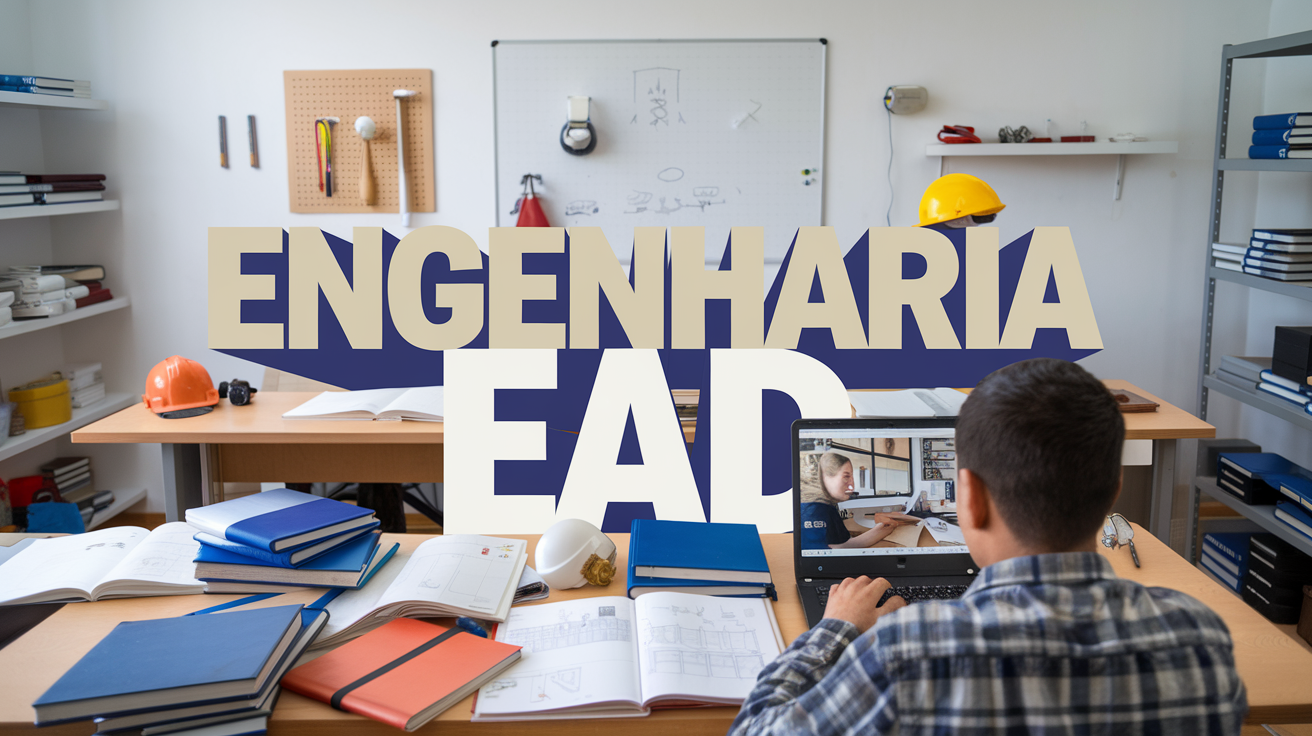


Distance Education in Engineering Grows in Brazil! With an Impressive Growth, E-Learning Has Already Surpassed Traditional Courses. Ministry of Education Intervenes, and the Job Market Observes with Concern.
A notable change has been observed in students’ preference for more flexible and accessible teaching modalities.
This trend reflects not only technological advancements but also adaptations to contemporary learning needs.
Distance education (E-Learning) in undergraduate courses, particularly in engineering, has shown significant growth in Brazil.
-
Entrepreneur Turns Rio Cemetery Canteen into a Successful Snack Chain Generating $4.9 Million Annually and Expanding to Metro Stations

-
Rare fox feared “extinct” found alive on Caribbean island after over two decades without official sightings

-
21-Year-Old Brazilian Student Turns Homemade Popsicle Hobby into $100,000-a-Month Business

-
Australia Dumps Hundreds of Thousands of Tons of Gravel into Rivers to Restore Natural Barriers and Reverse 150 Years of Erosion




According to data from the 2022 Higher Education Census, over the past ten years, there has been a 289% increase in enrollments in distance undergraduate courses.
Specifically in the field of engineering, this modality has attracted a growing number of students, surpassing, in some cases, enrollments in traditional courses.
In the state of Rio Grande do Sul, for example, in 2023, 56.6% of new students in engineering courses chose E-Learning, while 43.4% opted for the traditional format, as reported by Zero Hora.
Nationally, the trend continues. According to recent surveys, 55% of new engineering students have opted for distance courses, surpassing traditional enrollments. This phenomenon marks a turning point in the engineering education model in Brazil.
Factors Driving the Growth of E-Learning
Various elements contribute to the popularity of distance engineering courses.
The expansion of internet technologies and the development of virtual learning environments provide a more flexible and accessible education.
For many students, E-Learning offers the possibility to balance studies with professional and personal commitments, eliminating the need for commuting and allowing for a personalized learning pace.
Additionally, the reduced cost of tuition in E-Learning courses compared to traditional education makes this option more viable for a significant portion of the population.
Another relevant factor is the widespread availability of accredited courses and institutions, allowing students in more remote areas to access engineering education without having to relocate to major urban centers.
Challenges Faced by Distance Education in Engineering
Despite the benefits, the growth of E-Learning in engineering raises concerns about the quality of education offered.
Engineering courses traditionally depend on practical experiences, such as laboratories and fieldwork, which can be challenging to replicate in a virtual environment.
Moreover, in-person interaction between students and teachers is considered crucial for developing essential technical and social skills in the profession.
Experts point out that an engineer’s education relies not only on theoretical knowledge but also on supervised practice, teamwork, and real-time problem-solving.
Regulatory Measures and Future Directions
In response to these concerns, the Ministry of Education (MEC) has suspended, until March 2025, the creation of new distance undergraduate courses, including those in the field of engineering.
The decision, published in the Federal Official Gazette in June 2024, also suspends the expansion of the number of available spots and the creation of new E-Learning hubs by institutions.
The goal is to review evaluation instruments and establish new quality benchmarks for offering distance undergraduate courses.
Meanwhile, some universities have adopted a hybrid model, where part of the theoretical courses is offered online, but laboratory and practical activities occur in person.
This approach can represent a middle ground between accessibility and educational excellence.
Impact on the Job Market and Professional Education
The expansion of E-Learning in engineering has direct implications for the job market.
The training of well-qualified professionals is essential for the country’s competitiveness.
While distance education increases access to higher education, there are concerns about the impact of potentially inferior training on the quality of professionals entering the job market.
Employers may question the practical and theoretical preparedness of graduates from E-Learning courses, especially in fields requiring advanced technical skills.
Engineering companies have reported difficulties hiring professionals who acquired their training entirely remotely, especially due to the lack of experience in practical projects and real-world applications.
The Role of Technology in the Evolution of E-Learning
Technology plays a central role in the evolution of distance education.
Innovations such as virtual and augmented reality, remote laboratories, and artificial intelligence are being explored to enrich the learning experience of engineering students.
These tools have the potential to replicate, and even enhance, traditional practical experiences, offering students immersive and interactive learning opportunities.
Moreover, the use of adaptive platforms and artificial intelligence can help personalize education by adjusting content and challenges according to each student’s performance and learning pace.
With advances in new technologies and the adaptation of institutions, distance education in engineering can continue to grow, but the concern over the quality of training remains a central challenge for the coming years.






O desenvolvimento tecnológico, os custos em estudar, abriu o mercado EAD. Sem sombra de dúvida facilita a formação, mas há necessidade de corrigir os aspectos prático, que poderá ser com uma residencia, p.e., nas empresas.
Bom, eu faço o curso de Engeharia de controle e automação EAD.
Sou formado como técnico em eletrotécnica e técnico em Automação, estou na área desde o ano de 2007!
E pretendo fazer pós graduação presencial em Automação Insdustrial para suprir quaisquer lacuna.
Agora realmente não aconselho quem não tem nenhuma experiência ou conhecimento na area fazer EAD.
Cursos preseiais é para quem não trabalha, e têm quem pague suas despesas.