





 Portuguese
  English
  Spanish
  5 min of reading
  0 comments


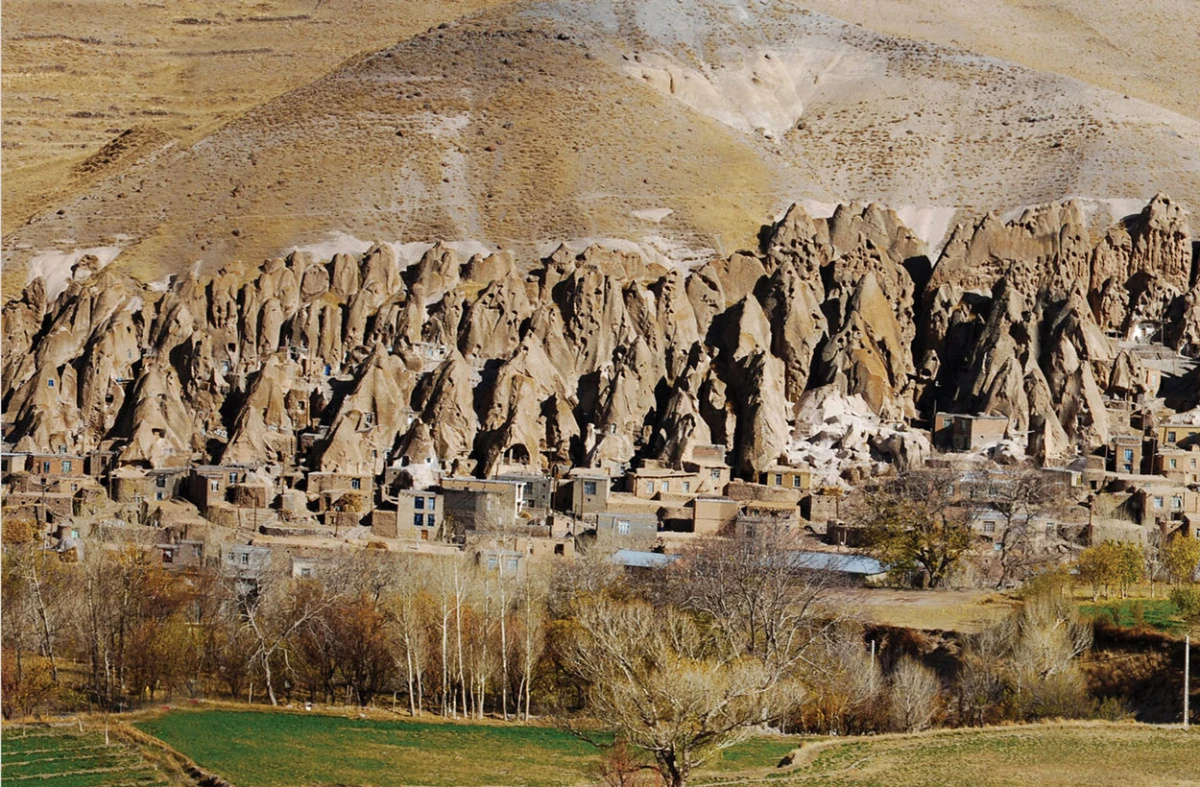
Village Carved In Volcanic Rock In Iran Has Been Providing Habitable Homes For 700 Years Without Cement, Steel, Or Concrete And With Natural Thermal Comfort Year-Round
In northwestern Iran, about 60 kilometers from the city of Tabriz, there is one of the most impressive examples of carved architecture on the planet. On the slopes of Mount Sahand, cone-shaped volcanic formations have been transformed, over centuries, into permanent homes carved directly into the rock. The site is known as Kandovan and represents a rare case of continuous human settlement in natural structures shaped by volcanic eruptions and erosion. What sets Kandovan apart from other similar sites is that the constructions are not archaeological ruins or uninhabited tourist attractions. They are functional buildings that continue to be used, integrating modern infrastructure with the original geology.
The main technical characteristic of these constructions is the total absence of cement, structural steel, or reinforced concrete. The mountain itself serves as a structure, thermal insulation, and physical support.
Mount Sahand And The Geological Origin Of The Tuff Formations
Mount Sahand is an extinct volcano that has been active for hundreds of thousands of years. Its eruptions produced large volumes of pyroclastic flows — mixtures of ash, rock fragments, and hot volcanic material — that settled in the surrounding valleys.
-
After nearly twenty years of halted and resumed construction, the Transnordestina has reached 79% completion and finally promises to connect the hinterland to two ports on the Northeast coast.

-
Madrid wants to build the world’s largest Ferris wheel at 260 meters and €300 million, surpass Dubai, transform Spain’s landscape, and create its own ‘Eiffel Tower’ in a project that still faces resistance and depends on approval.
-
Saudi Arabia and Qatar signed the agreement to connect Riyadh to Doha with a high-speed train traveling at 300 kilometers per hour, covering 785 kilometers of desert in about two hours.
-
What is the ideal distance between one pillar and another? The measurement used in houses with up to 2 floors can avoid huge beams, low ceilings, and extra construction costs.



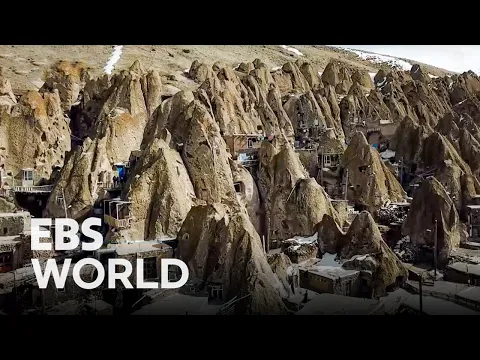
Over time, erosion caused by rain, wind, and climate variations has sculpted these layers into vertical cones known as “fairy chimneys.” The predominant material is volcanic tuff, also called ignimbrite.
The tuff has specific geotechnical properties that explain its suitability for carving:
- Low initial shear strength
- Progressive hardening after exposure to air
- High natural structural thickness
- Good stability when protected against excessive infiltration
These characteristics have allowed the formations to be manually excavated without structural collapse, maintaining integrity for centuries.
Excavated Architecture: Building Directly In The Rock
Construction in Kandovan does not involve raising conventional walls. The process begins with the selection of a geologically stable cone. From there, excavation is done with simple tools, gradually expanding the internal space.


The wall thickness varies between 1 meter and 2.5 meters, depending on the geometry of the cone. This thickness ensures structural stability and excellent thermal insulation.
The buildings can have two to four floors. The traditional organization follows a functional logic:
- Lower floor intended for storage
- Intermediate floors used as living areas
- Upper floor, when present, reserved for food storage
Stairs are often carved into the outer rock face, reducing internal interventions and allowing for cross ventilation.
Internally, niches carved into the walls serve as structural cabinets. Stone platforms serve as bases for resting areas. Traditional ovens and heating systems are integrated into the excavated floor.
There is no use of mortar, metal beams, or conventional foundations. The mountain is the structure.
Natural Thermal Performance And Thermal Mass Of Volcanic Tuff
One of the most relevant aspects of Kandovan from a thermal engineering perspective is the behavior of volcanic tuff as a material with high thermal mass.
Thermal mass refers to a material’s ability to absorb heat slowly and release it gradually. This reduces sharp internal temperature fluctuations.
In the Mount Sahand region, external temperatures can exceed 35 °C in the summer and drop below zero in the winter. Even under these conditions, the excavated spaces maintain a relatively stable temperature.
The mechanism is simple:
- During the day, the rock gradually absorbs external heat
- At night, it slowly releases the accumulated heat
- In winter, it retains internal heat for long periods
This behavior drastically reduces the need for mechanical climate control systems.
The Laleh Kandovan Rocky Hotel, inaugurated in 2012 within the rock formations, confirms this performance. In summer, cooling is natural. In winter, supplemental heating is used for comfort, not out of structural necessity.
Cultural Heritage And International Recognition
Kandovan was officially registered as a cultural heritage site of Iran in 1997. In 2023, it received recognition from the United Nations World Tourism Organization as one of the best global tourist villages, highlighting architectural preservation and sustainable integration with the environment.

Unlike places like Göreme in Cappadocia, where rock formations have become mainly tourist attractions, Kandovan remains functional as an active settlement.
This continuity allows for the observation of the interaction between geology, vernacular architecture, and modern infrastructure.
Contemporary Infrastructure Integrated With The Rock
Despite the age of the structures, Kandovan is not frozen in time. The buildings have incorporated:
- Electricity
- Plumbing system
- Glass installed in sculpted openings
- Adapted sanitary facilities
The integration occurs without altering the main structural logic. The rock remains the central element. Some units have been adapted for tourism use while maintaining the original form. The hotel installed in the rock formations has about 40 units, preserving the traditional typology known locally as “karaneh.”
Comparison With Conventional Concrete Construction
Modern reinforced concrete construction offers advantages such as standardization, speed of execution, and predictable structural control. However, it involves:
- High energy consumption in cement production
- Significant waste generation
- Need for artificial climate control
- Periodic maintenance of systems
International data indicate that the construction industry is one of the largest generators of urban solid waste. Mortar and concrete represent a significant portion of the debris produced.
Excavated architecture eliminates production stages associated with the manufacturing and transportation of materials. The intervention occurs directly on site, using the available natural raw material.
Passive Sustainability And Energy Efficiency
The concept of passive sustainability is based on the use of natural properties of the environment to ensure comfort and functionality without intensive energy consumption.
In Kandovan, passive principles include:
- Increased wall thickness
- Topographic protection against winds
- Strategic orientation of openings
- Natural ventilation
- Thermal inertia of the tuff
These elements reduce the need for mechanical equipment and enhance energy efficiency. Contemporary architecture increasingly seeks to reclaim similar principles through bioclimatic designs.
Geology As An Ally Of Architecture
Kandovan demonstrates that geology can function as an integral constructive element. Instead of removing the terrain to erect artificial structures, the architectural design starts from adapting to what already exists.
The logic is the reverse of conventional construction:
- Instead of transporting external materials, local material is used
- Instead of creating artificial insulation, natural thermal mass is utilized
- Instead of deep foundations, the structure is already anchored
When The Mountain Becomes Structural Engineering
Kandovan is not just a geological curiosity. It is a functional example of architecture integrated with the natural environment.
The volcanic tuff from Mount Sahand provided raw material. Erosion shaped the basic form. Human intervention merely adapted the interior to functionality.
- No cement.
- No steel.
- No reinforced concrete.
The mountain became the construction itself. At a time when global construction faces challenges related to sustainability, energy efficiency, and waste generation, Kandovan emerges as a relevant case study on how natural materials and thermal mass can be utilized strategically.
The excavated architecture of northwestern Iran demonstrates that sometimes the structural solution lies not in adding more technology but in better understanding what already exists beneath our feet.





Be the first to react!