Portuguese
  Spanish


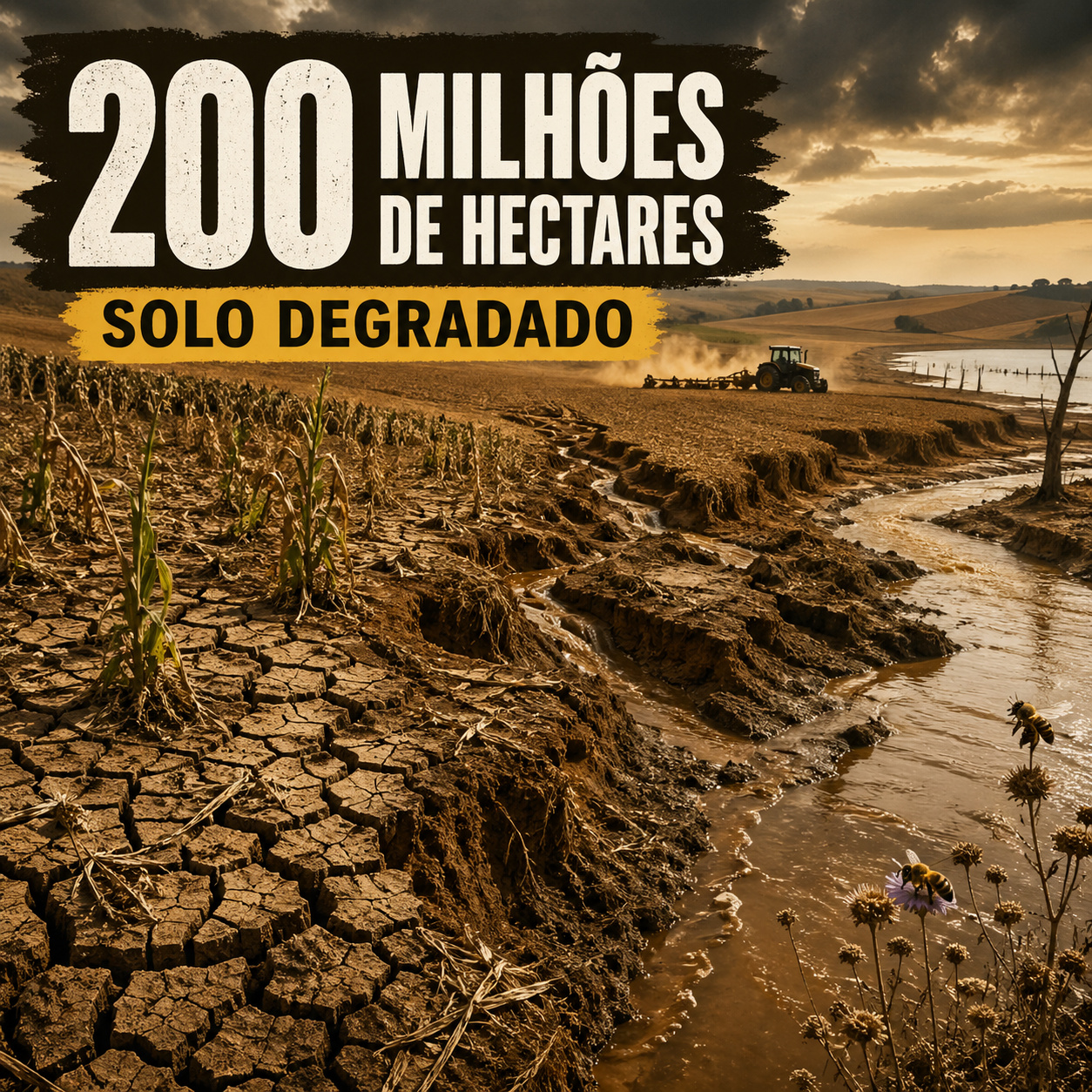

Brazil has 200 million hectares of degraded soils, compromising water, soil, and pollination and putting agricultural production at risk, according to experts.
On September 24, 2019, the Brazilian Platform on Biodiversity and Ecosystem Services published the 1st Brazilian Diagnosis of Biodiversity and Ecosystem Services, bringing together 85 experts to map how environmental degradation in Brazil threatens biodiversity, water, soil, pollination, food production, and coastal protection. The document followed the assessment logic of the IPBES and consolidated evidence on the ecosystem services that support the country’s economy, agriculture, and water security. One of the strongest data associated with the diagnosis was highlighted by Carlos Alfredo Joly, coordinator of BPBES, in an interview published by Unicamp on April 12, 2018: Brazil had about 200 million hectares of degraded areas, according to data from the Forestry Department of the Ministry of the Environment. This soil degradation affects all Brazilian biomes, advances silently, and weakens essential services such as soil fertility, water regulation, natural pest control, pollination, and agricultural productivity.
Next, understand why the loss of biodiversity and the degradation of ecosystem services can compromise the real foundation of the Brazilian economy, affecting everything from food production to water availability and ecosystem security.
Ecosystem services sustain agriculture, water, and climate and disappear without generating visible events that draw attention
The concept of ecosystem services describes natural functions that support human activities. When a pollinator acts in a field, an essential process for food production occurs. When a riparian forest stabilizes the soil and prevents river siltation, a water protection mechanism occurs.
-
Brazilian Family’s Cheese, Started with One Cow in 1984, Named Best in the World, Beating 2,700 Competitors from 30 Countries

-
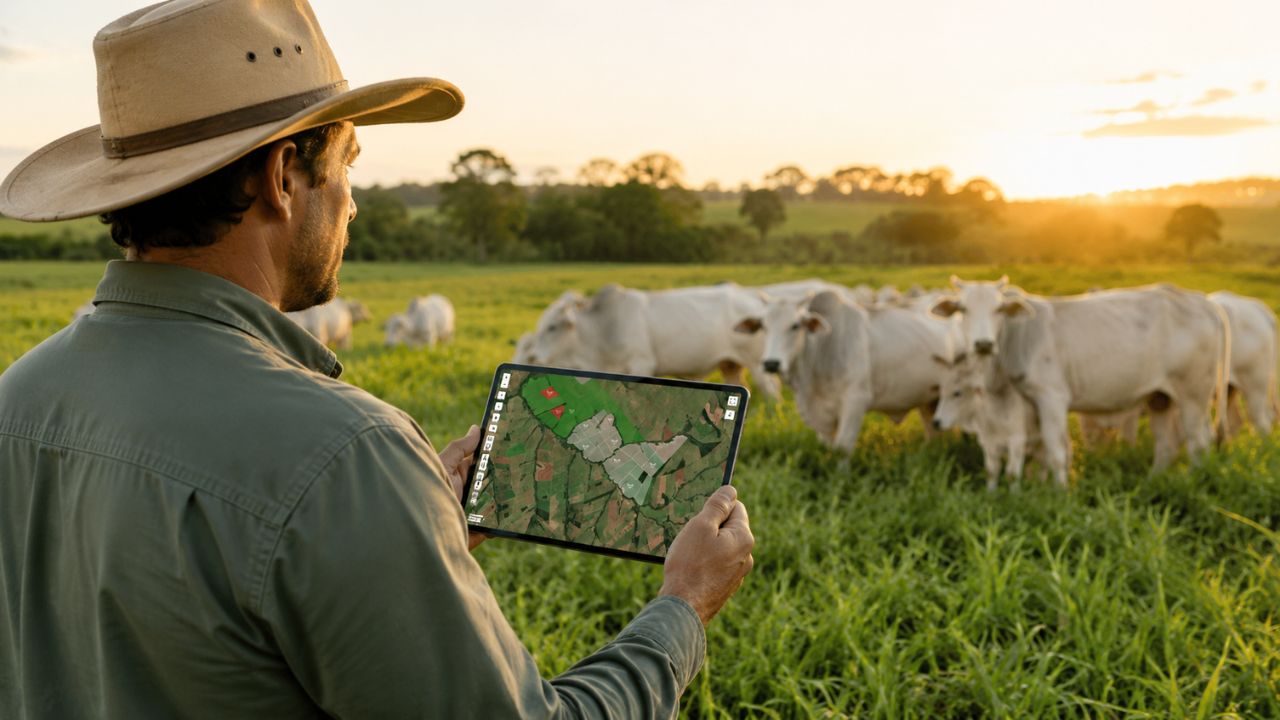
Brazilian Ranchers Use Satellites to Optimize Pasture Management and Prevent Feed Loss in Cattle Farms

-
Russia Follows China in Recognizing Brazil as Free from Foot-and-Mouth Disease Without Vaccination, Boosting Meat Exports and Agribusiness Potential

-
23-Year-Old Brazilian Turns Beekeeping into College Tuition, Harvesting Honey Twice a Year from 50 Hives




When soils rich in organic matter absorb water and release it gradually, natural water regulation occurs. When forests release water vapor and influence rainfall patterns over long distances, climate regulation occurs.


These processes have direct economic value, although they do not appear in traditional accounts. The 2019 global IPBES report estimated that up to US$ 577 billion in annual global agricultural production is at risk solely due to the reduction of pollinators.
In Brazil, the diagnosis shows that 85 of the 141 agricultural crops depend on animal pollination, including strategic products like cocoa, coffee, soybeans, watermelon, and passion fruit.
Destruction of environmental services does not make headlines and advances as accumulated loss of productivity and increased costs
The main characteristic of current environmental degradation is invisibility. Sudden events generate immediate reaction. Slow processes do not generate collective perception.
A river that disappears over decades due to loss of riparian forest does not make the news. A field that requires more chemical inputs due to the loss of natural pest control is not directly associated with environmental degradation.
The result is a gradual increase in costs and reduction in productive efficiency without clear identification of the cause.
Fragmented Atlantic Forest loses ecological capacity even when part of the area still exists
In the Atlantic Forest, degradation is historical and intense. The biome has been reduced to less than 12% of its original area and now exists in isolated fragments.
This pattern generates the so-called edge effect, where exposed areas suffer greater temperature variation, moisture loss, and invasion by external species.
Even if the remaining area exists, its ecological functionality is reduced, compromising environmental services.
Cerrado loses capacity to store water and compromises the functioning of the country’s main river basins
The Cerrado is responsible for the origin of some of the largest river basins in Brazil. The conversion of this biome into agricultural areas eliminates the soil’s ability to function as a natural water reservoir. As a result, aquifer recharge decreases and the regional hydrological cycle is disrupted.
In addition, the Cerrado participates in the formation of the so-called “flying rivers,” atmospheric flows that influence rainfall in distant regions.

In the Amazon, the current risk is associated with the ecological tipping point. Studies indicate that upon reaching a certain level of deforestation, the forest may lose its ability to sustain its own rainfall regime.
This process can occur even without new deforestation, simply as a consequence of accumulated degradation.
Pollinators enter global decline and put essential agricultural crops for Brazil at risk
The reduction of pollinators occurs due to multiple combined factors. The use of pesticides affects the nervous system of these organisms, habitat loss reduces their availability, and climate change alters natural cycles.
This set of factors directly compromises agricultural productivity. The soil suffers degradation from compaction, erosion, and loss of organic matter.
These processes reduce productive capacity and increase dependence on fertilizers and soil amendments. In the long term, the system enters a cycle of productivity loss and increased costs.
Agricultural expansion into new areas accelerates degradation by exploiting soils with no history of intensive use
Agricultural frontier regions show faster degradation. Newly converted soils have high initial productivity but lose fertility quickly when subjected to intensive use without proper management.
This pattern is repeated in different regions of the country. The country has about 12% of the world’s known species but shows high levels of degradation.

This contrast reveals a land use model that prioritizes immediate returns over sustainability.
The traditional economy does not account for environmental services. This causes short-term decisions to ignore long-term impacts. The result is the progressive loss of essential resources without immediate perception.
Now we want to know: can Brazil still reverse the degradation, or has it already entered a process of silent collapse?
The advance of environmental degradation puts essential systems for the economy and food security at risk.
In your view, is it still possible to reverse this process, or has the country already entered a structural path of irreversible loss?