Portuguese
  Spanish


The digital bank that originated in Brazil became one of the largest in the world and ended the year with the highest profit in its history, driven by expansion in Latin America
Nubank has evolved from just the purple card fintech to become one of the largest digital banks on the planet. The company closed 2025 with 131 million customers and a record net profit of US$ 2.87 billion, numbers that place the Brazilian company at a level that very few financial institutions in the world reach.
Nubank’s results are impressive due to their speed. There were 17 million new customers in 2025 alone, and a profit that grew more than 45% in one year. All this from a bank without physical branches, which started by questioning how Brazilians related to banking fees and bureaucracy.
131 million customers in three countries
The number that best translates the size of the company is its user base. According to the Jornal de Brasília, the bank ended 2025 with 131 million customers, combining Brazil, Mexico, and Colombia, after adding 17 million accounts in a single year.
-
Brazil Holds 95% of the World’s Niobium and Exported $2.1 Billion Worth in 2024

-
Embraer Hits Record $31 Billion in Orders, Largest Backlog in Its History

-
In 20 Years, Brazil Transformed from Cotton Importer to World’s Largest Exporter
-
Brazilian Official Proposes Plan to Revive 223 km Railway, Connecting 13 Cities and Transporting 32,000 Passengers and 600 Containers Daily, Plus a Tourist Train in Just 2 Hours 20 Minutes.


This growth rate is rare in the financial sector. Traditional banks take decades to capture a fraction of this audience. Reaching 131 million customers without a single physical branch is a feat that redefines what a bank is, and shows how mobile service has become the new financial counter.
Nubank and the record profit of US$ 2.87 billion
The growth was accompanied by profitability. According to Jornal de Brasília, Nubank recorded a net profit of US$ 2.87 billion in 2025, an increase of 45.6% over the previous year, the highest result in the institution’s history.
This data dismantles an old criticism that fintechs grew customers but did not make a profit. The bank proved that it is possible to scale and profit at the same time. Growing user base and profit together is what separates a technology promise from a truly solid business, and that is exactly what the 2025 result delivered.
US$ 894.8 million just in the last quarter

The momentum was also clear at the end of the year. According to the InvestTalk portal, from Banco do Brasil, in the fourth quarter of 2025 alone, Nubank had a record net profit of US$ 894.8 million, an annual increase of 50%.
Profiting almost a billion dollars in three months is the stuff of a giant bank. The data shows that the company is not just growing but accelerating. When the last quarter breaks record after record, the signal is that the business engine continues to gain strength, and not slowing down, as many predicted for the fintech sector.
From fintech to one of the largest digital banks in the world
The journey so far has been swift. Nubank started by challenging banking bureaucracy with a no-annual-fee credit card and a simple app. In May 2024, it became the first digital banking platform outside Asia to surpass the 100 million customer mark, adding its operations in Brazil, Mexico, and Colombia.
This pioneering outside the Asian axis is symbolic. It shows that a financial technology company from Latin America can compete on equal footing with global giants. Going from an annoying idea for traditional banks to becoming a global reference is the kind of leap that few Brazilian companies have made, and Nubank did it in just over a decade.
The revenue that grew 45% in one year
The size of the business also appears in the revenue. According to Jornal de Brasília, the bank’s revenue rose 45% in 2025, reaching US$ 16.3 billion, while the total credit portfolio expanded 40%, reaching US$ 32.7 billion.
These numbers show a bank that doesn’t just live off cards but advances in loans, payments, and investments. The growing credit portfolio is what sustains long-term profit. Diversifying financial products is the path that transforms a popular app into a full-fledged bank, and the data indicates that this transition is indeed happening.
The conquest of Mexico
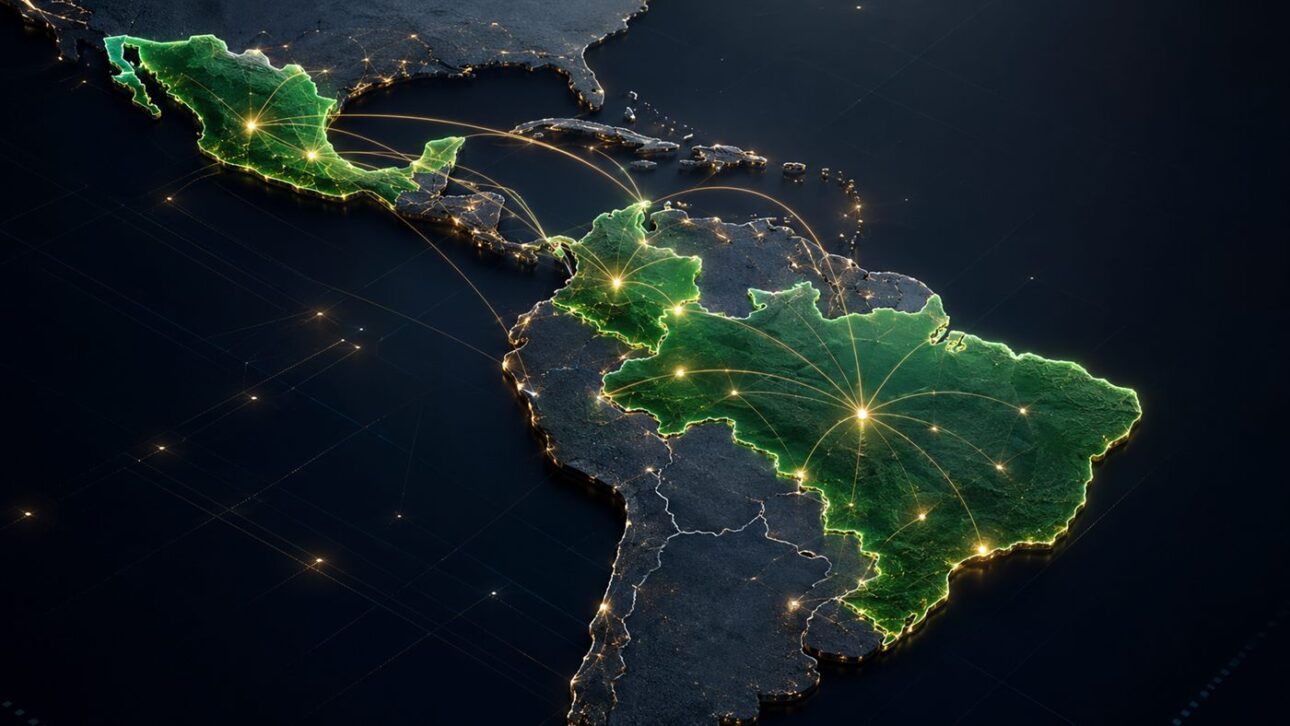
The next big chapter is outside Brazil. In April 2025, the bank’s Mexican operation received approval from the country’s financial authorities to convert into a multiple bank, which expands the offering of credit, payments, and savings products in Mexico.
This advancement is decisive because Mexico is a huge and still underbanked market, fertile ground for Nubank’s model. Replicating abroad the success achieved in Brazil is the company’s trial by fire, and the Mexican banking license is the passport to this new phase of growth in Latin America.
Why the ROE of 30% impresses
For those who understand banking, there is a number that draws more attention than profit. The Jornal de Brasília points out that the return on equity, known as ROE, rose from 28% in 2024 to 30% in 2025, an extremely high profitability metric for the financial sector.
A ROE of 30% means that the bank generates a lot of profit for every real invested by shareholders, a mark that surpasses many established traditional banks. Having the efficiency of a giant while still being a young company is what impresses analysts the most, and helps explain why the company’s value soared on the American stock exchange.
The ambition to become a global platform
Nubank does not hide that it wants more. The founder and president, David Vélez, stated that the company remains focused on succeeding in Latin America while building the infrastructure to eventually evolve into a global digital financial services platform. The goal is no longer regional.
The question remains whether the bank born in Brazil will indeed be able to replicate abroad what it has done here and become a global financial powerhouse. Did you imagine that a bank without branches, created in Brazil, would have more customers than the entire population of many countries?