






 Portuguese
  Spanish


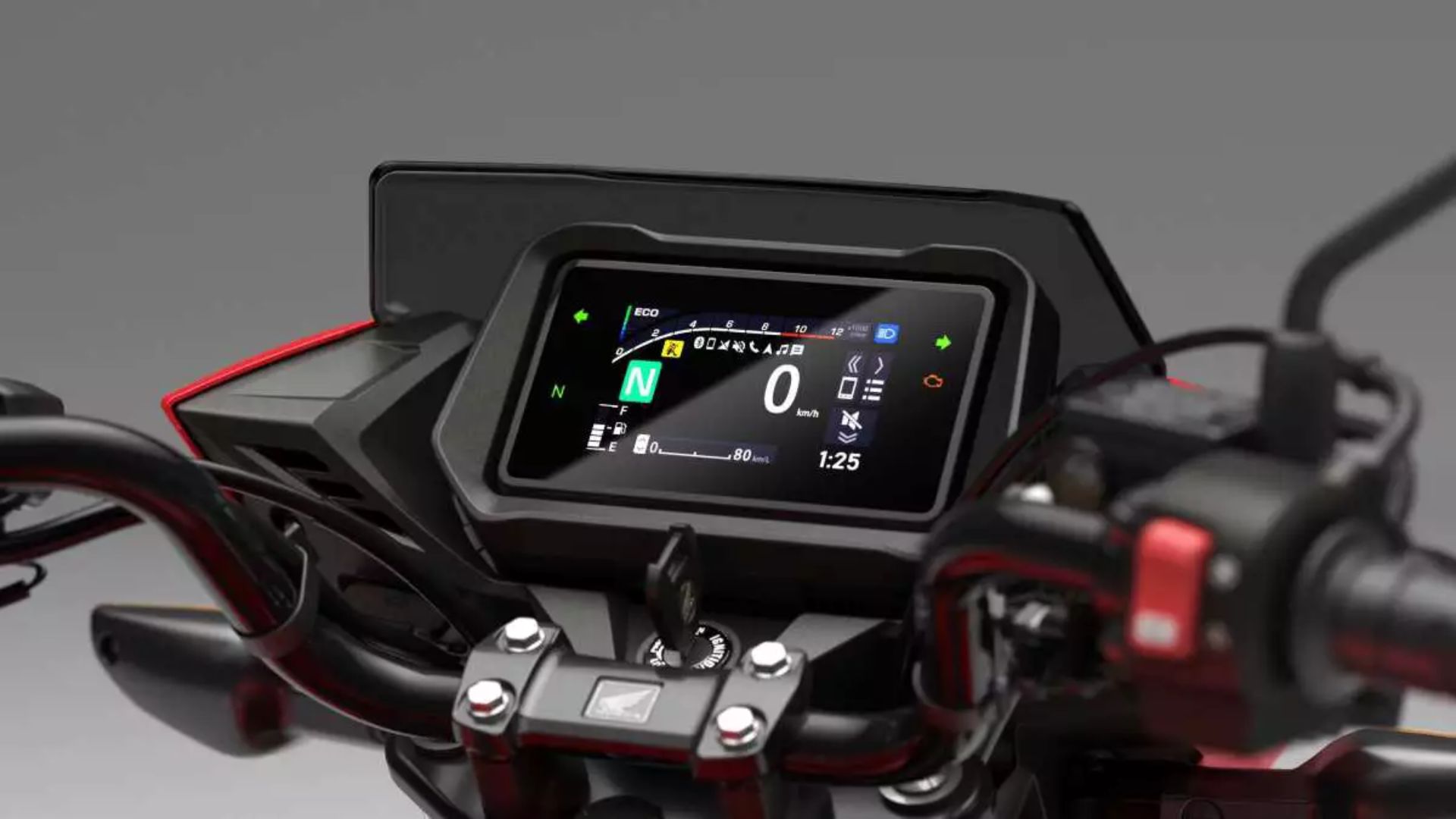


The Honda CB125F 2026 Combines Fuel Economy Above 66 Km/L, Color TFT Panel, Full LED Lighting, and the Unprecedented Idling Stop Technology in Manual Motorcycles, Offering Range Close to 730 Km in Urban Use.
The Honda CB125F 2026 is the new 125 cm³ urban motorcycle from the Japanese brand for the European market and comes with a hard-to-ignore combination: homologated fuel consumption of up to 66.7 km/l, an 11-liter tank, and an estimated range of about 730 km according to the international WMTC cycle.
Besides efficiency, the model debuts the Idling Stop technology in a Honda motorcycle with a manual transmission, and incorporates a color TFT panel, full LED lighting, and smartphone connectivity.
Consumption Above 66 Km/L and Extended Range
Homologated by the WMTC standard, the CB125F 2026 achieves a stated average consumption of 66.7 km/l, a figure announced in 2025 in European markets.
-
1983 Chevrolet Runs Over 100,000 km Without Gasoline, Powered by Wood Chips, Reaches 125 km/h in Airport Test

-
Workshop Converts Giant Tractor Tire Tricycle into a Three-Wheel Drive Hybrid with 36,000-Watt Electric Motor Capable of Climbing Hills

-
Sales of Brazil’s Cheapest Electric Car Halted Before First Deliveries: E-Motors Suspends Emova Easy Due to Import Tax Increase and Rising Freight Costs

-
Nissan Discontinues Qashqai SUV Amid Cost-Cutting, Chinese Competition, and Product Line Review


Considering the 11-liter tank, Honda estimates an approximate range of 730 to 733 km on a single fill-up, performance that places the motorcycle among the most economical in the low-displacement category worldwide.
In practice, this level of range allows for long urban and peri-urban distances with few trips to the gas station, which is especially relevant in a context of expensive fuel and intensive use of motorcycles as work tools.
Specialized publications emphasize that, even with eventual variations in real use, the CB125F remains among the most efficient 125 cm³ motorcycles available today outside of Brazil.
124 Cm³ Engine and eSP Technology

The mechanical set of the Honda CB125F 2026 consists of a 124 cm³ OHC single-cylinder engine, four-stroke, two-valve, and air-cooled.
According to official data from the brand in Europe, the engine delivers 8 kW (about 11 hp) at 7,500 rpm and 10.9 Nm of torque at 6,000 rpm, prioritizing linear responses at low and medium revolutions, typical for daily urban use.
The unit is part of the eSP (enhanced Smart Power) family, developed to reduce internal friction, optimize thermal performance, and contribute to low fuel consumption.
The fueling is done via electronic fuel injection PGM-FI, already known from other Honda models, calibrated to meet Euro 5+ emissions standards without sacrificing energy efficiency.
This combination of a compact engine, updated electronic management, and a focus on low friction helps explain why the CB125F 2026 can offer fuel consumption close to or above 66 km/l in standardized test patterns, while maintaining sufficient performance to tackle the heavy traffic of major cities.
Idling Stop Debuts in Manual Transmission
One of the main technical highlights of the CB125F 2026 is the adoption of the Idling Stop system, which automatically turns off the engine during longer stops, such as at traffic lights and in congestion, and restarts it when the rider activates the clutch.
This marks the first time this technology has appeared in a Honda motorcycle with a manual transmission, following its established use in scooters like the PCX, SH125i, ADV, and also in the brand’s premium models.
In practice, the feature operates to reduce fuel consumption and emissions in urban circulation, precisely the scenario where the engine remains idle for the longest time.

The calibration was designed to restart the engine quickly and smoothly, without noticeable jolts, preserving rider comfort.
In situations where the rider prefers continuous operation, the system can be deactivated via command on the panel itself.
Sporty Design and Full LED Lighting
Visually, the CB125F 2026 follows the design language of larger models in the CB family.
The tank is more angular, the side fairings have been redesigned, and the front now features a new headlight assembly with full LED lighting, as well as a small darkened windscreen.
The rear has also been updated, with a new tail design and LED taillight.
The model weighs 117 kg in running order, a measurement that contributes to ease of handling, especially for beginners or those using the motorcycle for short, frequent urban commutes.
The compact dimensions, combined with a wheelbase of about 1,280 mm, facilitate maneuvers in tight spaces and quick direction changes.
The chassis consists of a diamond-type steel frame, telescopic front suspension, and a rear set with two adjustable preload shock absorbers.
In terms of braking, the motorcycle uses a disc brake in the front and a drum brake in the rear, with a CBS system.
TFT Panel and Smartphone Connectivity

In terms of onboard technology, the CB125F 2026 features a 4.2-inch color TFT panel, with modern graphics and high legibility.
The system is compatible with Honda RoadSync, allowing integration with smartphones for access to navigation, calls, messages, and media.
The motorcycle also includes a USB-C charging port near the handlebars for charging mobile devices, a feature that aligns with the intensive use of route, delivery, and communication apps by many urban motorcyclists.
Items such as a center stand and passenger grab handles complete the package aimed at everyday use.
With this set, the CB125F 2026 offers a level of connectivity and convenience still uncommon in 125 cm³ motorcycles, especially when compared to entry-level models sold today in Brazil.
Possible Impact of Potential Arrival in Brazil
So far, there has been no official announcement from Honda regarding the arrival of the CB125F 2026 in the Brazilian market.

Specialized articles highlight that the model is focused on Europe and other international markets, and only mention the potential interest of consumers in Brazil if the motorcycle were offered here.
If it were ever nationalized or officially imported, the CB125F would have major rivals such as the Yamaha Factor 125i and Honda Pop 110i, which are currently references for low operating costs and simplicity, but without the same digital technology and connectivity package.
To operate in the national market, eventual adaptations would be expected, such as a flex version, as well as suspension calibration and possible structural adjustments to handle more irregular road surfaces.
While this confirmation is pending, the CB125F 2026 consolidates in Europe a trend towards smaller, more efficient motorcycles equipped with features previously restricted to higher segments.
With so many technological changes combined in one compact model, which of these attributes do you consider most decisive when choosing an urban motorcycle today?







A mottu vai pegar logo pra colocar no lugar da tvs sport
Vai chegar aqui por mais de 20 mil.
66 km por litro???
Não com a nossa gasolina E30 batizado.
Vc foi bem generoso amigo! Na minha cidade um posto de gasolina foi internado porque a gasolina tinha 70% de etanol.