Portuguese
  Spanish


In Campinas, Cassini, from the Praça family, built the world’s first 100% automated polvilho biscuit factory, producing a thousand tons per month: an automated factory that was born from an idea João Leite Praça had in a hospital canteen after a motorcycle accident.
The best ideas often appear in the most unlikely places. Cassini’s idea emerged in a hospital canteen. In 1976, the young João Leite Praça suffered a serious motorcycle accident and spent 105 days hospitalized in Formiga, in the interior of Minas Gerais. To pass the time during recovery, he would go down to the canteen, and it was there that he noticed something simple and powerful: the polvilho biscuit was flying off the shelf, with about 200 bags sold per day. He left the hospital with a fixed idea in his head.
The story was recorded in material from ABRAS and shows how an observation turned into an industry. That polvilho biscuit that João saw selling so much became a business that, in 2004, would gain the world’s first 100% automated polvilho biscuit factory in Campinas. Today, Cassini’s automated factory churns out a thousand tons per month and fills 250 packages per minute, transforming a homemade treat into large-scale industrial production.
The idea that was born in a hospital canteen
Before the factory, there was a keen observation.
-
Attention Brazilian Tap-to-Pay Users: Quick Transactions May Conceal Important Details Noticed Only Post-Purchase

-
Why Air Conditioning Remains Scarce in Millions of European Homes Despite Deadly Heatwaves, While Nearly 90% of U.S. Homes Have It

-
7.1 Magnitude Earthquake in Venezuela Shakes Buildings in the Brazilian Amazon: Residents Report Panic as Civil Defense Monitors Aftershocks Far from Epicenter in Morón
-
São Paulo Beach Ranked Among World’s Best, But Access Requires Challenging Hike


Hospitalized for over three months after the accident, João Leite Praça noticed that the most sought-after item in the hospital canteen was the humble polvilho biscuit.
About 200 bags were sold every day, a volume that sparked the business idea in his mind.
The Praça family already had a knack for the business.
The couple Mauro Leite Praça and Mrs. Eliana had acquired a small bakery in the interior of Minas, founded in 1968, and ran the business with the help of their eight children.
It was within this family structure that João convinced his mother to start producing polvilho biscuits on a larger scale.
The production moved out of the home oven.
Initially, the biscuits were made in the family’s own bakery, with processes similar to those of everyday bread.
It was a large homemade production, still far from the industry that would come later, but already with the seed of what Cassini would become.
The world’s first automated polvilho biscuit factory
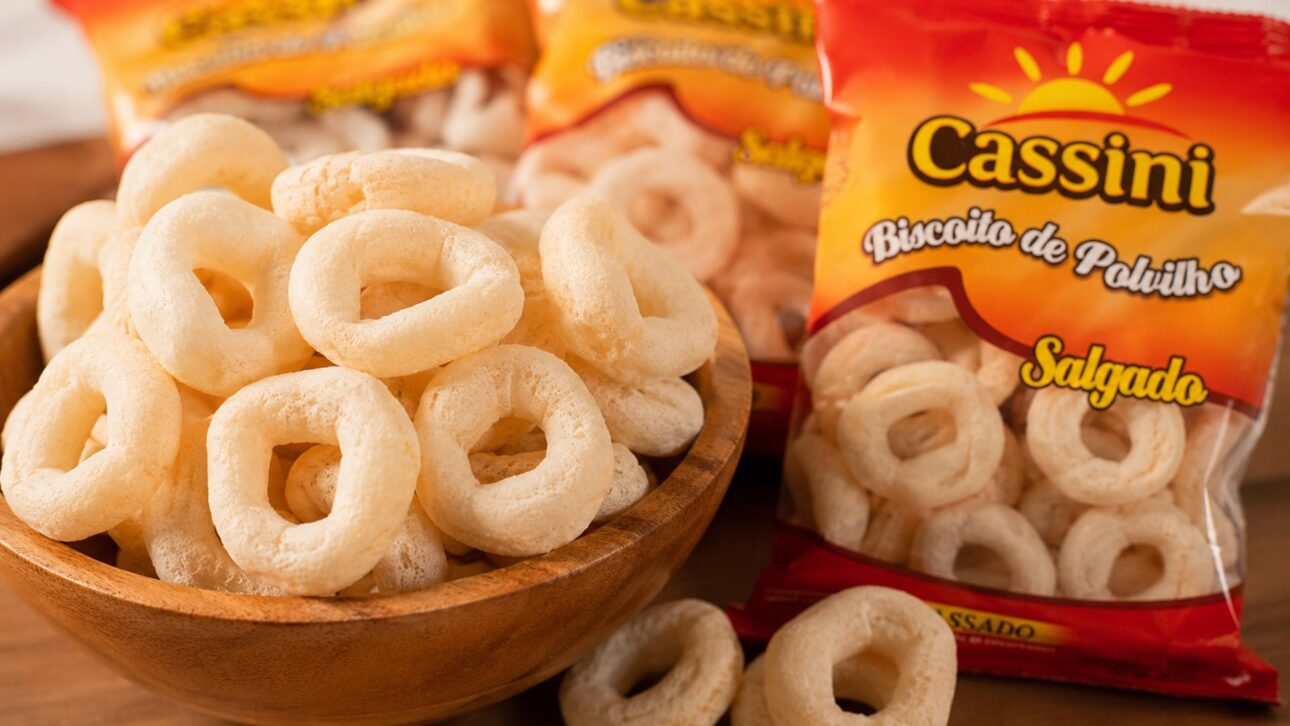
The demand grew, exceeded the bakery’s capacity, and in the mid-1980s the family established the first factory dedicated solely to polvilho biscuits.
Later, a second plant was established in Amparo, in the interior of São Paulo, and the business gained strength.
The most daring milestone arrived in 2004.
In that year, Cassini inaugurated in Campinas what is described as the world’s first fully automated polvilho biscuit factory, with no manual contact in the process.
A typically Brazilian and artisanal product began to be made by an end-to-end automated factory.
Removing the human touch from such a homemade treat is not trivial.
The polvilho biscuit has always been synonymous with family recipes, made with care, and automating this without losing its identity required custom engineering.
Cassini proved that it was possible to industrialize the homemade without losing its character.
250 packages per minute and a thousand tons per month
The numbers of the automated factory are impressive.
The Campinas unit produces about a thousand tons of polvilho biscuits per month, a volume of heavy industrial scale.
At the end of the line, 250 packages are packed per minute, at a pace that no manual production could achieve.
This scale is the result of decades of growth.
From the Minas Gerais bakery in 1968 to the dedicated factory of the 1980s, from the Amparo plant to the megafactory in Campinas, Cassini scaled step by step to become a national reference in polvilho biscuits.
In 2019, the company also acquired a second area in Campinas to triple production.
Automation is what sustains this volume.
Producing a thousand tons monthly with consistent standards is only possible with an automated factory that controls each stage, from dough to packaging.
It was technology that transformed the canteen idea into an industrial powerhouse.
Homemade Cookie Made in the Factory
The biggest technical challenge was an apparent paradox.
How to make, on an industrial line, a cassava starch cookie that tastes homemade?
The answer involved João Leite Praça building what didn’t exist in the market.
There were no suitable machines for the product.
Realizing there were no custom ovens for the cassava starch cookie, he developed the specific machinery himself, adapting the technology to the artisanal way of making the treat.
It was engineering born out of necessity, not bought ready-made.
The company itself acknowledges its modest origins.
“The first factory was a large homemade production, with processes similar to a bakery,” describes Cassini about its beginnings.
From the bakery process to a world-class automated factory, the evolution maintained the homemade DNA of the product.
The Praça Family and the Business Turnaround
Behind Cassini, there is a family story that reinvents itself.
The Praça family started with a bakery in Minas Gerais and rebuilt it after a financial setback, working together, parents and eight children, to restore the lost heritage.
The cassava starch cookie was the product that changed the business level.
The expansion involved several members.
The second factory, in Amparo, was born from a partnership with sister Cristina and brother-in-law Saulo Costa, showing how growth was shared within the Praça family itself.
It was not the work of one, it was a collective construction over decades.
The result is a company of national stature.
In 2011, Cassini was already earning around R$ 55 million and projected to jump to R$ 250 million in the following years, numbers that confirm the transformation of a hospital idea into a robust business.
The Praça family turned observation and stubbornness into industry.
Why the Cassava Starch Cookie is So Brazilian
It’s worth understanding the product at the center of this story.
The cassava starch cookie is made from cassava starch, the starch extracted from cassava, and is one of the most Brazilian treats that exist, present in bakeries, snack bars, and tables across the entire country.
It is cheap, crunchy, affectionate, and crosses all social classes.
This popular character explains the size of the market.
A product consumed nationwide, every day, makes room for an automated factory of a thousand tons per month to find buyers all year round.
Cassini surfed precisely on this constant demand for polvilho biscuits.
There is also an industrial pride in this.
Having the first automated polvilho biscuit factory in the world on Brazilian soil shows that the country knows how to industrialize with technology even the simplest of its treats.
The homemade turned into an industry of knowledge export.
What the Cassini case teaches
The strongest lesson is about seeing opportunity where no one looks.
João Leite Praça turned weeks in the hospital into a market observation and, from this observation, built a polvilho biscuit industry that became a world reference.
It was business vision combined with the courage to build the technology that was missing.
Honest context is worth it.
This is a story that comes from afar, from the accident in 1976 to the automated factory in 2004, and the title of the first in the world is how the company itself describes its pioneering in this niche.
It’s not a novelty of the month, it’s the trajectory of a brand that helped industrialize the treat.
Even so, the example remains current.
Cassini shows that it is possible to take an artisanal and cheap product, like the polvilho biscuit, and bring it to an automated factory of a thousand tons per month without losing its homemade essence.
From a hospital canteen to 250 packages per minute, it is proof that a good idea does not choose a place to be born.
And you, did you imagine that the polvilho biscuit you buy at the bakery might have come from the first factory in the world to fully automate this very Brazilian treat? Tell us in the comments your favorite way to eat polvilho biscuit.