






 Portuguese
  Spanish


Artificial cosmic dust produced in the laboratory allows the study of molecules linked to the origin of life and processes that occur in space.
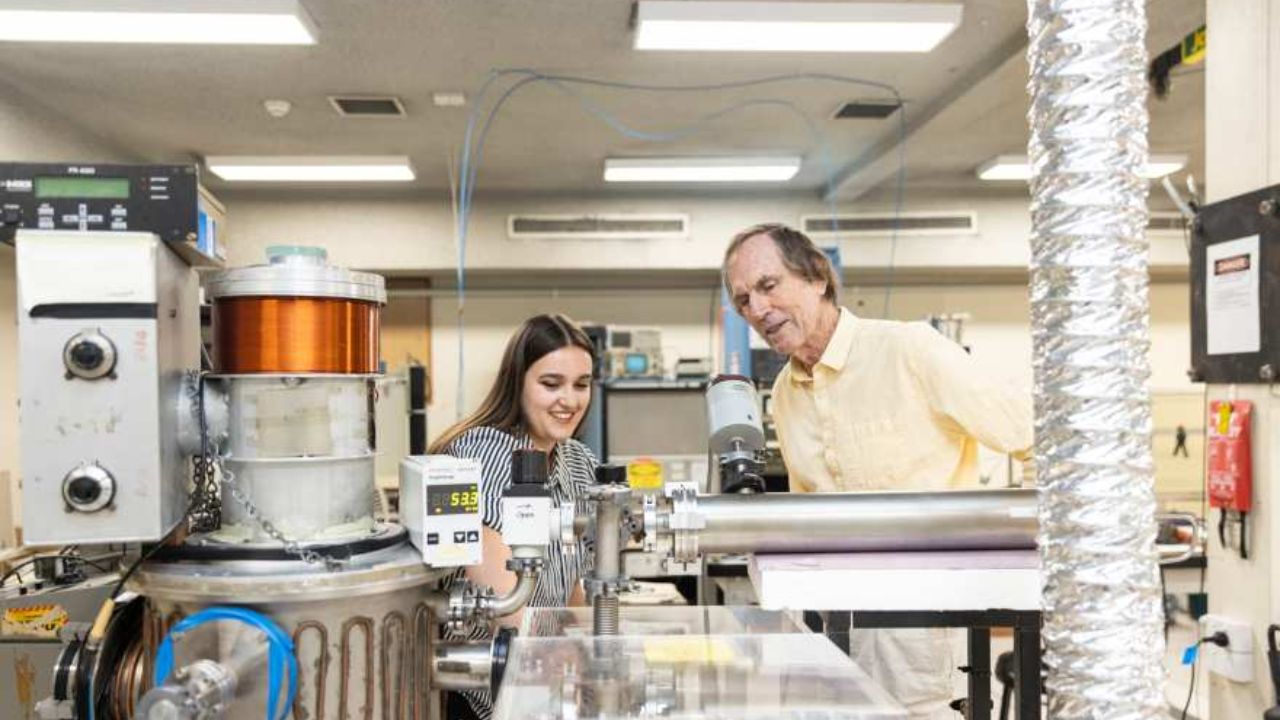
Research conducted at the University of Sydney managed to reproduce in the laboratory a material similar to the dust present in space, opening new possibilities to investigate how fundamental compounds for life may have emerged in the Universe. The work done by doctoral student Linda Losurdo and Professor David R. McKenzie had the results published in January 2026 in the scientific journal The Astrophysical Journal.
The experiment simulated extreme environments found near stars and stellar explosions. For this, the researchers used a combination of gases subjected to conditions similar to those of space, creating microscopic particles that reproduce characteristics observed in the so-called cosmic dust. According to the authors, the discovery could help answer one of the most debated questions in science: where did the chemical ingredients that gave rise to life on Earth come from?
How the artificial cosmic dust was produced
To create the material, the team removed almost all the air from glass tubes using a vacuum pump. Then, three gases were inserted:
-
Table Salt Sodium Emerges as Billion-Dollar Bet for Cheaper Electric Vehicle and Energy Storage Batteries

-
Ultrasound Body Scanner Promises Full-Body Mapping in 60 Seconds Without Radiation or Contrast, Enhanced by AI for a Faster, More Comfortable Preventive Exam Experience

-
In the US, researchers attached iPhones to a $25 grabber, turning 22 homes into a database to teach robots to open drawers and handle objects like humans.

-
IBM Breaks 1-Nanometer Barrier with 0.7 nm Chip Featuring Nearly 100 Billion Transistors and 3D Architecture, Promising AI Revolution


- Nitrogen;
- Carbon dioxide;
- Acetylene.
After this step, the mixture received an electric discharge of approximately 10,000 volts for about an hour.
Under this intense energy, the molecules present in the gases were broken and reorganized into more complex chemical structures. Over time, these compounds deposited on silicon chips placed inside the tubes, forming a thin layer of dust similar to that found in space environments.
What makes artificial cosmic dust so important
The researchers explain that interstellar dust acts as a kind of chemical platform capable of favoring the formation of organic molecules.
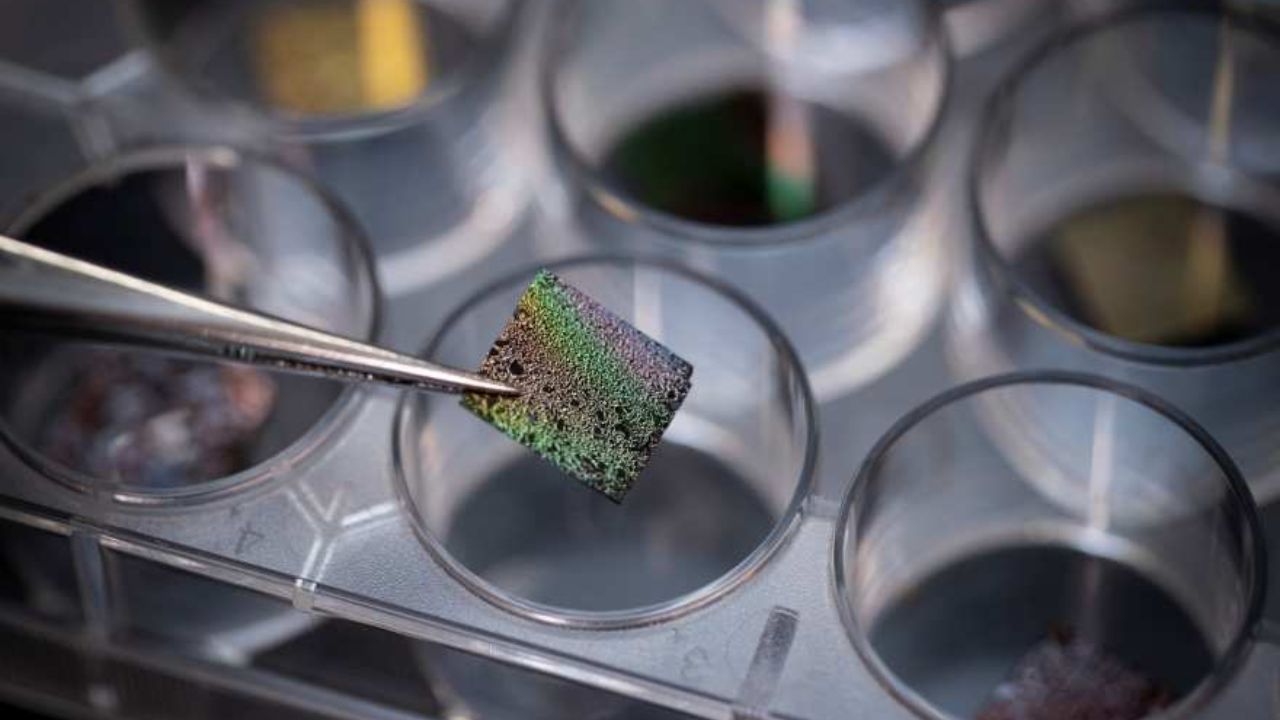
The material produced in the laboratory presented combinations of carbon, hydrogen, oxygen, and nitrogen, a set known by the acronym CHON. These elements participate in the formation of various substances considered essential for life.
According to the study, understanding how these structures arise can help clarify whether the basic components of life were born directly on Earth or arrived on the planet transported by meteorites, comets, and other space particles.
Chemical signatures confirm similarity with space material
One of the most relevant results of the work was the identification of the same infrared marks observed in the dust found in space.
These signatures function as a kind of chemical fingerprint used by scientists to recognize materials in distant regions of the Universe.
The similarity between the signals emitted by the material created in the laboratory and those observed in cosmic environments reinforces that the experiment managed to reproduce processes that really happen outside Earth.
Statements highlight the potential of the research
Linda Losurdo stated that researchers no longer need to rely exclusively on the arrival of asteroids or comets to analyze this type of material. According to her, recreating these environments in the laboratory allows for investigating their composition and better understanding their formation.
The researcher also compared the experiment to creating a small part of the Universe within the laboratory, highlighting the potential of the technique to study processes occurring in ancient stars and regions where new stars are being born.
What scientists intend to discover now
One of the team’s future goals is to build a comprehensive library of infrared signatures obtained from different samples of artificial cosmic dust. This database could assist astronomers in identifying space regions with characteristics similar to those reproduced in the experiments.
Professor David McKenzie, co-author of the study and research advisor, stated that the technique will allow for the investigation of conditions impossible to be observed directly in space. According to him, understanding factors such as temperature and energy intensity during dust formation can reveal important details about environments where chemical reactions associated with life occur.
Between approximately 3.5 billion and 4.56 billion years ago, Earth received a large amount of material from space through meteorites, micrometeorites, and interplanetary particles. Although this hypothesis is widely studied, there are still doubts about the origin of the organic compounds transported by these celestial bodies.
The recreation of artificial cosmic dust represents a new tool to investigate this enigma. By reproducing in the laboratory processes that occur in stars, supernovas, and interstellar clouds, scientists gain access to information that can help reconstruct fundamental stages of the chemical evolution of the Universe and possibly the very origin of life.


