Portuguese
  Spanish


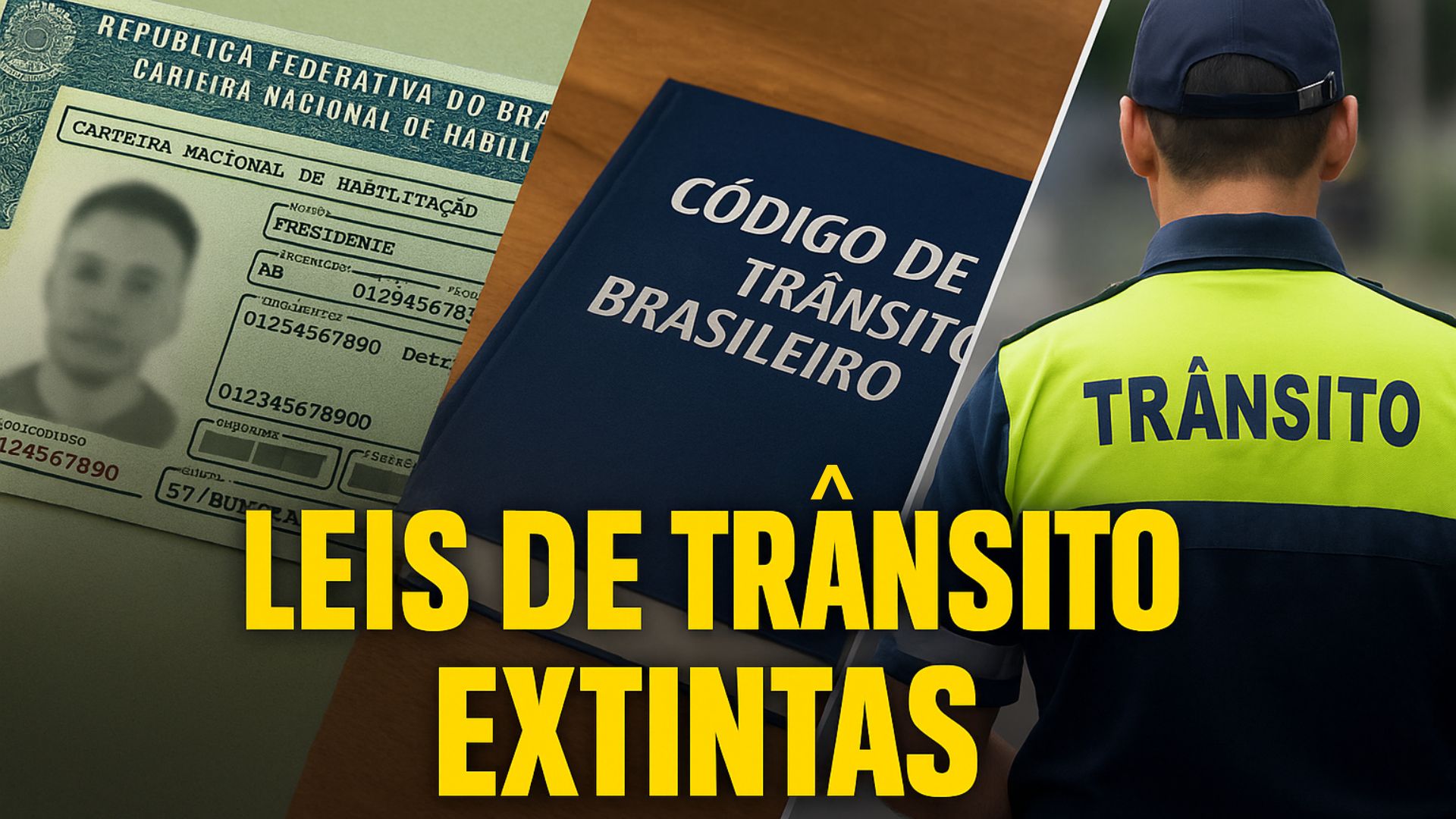

Three Recent Changes in Traffic Laws Altered Known Rules for Brazilian Drivers. The Changes Involve the Use of Fire Extinguishers, the Replacement of the Old National Traffic Code, and the Waiver of the Physical Driver’s License.
Recent changes in traffic regulations have modified known rules for drivers across the country.
Three changes are drawing the attention of specialists and oversight agencies: the waiver of the fire extinguisher in passenger vehicles, the replacement of the old National Traffic Code of 1966 with the Brazilian Traffic Code (CTB), and the waiver of the mandatory possession of the physical driver’s license, provided the driver can have their license confirmed digitally.
These changes remain valid and define part of the current requirements on Brazilian roads.
-
Volcanic Soils from Destructive Eruptions Turn into Million-Dollar Crops: Ashes Nourish Grapes in Lanzarote, Bananas in the Canary Islands, Blood Oranges on Mount Etna, and Cacti in Mexico, Showcasing How Lava-Formed Lands Sustain Rare Harvests in Seemingly Barren Regions

-
In the Caucasus Mountains, a Community Preserves a Language So Rare Few Outsiders Can Understand It

-
Slovakia’s Ice Cave Holds Over 110,000 m³ of Frozen Wonders, Boasts Walls Up to 27 Meters Thick, and Was Among the First Electrified Caves Globally

-
Street Cleaner Accidentally Receives $200,000 Transfer, Returns Unexpected Fortune to Rightful Owner



Fire Extinguisher in Passenger Vehicles: What Is in Force
The obligation for fire extinguishers for passenger vehicles was ended by a decision from the National Traffic Council (Contran).
Resolution No. 556/2015 made the item optional for cars, utility vehicles, vans, pickup trucks, and closed-cab tricycles.
As a result, the equipment is no longer required during licensing and routine inspections.
According to Contran, the measure aimed to simplify requirements and reduce costs for drivers, without compromising road safety.
However, the obligation remains for trucks, buses, minibusses, and vehicles transporting hazardous materials, which continue to follow specific safety regulations.
Currently, a bill is being processed in the Senate proposing the return of the obligation of fire extinguishers in passenger vehicles.
The text has not yet been voted on in plenary and, therefore, the current regulation remains optional for this type of vehicle.
The National Traffic Code of 1966 Was Replaced
The old National Traffic Code of 1966 was repealed and replaced by Law No. 9,503/1997, the Brazilian Traffic Code (CTB), which came into force in 1998.
Since then, the CTB has concentrated all circulation rules, penalties, and responsibilities of oversight agencies.
The creation of the CTB represented an update of the regulatory framework for the sector, incorporating provisions on signaling, licensing, penalties, and traffic education.
Since the promulgation of the law, various specific changes have been made to adapt the rules to current realities, such as adjustments in the scoring of the driver’s license and the validity periods of the license.
Traffic legislation specialists assess that the CTB consolidated the system and allowed for greater uniformity in inspections, unlike the 1966 code, which no longer met the complexity of the fleet and the number of drivers circulating in the country.
Physical Driver’s License: When Possession Is Waived
The possession of the physical driver’s license is still provided for in Article 159 of the CTB, but Law No. 14,071/2020 added paragraph 1-A, which authorizes waiving the physical document when the agent can confirm electronically that the driver is regularly licensed.
The display of the Digital Driver’s License, available in the Digital Traffic Wallet (CDT) app, is also accepted as valid proof.
According to the National Department of Traffic (Denatran), the digital driver’s license has the same validity as the printed version, as long as it is presented through the official app that displays the authentication QR code.
When electronic verification is not possible, specialists recommend carrying the physical document to avoid delays during an approach.
The same rule applies to the Electronic Vehicle Registration and Licensing Certificate (CRLV-e), which replaces the old paper document, provided authenticity can be confirmed in the system.
The Impact of Changes on Drivers’ Routine
The revocation of the obligation for extinguishers in passenger vehicles reduced the number of fines for lack of equipment.
Even without legal imposition, some insurance companies and driver training centers still recommend keeping the item in the vehicle as a preventive measure, especially on long trips.
The replacement of the 1966 code with the CTB eliminated doubts about outdated rules and centralized updates in a single legislation, which, according to specialists, facilitated the standardization of rules across the country.
Additionally, the digiitalization of documents has been considered one of the biggest administrative changes in the sector in recent decades, reflecting the technological advancement of the public traffic system.
With the integration of state and federal databases, drivers can be identified in real time during an approach, which, according to the Ministry of Transport, increases the efficiency of inspections and reduces errors in fines.
Despite the waiver of physical possession in certain situations, traffic safety specialists emphasize that it is the driver’s responsibility to keep their digital documents updated in the official app and ensure they are accessible even without an internet connection.
These changes reflect the ongoing process of modernization of traffic laws in the country.
For the driver, understanding which rules have been repealed and which remain in force is essential to avoid infractions.
In light of this scenario, do you know which of these changes are already in effect and how they might affect your routine behind the wheel?