





 Portuguese
  English
  Spanish
  2 min of reading
  2 comments


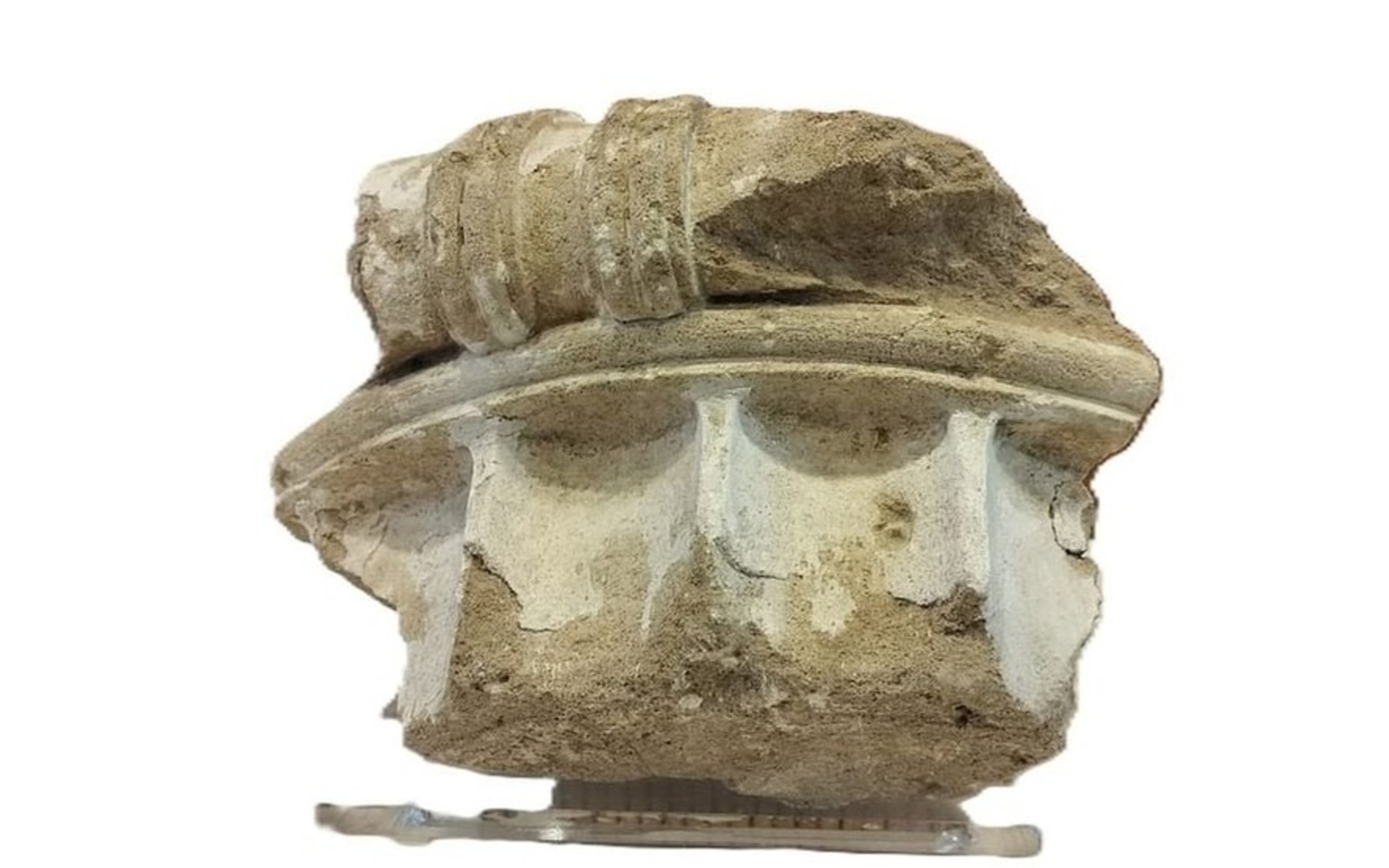


After Nearly 60 Years, German Woman Returns To Greece A Fragment Of Ionic Capital Removed From Leonidaion In Olympia. The Act Was Celebrated As A Symbol Of Cooperation And Respect For World Historical Heritage
A German woman returned to Greece, in early October, a fragment of Ionic capital that she kept for nearly 60 years. The small limestone block, with traces of plaster, measures about 24 centimeters in height by 33.5 in width and was part of one of the columns of the Leonidaion, a building located at the southwestern edge of the archaeological site of Ancient Olympia.
The site is considered one of the most important in Ancient Greece, as it housed competitors in the original Olympic Games.
The fragment was taken from the country in the 1960s, when the woman received it as a gift and took it with her to Germany.
-
Find out which are the 5 busiest bus stations in Brazil and what they offer to travelers.

-
Three of the five winners of one of the UK’s most prestigious literary awards are suspected of having submitted books written by AI, as detectors cannot distinguish human from machine, and writing too well has become a reason for suspicion.

-
13 researchers from the USA, Italy, Germany, the United Kingdom, and Spain have found new scars from the megaflood that resurrected the Mediterranean: 5.33 million years ago, the Zanclean Flood opened a 20 km wide underwater channel, left more than 300 giant ridges, and had a flow rate up to 500 times greater than that of the Amazon in a geological catastrophe that still challenges science.
-
While the world is living in 2026, Nepal has already entered 2083 and uses a calendar that intrigues visitors, appears in official documents, and makes astronomers decide when each new year really begins, far from the standard adopted in much of the planet.




Origin Of The Leonidaion
Built around the 4th century BC, the Leonidaion featured four Ionic colonnades with 138 decorated columns, a symbol of Hellenic classical architecture. Over the centuries, the structure was damaged by natural disasters and time.
Today, only a small part of the original columns remains preserved in the arena, serving as a testament to the grandeur of Greece’s past.
Cooperation Between Countries
The Greek Ministry of Culture reported that the return was only possible because the woman voluntarily approached the University of Münster in Germany.
Inspired by other restitutions promoted by the institution, she decided to hand over the artifact for it to be officially repatriated.
The action was described by the Greek government as a gesture of “sensitivity and courage.” Furthermore, the Ministry highlighted the ongoing partnership with the university, which had previously returned other artifacts in 2019 and 2024.
Ceremony In Olympia
The curator of the Archaeological Museum of the University of Münster, Torben Schreiber, represented the German institution at the repatriation ceremony held in Olympia.
The fragment will be incorporated into the collection of the Archaeological Museum of Olympia.
During the event, Schreiber emphasized the ethical value of the return and stated: “It’s never too late to do the right, moral, and just thing. It is the duty of institutions to return objects obtained in an irregular manner.”
With information from Galileu Magazine.






Great article! I really appreciate the clear insights you shared – it shows true expertise. As someone working in this field, I see the importance of strong web presence every day. That’s exactly what I do at https://webdesignfreelancerhamburg.de/ where I help businesses in Hamburg with modern, conversion-focused web design. Thanks for the valuable content!
Great article! I really appreciate the clear insights you shared – it shows true expertise. As someone working in this field, I see the importance of strong web presence every day. That’s exactly what I do at https://webdesignfreelancerhamburg.de/ where I help businesses in Hamburg with modern, conversion-focused web design. Thanks for the valuable content!