Portuguese
  Spanish


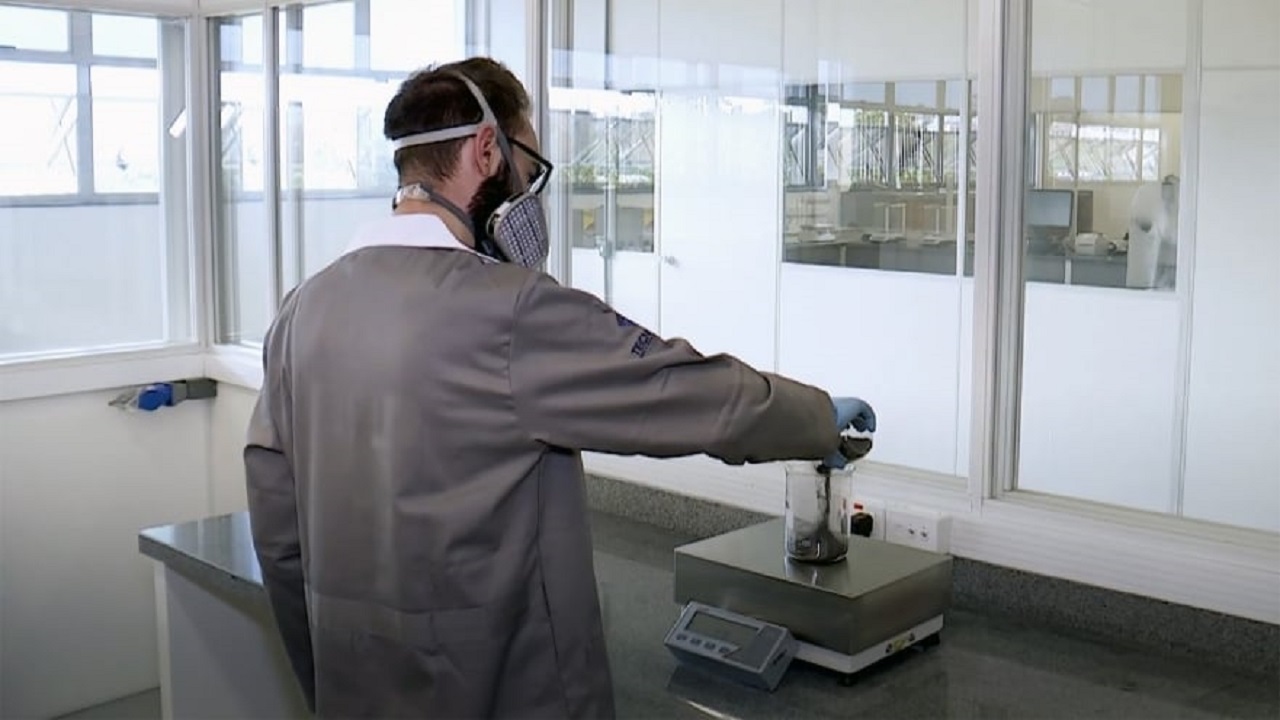

The Multinational Ford Created a Team of 20 Brazilian Scientists Focused Exclusively on Advances in Graphene Technology. The Team Was Developed in Partnership with UCSGRAPHENE.
Ford has developed a new team focused on graphene research, a material considered the future of technology, at its new Development and Technology Center in Brazil, located in Bahia. The multinational’s efforts to advance graphene technology are being carried out in partnership with UCSGRAPHENE, linked to the University of Caxias do Sul, the first innovation ecosystem focused on the production of graphene at scale in Latin America, inaugurated last year by the University of Caxias do Sul (UCS) in Rio Grande do Sul.
Ford’s Research Team Is Comprised of 20 People
The Graphene has unique properties that can revolutionize various products, such as electronics, automotive components, and batteries. Being the lightest and strongest material in the world, up to 200 times stronger than steel, it also has excellent thermal and electrical conductivity. Furthermore, it enables the creation of very thin layers and integration with other materials.
The new graphene technology research team at Ford, made up of about 20 people, reinforces the role of national engineering within the brand’s global innovation ecosystem, joining other projects already established at the unit focused on the future of mobility.
-
How Much Does Starlink Satellite Internet Cost for Cars, Trucks, and RVs? Prices for Antenna, Accessories, and Plans

-
Scientists Convert Food Waste into Aviation Fuel, Successfully Test 50% Blend with Conventional Kerosene to Cut Emissions and Promote Sustainable Flights
-
OnePlus N6 Smartphone to Launch in India with 8,000mAh Battery and 45W SuperVOOC Charging, Lasting Up to Three Days
-
Scientists Plan to Release Air Bubbles Underwater to Protect Antarctica’s “Doomsday Glacier” from Melting




According to the engineering specialist and leader of the team at Ford Brazil’s Development and Technology Center, Rodrigo Polkowski, the multinational was the first automaker in the world to use graphene in vehicles and already holds several patents in the US. This material is currently present in over 5 million vehicles, such as the F-150, the Mach-E, and the Mustang, in components such as engine covers and rubbers, to enhance thermal resistance and reduce noise.
Details About the Partnership Between Ford and UCS
According to Polkowski, Brazil has the advantage of possessing one of the largest global reserves and is currently the third-largest global producer of graphite, from which graphene technology is derived. The main reserves are located in Minas Gerais and Bahia.
Brazil will be developing this research in partnership with the multinational Ford, with enormous potential applications, such as improving the cooling of electric vehicle batteries, anticorrosive coatings, noise insulation materials, and aluminum alloys reinforced with graphene.
Currently, the company is already working on more than 10 projects applying graphene in the mobility sector. As part of the partnership established between Ford and UCS, the university inaugurated, within its Science, Technology, and Innovation Park, the Ford Space, developed to connect industry and academia with the goal of promoting research, entrepreneurship, and technology.
New Materials Are Being Developed in the Graphene Technology Project
According to the coordinator of UCSGRAPHENE, Diego Piazza, the institution has accumulated experience from 18 years of advanced nanomaterial research. The partnership with the multinational Ford marks a historic moment, as it allows for the generation of knowledge connected to an innovation ecosystem capable of developing various potentials.
Ford has also established other partnerships with Mackenzie University and the Federal University of Minas Gerais (UFMG) to advance graphene technology.
The Development and Technology Center of Ford Brazil is one of nine of the company worldwide and has experience in materials research, with patents registered in the US, Brazil, China, and Germany. An example is the new biodiesel-resistant rubber, reinforced with silica obtained from rice husk ash, already applied in the Ranger.
Source: FORD Media