






 Portuguese
  Spanish


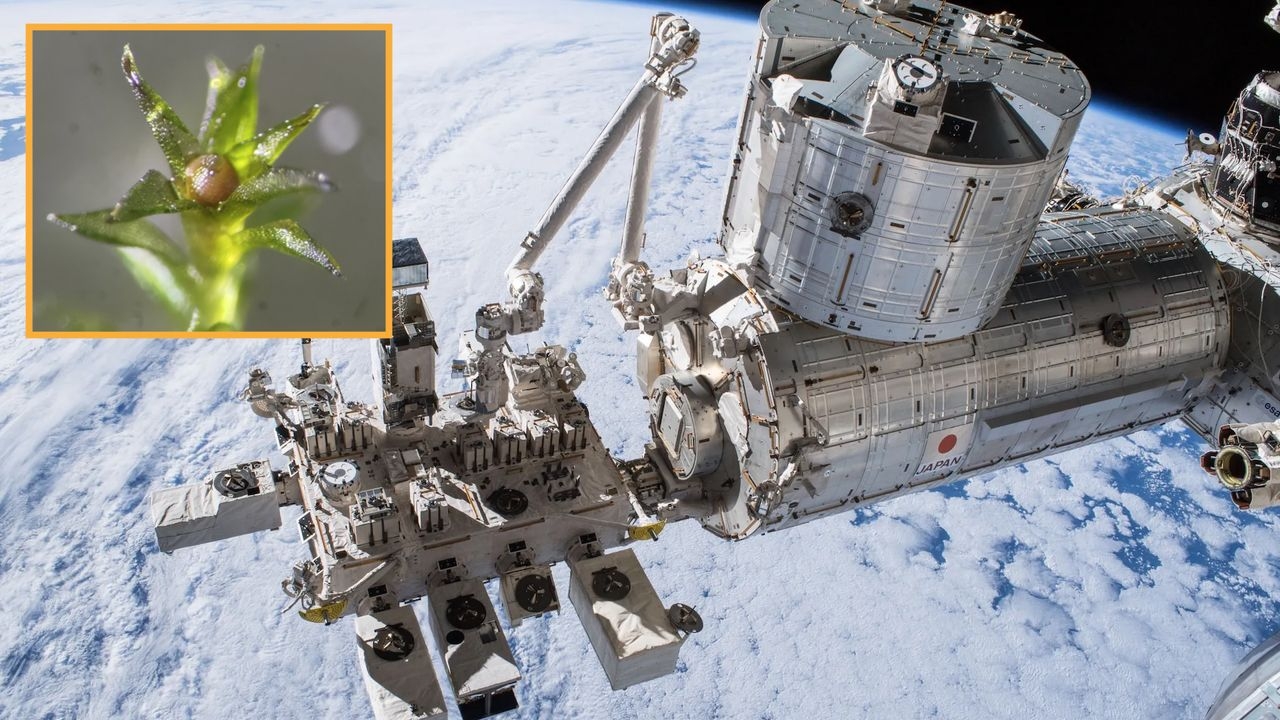

The Moss P. patens Survived Nine Months Outside the ISS, and More Than 80% of the Spores Germinated on Earth, Revealing Extreme Resistance That May Help Create Ecosystems Beyond Our Planet
An international group of biologists achieved something unexpected by placing samples of moss on the outside of the International Space Station for nearly a year. The spores were exposed to the vacuum of space, ultraviolet radiation, and drastic temperature variations, conditions that normally destroy most forms of life on Earth quickly.
Even so, when they returned to Earth, over 80 percent of them continued to reproduce normally, a result that opens new doors for understanding how simple organisms withstand extreme environments beyond our planet.
The discovery, published in the journal iScience, reinforces the idea that certain primitive plants possess surprisingly robust defense mechanisms capable of withstanding physical and chemical stressors similar to those of deep space.
-
Brazilian Woman Turns 1.3 Tons of Waste into Over 4,000 Sustainable Bags and Accessories

-
Brazilian Container Factory Innovates by Halving 40-Foot Units Seamlessly to Create Autonomous Market Pods

-
Former XP Partners Launch Yuool, a Recycled PET Bottle Shoe Brand, Becoming Brazil’s First B Corp Footwear Company with $15 Million Revenue

-
Man Who Spent 27 Years Cleaning Classrooms in Louisiana Becomes Principal of the Same School at 39




According to the researchers, this resistance may have been crucial in the first millions of years of terrestrial life when plants began to occupy arid, cold environments that were completely exposed to solar radiation.

Why This Moss is So Resistant
The experiment utilized Physcomitrium patens, a species of moss known for thriving where other plants do not survive, from the icy peaks of the Himalayas to extremely hot and dry areas like Death Valley in California.
To understand how it behaves under extreme conditions, scientists analyzed different types of moss cells before sending it into space, focusing especially on sporophytes, structures that house reproductive spores.
Initial laboratory tests had already shown that the sporophytes withstood ultraviolet radiation, intense cold, and extreme heat better. Therefore, the group decided to place them on an external platform installed in the Japanese Kibo module of the ISS. There, the samples remained directly exposed to the space environment for nine months, without any additional protection.
When they returned to Earth, the results surprised even the most experienced researchers. According to Tomomichi Fujita, a professor of plant biology at Hokkaido University and the lead author of the study, most of the spores germinated normally.
Based on this data, his team developed a model suggesting that these spores could survive in space for up to 5600 days, equivalent to about 15 years.

What the Results Mean for Space Biology
After analyzing the samples, the scientists concluded that factors such as microgravity, absence of atmospheric pressure, and violent temperature changes had a limited impact on the moss.
The only truly harmful element was direct exposure to certain ranges of ultraviolet light, which significantly reduced the amount of essential pigments for photosynthesis, such as chlorophyll a. Even so, even the samples affected by radiation managed to recover and grow again under controlled conditions.
This level of resistance surpasses that observed in other plants subjected to space testing. For Fujita, the secret lies in the thick, spongy layer that surrounds the spores, acting as a natural shield against dehydration and radiation. According to him, this characteristic likely emerged very early in the evolution of terrestrial plants and may have been essential for early mosses to occupy extreme environments.
Although the experiment focused on a single species, the results pave the way for even broader studies. If such simple organisms can withstand extreme conditions outside Earth, it is possible to envision more ambitious biological projects in space stations, lunar bases, or even future missions to Mars.
For the authors of the study, the performance of the moss represents a concrete first step toward creating small resilient ecosystems capable of functioning beyond our planet.


