






 Portuguese
  Spanish
  4 min of reading
  0 comments


Revolution or Tradition? Toyota’s Big Bet on Manufacturing Gasoline and Hydrogen Combustion Engines Will Preserve Thousands of Jobs in Its Factories and Supplier Network
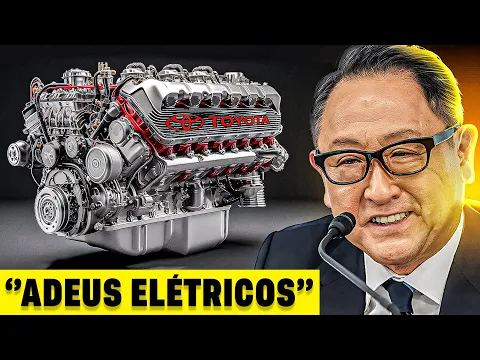
Toyota’s Contrarian Strategy Following the Scandal Involving Annual Fraud of Over 432,000 Diesel Engines from the Hilux and 9 Other Models. In a world increasingly focused on electric vehicles, Toyota is making a bold move. Toyota President Akio Toyoda surprised everyone with a striking statement: the company not only continues to believe in gasoline and hydrogen combustion engines, but is also developing new models. This claim, made during a meeting with over 200 executives, contradicts its competitors.
While other automotive giants like Volkswagen and Audi are plotting plans for an exclusively electric future, Toyota is keeping its focus on gasoline engines and alternatives like hydrogen. Toyota believes that the freedom of choice is essential, offering consumers the option between electric innovation and the reliability of combustion engines.

More Than 11 Million Vehicles Sold by the Manufacturer, Only About 100,000 Were Electric
The 2023 Sales Results of Toyota Reflect This Philosophy. The company recorded record sales, with impressive growth in the global market. However, one statistic stands out: of the more than 11 million vehicles sold, only about 100,000 were electric. This represents less than 1% of the total, a clear indication of Toyota’s ongoing bet on traditional engines.
-
Nissan X-Trail e-Power debuts as a hybrid SUV that runs like an electric vehicle, uses a 1.5 turbo engine only as a generator, promises up to 1,039 km per tank, and arrives in the Philippines with 204 hp, a 482-liter trunk, and a competitive price.

-
Cheaper than Civic and Corolla, this Korean sedan offers a giant 520-liter trunk, 2.0 flex engine, and 6-speed automatic transmission; the Kia Cerato EX 2.0 2022 stands out as an ideal option for those who prioritize interior space and comfort.
-
An old Nissan Bluebird received the motor, inverter, and battery from the Leaf, became electric, and kept the body intact in a conversion done in the United Kingdom.

-
The car that most Brazilians buy today may cease to exist by 2030, and automakers already know that the 1.0 aspirated engine with manual transmission is numbered in the country.


Toyoda firmly believes that despite technological advances, battery electric vehicles will not exceed 30% of the automotive market. He envisions a future where the remaining 70% is dominated by gasoline cars, hybrids, and fuel cell vehicles. This vision is an integral part of Toyota’s strategy and shapes the path the company will take in the coming years.
Toyoda Did Not Mention Diesel Engine Production in His Future Plans
Toyota’s strategy is not limited to maintaining gasoline and hydrogen combustion engines. The automaker is exploring new frontiers, including the possibility of combustion engines powered by hydrogen. This innovative interest in alternative fuels shows that Toyota is not clinging to the past but looking toward the future in unique ways.
Interestingly, Toyoda did not mention diesel in his future plans. This silence may signal a gradual shift in the company’s stance on this type of fuel, possibly in response to growing environmental concerns and tighter regulations.
Preserving Jobs
In his speech, Toyoda also addressed an often overlooked aspect of discussions about the transition to electric vehicles: the impact on jobs. A sudden shift to electric vehicles could jeopardize millions of jobs in the automotive industry, especially in Japan, where engine manufacturing is a significant part of the economy.
Toyoda expressed concern for suppliers of combustion engines components, who would also face financial challenges. This holistic approach reflects Toyota’s social responsibility, balancing innovation with the preservation of jobs and industrial traditions.
Ford, Chevrolet, Honda, Audi, Jaguar, Chrysler, and Volvo Commit to Manufacturing Electric Engines in the Coming Years
While other automakers like Ford, Chevrolet, Volkswagen, Audi, Jaguar, Chrysler, and Volvo commit to being exclusively electric in the coming years, Toyota is choosing a different path. Toyoda emphasizes that global charging infrastructure is still under development and that many regions of the world do not have easy access to electricity.
Investing heavily in electric vehicles, according to Toyota, would not be feasible considering its global market. This pragmatic perspective sets Toyota apart from its competitors and shows a deep understanding of the complexities of the global automotive market.
Toyota Is Not Alone, Luxury Car Manufacturer BMW Has Yet to Set a Date to Cease the Production of Combustion Engines
Toyota is not alone in its approach. Brands like BMW have yet to set a date to cease the production of combustion engines, and Volkswagen plans to manufacture only electric vehicles in Europe starting in 2033, leaving room for traditional engines in other regions.
This strategy by Toyota reflects a broader and more diversified vision for the future of transportation. The company seems to be betting on the coexistence of multiple technologies rather than focusing on a single solution. This approach may be the key to meeting a wider range of consumer needs and adapting to a constantly changing world.




Be the first to react!