






 Portuguese
  Spanish




In Global Statement, Toyota Confirms Fraud in Thousands of Diesel Engines Worldwide. Check All Models Suspended by the Brand.
In an unprecedented move, Toyota has just shaken the global automotive market by immediately suspending sales, production, and exports of ten of its models powered by diesel combustion engines. This shocking announcement follows the discovery of frauds in certification tests of engines, putting the integrity of the automotive giant under intense scrutiny. Among the affected models are globally renowned giants like the robust Land Cruiser 300, the versatile Hiace, the elegant Innova, and the luxurious Lexus LX500D, as well as favorites in Brazil such as the HILUX and SW4.
The decision by Toyota to pause the commercialization of these vehicles reflects a commitment to transparency and quality, despite ensuring that all vehicles involved “meet engine power standards”.
Fraud Details Unveiled: Japan’s Ministry of Transport Promises Rigorous Inspections and Penalties
The root of the problem dates back to Toyota Industries Corporation (TICO), the driving force behind the development of these diesel combustion engines. The revelation that a divergent software was used during certification tests – different from the one used in mass production – casts a shadow over TICO’s credibility. This maneuver aimed to present more consistent and favorable performance and power results, a severe blow to consumer trust and certification practices.
-
Chery Stockman 2026 Unveiled: Larger Than Toyota Hilux, Featuring Unique Plug-In Hybrid Diesel Engine, 3.5 Ton Towing Capacity, and 1,000 kg Payload to Challenge Traditional Off-Road Trucks

-
Does a Flag on Your Car’s Hood Overheat the Engine? Expert Reveals the Overlooked Danger for Drivers

-
How to Identify and Remove Superficial Scratches Before Spending on Car Bodywork

-
Electric Car with Extended Range: Company Patents Hybrid Transmission System Using Gasoline Engine for Backup


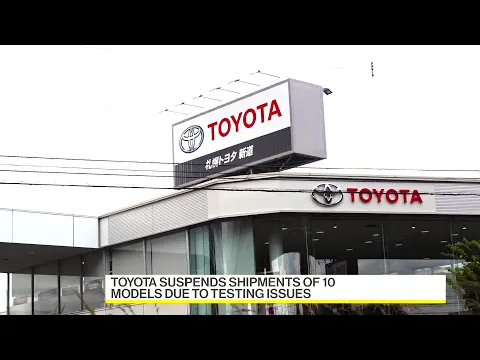

The Ministry of Transport of Japan was quick to respond, promising rigorous inspections and penalties for inadequate management of the tests. Toyota’s response, emphasizing that the irregularities do not affect vehicle emissions or safety, seeks to ease tensions during a crisis.
Toyota Brazil Addresses the Issue:
In an effort to dispel any lingering doubts, Toyota do Brasil steps forward with a clarifying statement bringing relief to Brazilian owners. Reinforcing that the vehicles sold in Brazil, specifically the HILUX and SW4 models manufactured in Argentina, are free from the irregularities detected in other countries.
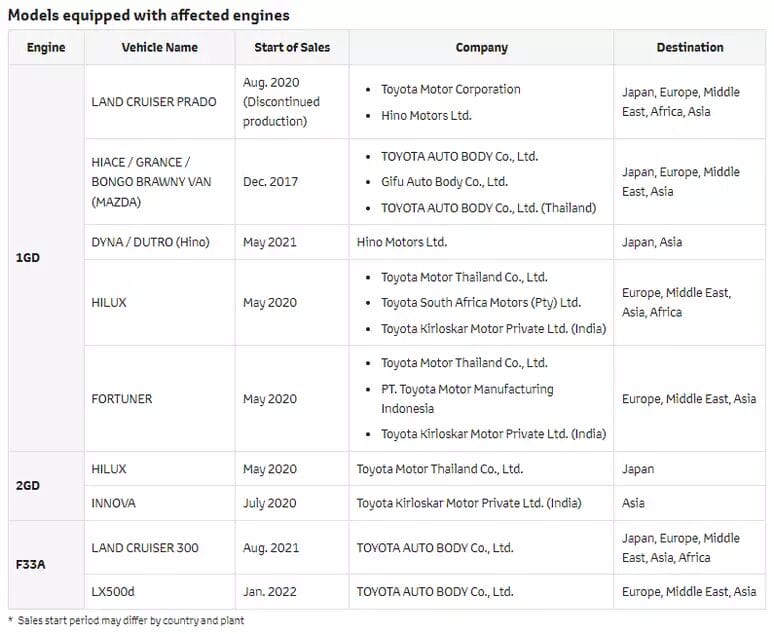
This statement emphasizes the distinction between the identified issues and the integrity of locally marketed vehicles, assuring consumers that power, torque, and other critical performance aspects remain unchanged. Toyota uses this moment to reaffirm its commitment to quality and safety, apologizing for any confusion or concern caused. Below is the list of factories and countries affected by Toyota’s diesel engine fraud.
A Dark Past: It’s Not the First Time the Automaker Has Been Accused of Fraud in Its Vehicles
The recent history of Toyota is marked by other fraud episodes, reinforcing the need for ongoing vigilance over safety and quality standards. Last year, Mobiauto reminded the automotive world of the suspension of two Toyota models due to discrepancies in crash tests, including the new Toyota Yaris and the Toyota Raize.
These previous events shed light on the challenges faced by Toyota in maintaining consumer trust while striving to rectify flaws and uphold its reputation for reliability.
Toyota Suspends Exports
The decision by Toyota to suspend exports, rather than a complete halt on sales, highlights a measured approach to the crisis. Interpreted as a pause in exports from TICO’s engine factory, this action reflects a strategic caution, allowing Toyota to assess and adjust its internal processes. This phase of introspection and correction is vital for Toyota as it seeks to remedy the identified flaws and strengthen its quality and transparency protocols, ensuring global consumers that integrity and safety remain at the heart of every vehicle they produce.
Koji Sato, CEO of Toyota, Took the Initiative to Publicly Address the Issue
In the face of challenges, Toyota remains steadfast in its commitment to its consumers. Koji Sato, CEO of Toyota, took the initiative to publicly address the issue, emphasizing the importance of transparent communication and stated in a press conference that the company used 36,000 units of the affected engines globally each month, equating to 432,000 units per year.
Toyota not only acknowledges the magnitude of the problem but is also dedicated to a thorough review and correction. This effort reflects Toyota’s determination to restore lost trust and ensure that unyielding quality once again becomes synonymous with the brand.


