Portuguese
  Spanish


In Denmark, Laid-Off Workers Receive Up to 90% of Salary for Two Years and Free Courses Focused on Reemployment and Continuous Qualification to Return to the Job Market.
In much of the world, losing a job means a race against time. Bills don’t wait, the cost of living weighs heavily, and the search for a position mixes with anxiety about when the next opportunity will come. But in Denmark, the experience is practically the opposite of what most workers know. There, the transition between one job and another is part of a system designed to support the citizen, preserve their dignity, and accelerate their reinsertion into the market. Instead of seeing unemployment as an individual failure, the country treats the period as a phase of capacity building, support, and professional renewal.
In the Danish model, workers who lose their jobs can receive up to 90% of their salary for up to two years, provided they are enrolled in the national unemployment insurance system and meet participation requirements in reemployment programs. The benefit is accompanied by free qualification courses, individual guidance, and government support for returning to the job market. Instead of simply paying to keep someone idle, Denmark invests so that this person progresses and returns more qualified.
The logic behind the model is simple and powerful: the stronger and more prepared the workforce is, the more competitive the country will be. As a result, the economy grows, unemployment remains low, and productivity rises continuously. It is the opposite of the cycle of precariousness that affects many countries, where job loss often leads to lower wages, instability, and loss of qualification when returning to the market.
-
New York removed the tracks from over 2,500 subway cars and dumped everything at the bottom of the Atlantic, and what seemed like trash turned into an artificial reef teeming with fish and divers.

-
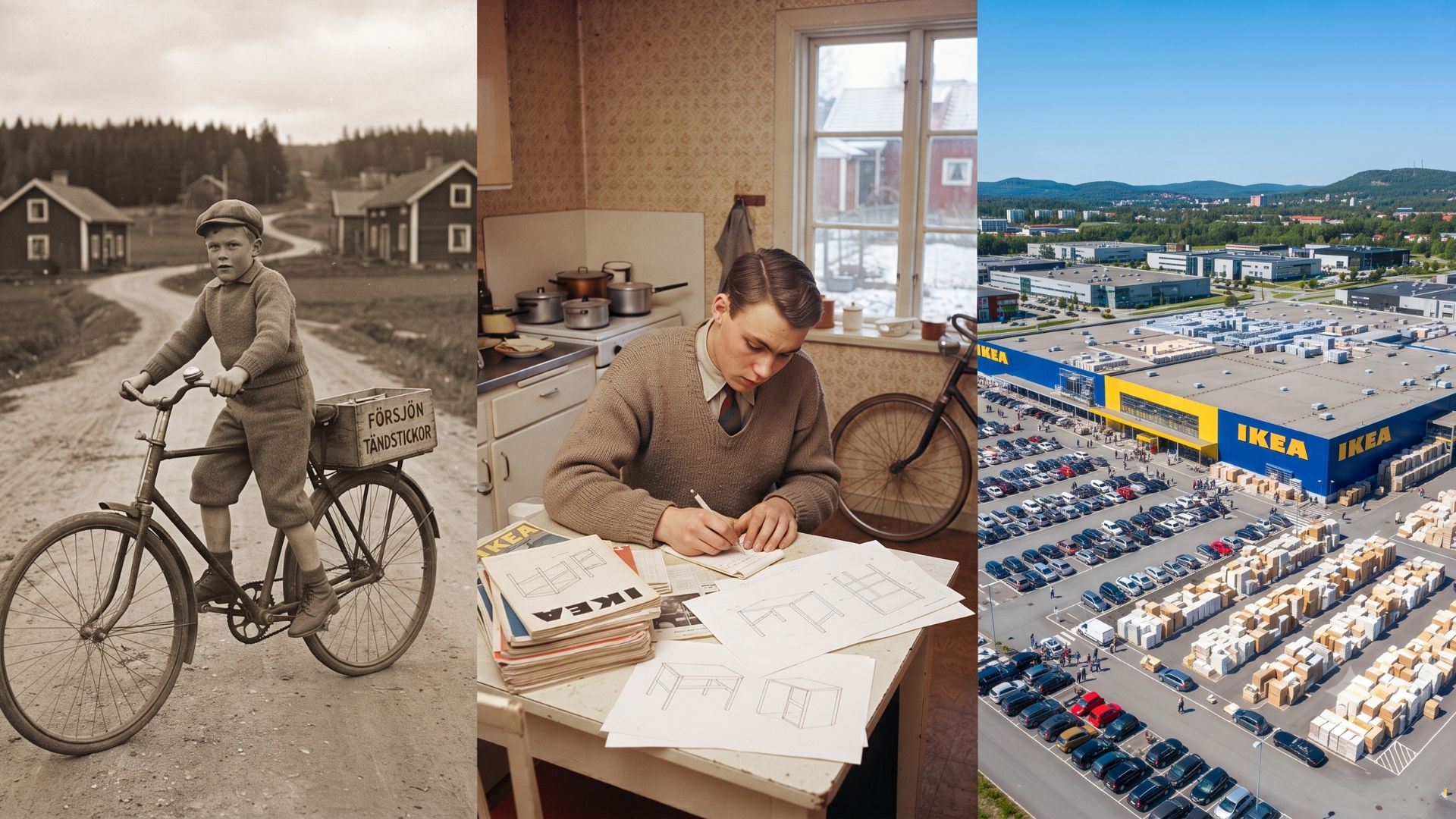
From matches sold by bicycle at age 5 to a global furniture empire: the lumberjack’s son founded IKEA at 17 in his uncle’s kitchen and transformed a small company into the largest furniture retailer on the planet.
-
The mansion in Flamengo, built in 1865 for the Baron of São Clemente and closed for 20 years, has become a spa, event hall, and gym for “Symphony,” a luxury condominium that sold 70% of its gross development value in the first month on the R$ 60 million land of the former Bennett College.

-
The Ipiranga convent, a 1924 building adjacent to the Museum that remained vacant for a decade and became home to dozens of cats, is reborn as “Alma Mater,” a luxury development worth R$ 130 million with a pool in the courtyard and a clubhouse in the former nuns’ chapel.




Flexicurity: Flexibility with Security and Social Outcome
The Danish model is known as flexicurity, a combination of flexibility for companies to hire and fire quickly and security for workers to maintain income and develop new skills during transition periods.
The logic is supported by a social pact that involves companies, government, and unions, and has the following pillars:
- Robust unemployment insurance, covering up to 90% of salary for eligible workers for two years
- Free courses, professional training, and mandatory retraining
- Individual guidance for reemployment
- A dynamic labor market that quickly absorbs qualified professionals
- Incentives for workers to continue developing throughout their lives
In practice, Denmark does not prevent people from losing their jobs—instead, it ensures they do not lose their future.
Unemployment as a Learning Period, Not Stagnation
When leaving a company, the Danish worker is not thrown alone into the market. They benefit from personalized plans, career consulting, and access to specialized centers that assist in updating their resume, training, and actively seeking opportunities.
Public programs, in partnership with private institutions, offer courses in essential areas such as technology, education, logistics, health, and specialized services, strategic sectors of the Danish economy.
This structure reduces the stigma surrounding unemployment. The transition is natural, predictable, and seen as an opportunity—not a threat. The focus is never on punishing those who are out of work, but on preparing them for a better placement. In many cases, workers leave this phase with renewed skills and greater future income.
Public Investment as a Driver of Productivity
Funding a robust system like Denmark’s requires a high tax burden. However, this investment pays off in productivity, innovation, and economic stability.
Countries that spend little on worker protection tend to spend more on social problems and face cycles of instability that hinder long-term growth.
The Danish case shows a clear equation: security does not reduce competitiveness. On the contrary, it increases it.
Companies have the freedom to adjust their teams according to market demands, while professionals are not forced to accept any position just to survive. The result: the economic machine does not stall, the worker does not sink, and the country thrives.
Comparison with Brazil and the Challenge of Reformulation
In Brazil, unemployment insurance covers up to five installments, and the maximum amount is far from each worker’s full income. Qualification courses exist, but not universally, nor structured with continuous follow-up.
Reemployment largely depends on individual initiative and the market’s willingness to quickly absorb labor, which does not occur during periods of economic instability.
The comparison between the two models reveals profound differences in structure, culture, and public policy. While Denmark views the worker as an asset to the country, and continuing education as a national policy, Brazil still faces difficulty in transforming qualification, income, and stability into central pillars of employment policy.
It is clear that each country has its reality. Denmark has a smaller population, a high level of development, strong revenue collection, and a tradition of solid collective agreements. But observing its model offers a powerful reflection on possible paths to form more qualified, humane, and resilient markets.
When Security Becomes a Driver of Growth and Not a Burden
The Danish system is, above all, a choice. A vision that no society grows by leaving people behind. A bet that well-trained, supported, and motivated workers build a stronger country. Instead of viewing social protection as an expense, Denmark treats it as a strategic investment.
And the results are evident in productivity, average income, educational levels, and social welfare, indices that place the country among the most developed and stable in the world.
In the end, the model leaves a question that goes far beyond statistics:
if some countries choose to compete through efficiency, continuous education, and respect for the worker, why do others still insist on imposing insecurity as a form of social management?