Portuguese
  Spanish


In Lagos, Nigeria, Free Recycle Transforms Up to 500,000 Discarded Tires Per Day Into Durable Rubber Pavements Used in Public Areas, Schools, and Sidewalks. The Largest Recycling Operation in the Country Tackles Urban Waste and Environmental Risks in an Unstable Infrastructure Context and Promotes the Circular Economy.
In Lagos, Lagos State, Nigeria, the company Free Recycle leads the largest tire recycling operation in the country, processing up to 500,000 discarded tires per day and converting the material into durable rubber pavers used in playgrounds, sidewalks, and urban areas. This industrial recycling initiative not only reduces waste accumulation in landfills and vacant lots but also creates a growing market for sustainable pavements in a metropolis facing environmental and urban waste management challenges.
Lagos Faces Mountains of Tires and Urban Waste
Lagos, with an estimated population of over 20 million people, produces an enormous amount of urban waste daily, including used tires that traditionally end up in abandoned lots, public roads, or even blocking drainage systems.
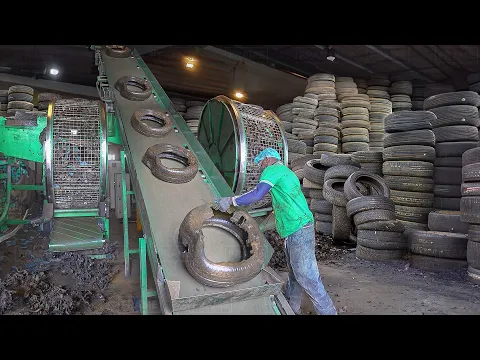

Before the industrial recycling operation, piles of tires represented not only an aesthetic problem but an environmental and public health risk, as they accumulate stagnant water and favor the proliferation of mosquitoes that transmit diseases like malaria.
-
Helsinki Residents Receive Water That Travels 120 Kilometers Through a Hidden Rock Tunnel from a Lake Before Treatment

-
SENAI Launches $36 Million Innovation Round to Boost Brazilian Manufacturing Productivity and Reduce Business Risks with R&D Projects by 2026
-
Indonesia Plans to Build 5,000 Suspension Bridges by 2026 to Connect Rural Communities to Schools, Health Centers, and Markets
-
U.S. Invests $75 Million in Projects to Extract Rare Earths, Gallium, Germanium, and Aluminum from Coal Waste




Free Recycle and the Largest Tire Recycling Line in Africa
The company Free Recycle has focused investments in industrial processing technology to handle the enormous daily flow of discarded tires. Through an integrated logistics and sorting chain, tires are collected from workshops, informal disposal points, and small collectors spread throughout the city.
In return, collectors receive a payment per unit, economically incentivizing the removal of waste from the environment.
Within the recycling plant, heavy machinery removes the steel wires from the inside of the rubber, and the material is crushed into granules up to 5 mm in diameter. These granules become the basis for manufacturing rubber pavers, which in many cases replace or complement concrete or asphalt pavements in public and private areas.
Applied Recycling Technology: Industrial Steps

The production line involves several steps:
- Collection and Sorting: Tires are gathered in large quantities from workshops and disposal points in Lagos.
- Steel Removal: Industrial mechanisms remove the internal steel that reinforces the tires.
- Crushing: The rubber is fragmented until it reaches controlled granulation.
- Separation and Cleaning: Magnets and screens separate metals and other impurities.
- Paver Production: The granules are molded and processed into durable rubber pavers.
The final product is a flooring that combines durability, resistance to tropical weather, and, in many cases, greater comfort for pedestrians and urban use compared to traditional rigid materials.
Environmental and Social Impacts of Recycling in Lagos
The initiative has a direct impact on the environment and urban life in Lagos:
- Waste Reduction: Tires no longer occupy public areas or are improperly discarded, contributing to visual pollution and drainage blockages.
- Improvement of Public Health: The use of pavements reduces areas of stagnant water, decreasing habitats for disease-carrying mosquitoes.
- Job Creation: The industrial operation creates jobs for local workers in collection, sorting, and processing.
- Sustainable Infrastructure: Rubber pavers provide durable alternatives for paving in neighborhoods, schools, and public spaces.
Operational Challenges and Energy Context
Despite the advancements, the operation faces challenges, such as Nigeria’s unstable electrical infrastructure. To keep heavy machinery running, Free Recycle relies heavily on diesel generators for about 80% of the energy it consumes, which increases the process’s costs and highlights the need for cleaner and more stable long-term energy solutions.

Tire recycling is not just a local phenomenon: globally, billions of tires are discarded each year, creating a significant environmental challenge.
Projects like the one in Lagos demonstrate that, with technology and economic incentives, hard-to-degrade waste can be transformed into useful products with added value.
Urban Waste Becomes Urban Infrastructure
The example of Lagos demonstrates how a city can tackle a chronic waste problem and convert it into an opportunity for sustainable infrastructure.
By transforming up to half a million tires per day into durable pavers, the largest rubber recycling operation in Nigeria not only tackles urban waste but also contributes to safer public spaces and innovative environmental solutions, paving the way for similar models in other metropolises facing waste challenges.