Portuguese
  Spanish


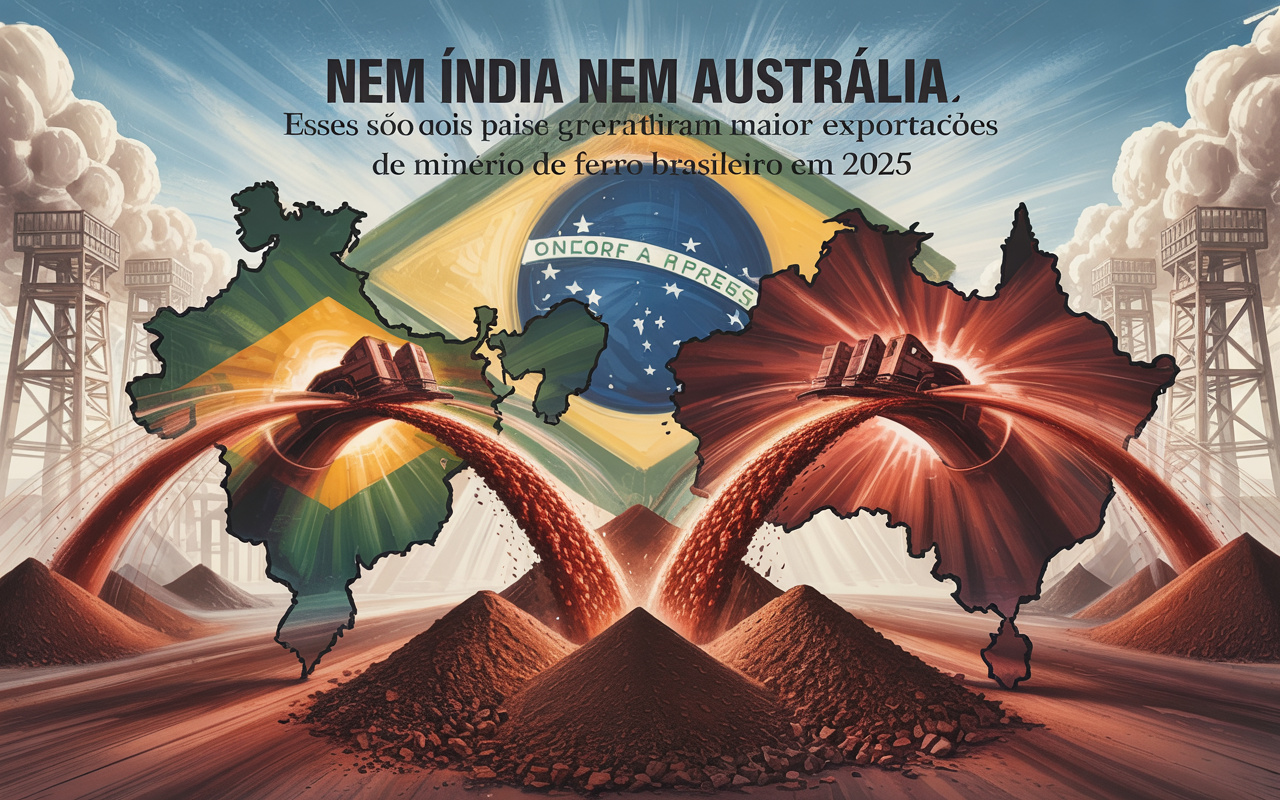

Brazil Exports Record Volume Of Iron Ore In 2025 And Two Countries Take The Lead In Purchases, Consolidating New Global Configuration.
Iron ore continues to be one of the pillars of Brazil’s trade balance. In July 2025, the country recorded record exports of 41.1 million tons in just one month, consolidating its position as the second largest global supplier, only behind Australia. Shipments from January to August have already exceeded 200 million tons, generating more than US$ 20 billion. The performance confirms the significance of the mining sector, responsible for over 10% of Brazil’s export agenda.
Two Countries Concentrate The Majority Of Purchases
The figures from the Department of Foreign Trade (Secex) and the OEC platform show that in 2025, two destinations concentrated the majority of Brazilian iron ore exports.
Together, these two countries account for over 70% of the exported value as of August, reinforcing their strategic relevance for the mining industry and for Brazil’s trade balance.
-
Eni Acquires 25% Stake in Chilean Lithium Project, Plans to Invest Up to $225 Million in Eco-Friendly Extraction Method

-
Mexico’s Giant Crystal Cave: A Deadly 58°C Underground Palace with 11-Meter Crystals Formed Over Nearly a Million Years

-
China Dominates Over 90% of Rare Earth Refining, Prompting Global Concerns: Canada and Japan Launch Billion-Dollar Plan to Reduce Dependency and Safeguard Batteries, Semiconductors, and Defense
-
Ancient Mines in Spain Reveal Tools and Metals That May Explain Bronze Age Trade with Scandinavia


The leadership of these markets also highlights a reconfiguration of global trade, in which Brazil plays a prominent role alongside Australia as a key supplier to major global steelmakers.
China Continues As The Main Destination
The first of these destinations is China, which has led purchases of Brazilian ore for over a decade. In June 2025, for example, exports to the Asian country totaled US$ 1.59 billion, more than ten times that recorded for the second place.
The Chinese demand is explained by the size of its steel industry, responsible for more than half of the steel produced in the world. Brazilian ore, known for its high quality and competitive prices, remains essential to supply this strategic sector.
Japan Reinforces Its Position As A Buyer
The second prominent market in 2025 is Japan, which appears as a recurring buyer of Brazilian ore, even amid a contraction in global demand. According to official data, in June, shipments to Japan reached US$ 61.3 million, surpassing traditional destinations such as the European Union and the Middle East.
This trend reinforces the historical relationship between Brazil and Japan in the mining and industrial sectors, especially with Japanese steelmakers that rely on high-quality raw materials to maintain their production.
Malaysia And Oman Emerge As Regional Hubs
Although not among the two largest buyers, Malaysia and Oman gained importance in 2025. Both countries act as logistics hubs, receiving Brazilian ore and redistributing it to steelmakers in Asia and the Middle East.
In June, Malaysia imported US$ 143 million and Oman US$ 101 million, significant amounts that demonstrate the diversification of routes and Brazil’s efforts to expand its presence in the global market.
Economic And Geopolitical Impact
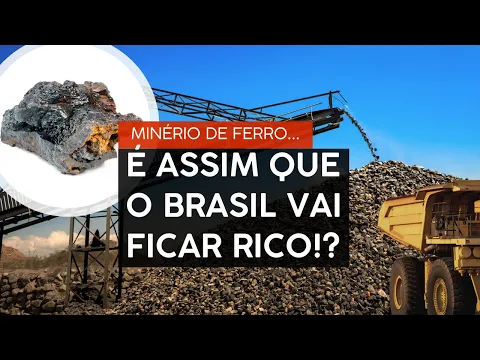

The strengthening of China and Japan as primary destinations for Brazilian ore goes beyond the economy; it also carries a geopolitical component. In a scenario of trade tensions among major powers, the supply of critical raw materials becomes a strategic asset.
For Brazil, securing long-term contracts with these markets means not only financial stability but also increased influence in international negotiations related to steelmaking, infrastructure, and the global commodities trade.
Logistical And Environmental Challenges
Despite the record numbers, the sector faces significant challenges:
- Logistics: ports and railways need to keep pace with increasingly larger export volumes.
- Sustainability: buyers demand environmental certifications and traceability of production.
- Diversification: reliance on few markets increases risks of commercial dependency.
Companies like Vale have invested in new transportation technologies and emissions reduction, trying to align production and export with the demands of more sophisticated markets.
Outlook For 2025 And 2026
Analysts expect Brazil to end 2025 with exports exceeding 300 million tons of iron ore, surpassing 2024 and confirming a growth trajectory.
For 2026, the trend is to maintain demand, with China still leading and Japan solidifying its position as the second largest destination. At the same time, emerging markets such as Malaysia and Oman are expected to gain more ground, serving as strategic distribution points.
The performance of Brazilian exports in 2025 proves that iron ore is an economic and geopolitical asset for Brazil.
By reaching record volumes and consolidating two strategic markets as main buyers, the country reinforces its position in the global commodities landscape.
The dependency on China and Japan poses risks but also opens opportunities for long-term negotiations and infrastructure investments that could transform Brazil into an even more competitive supplier in the future.