






 Portuguese
  Spanish
  5 min of reading
  8 comments


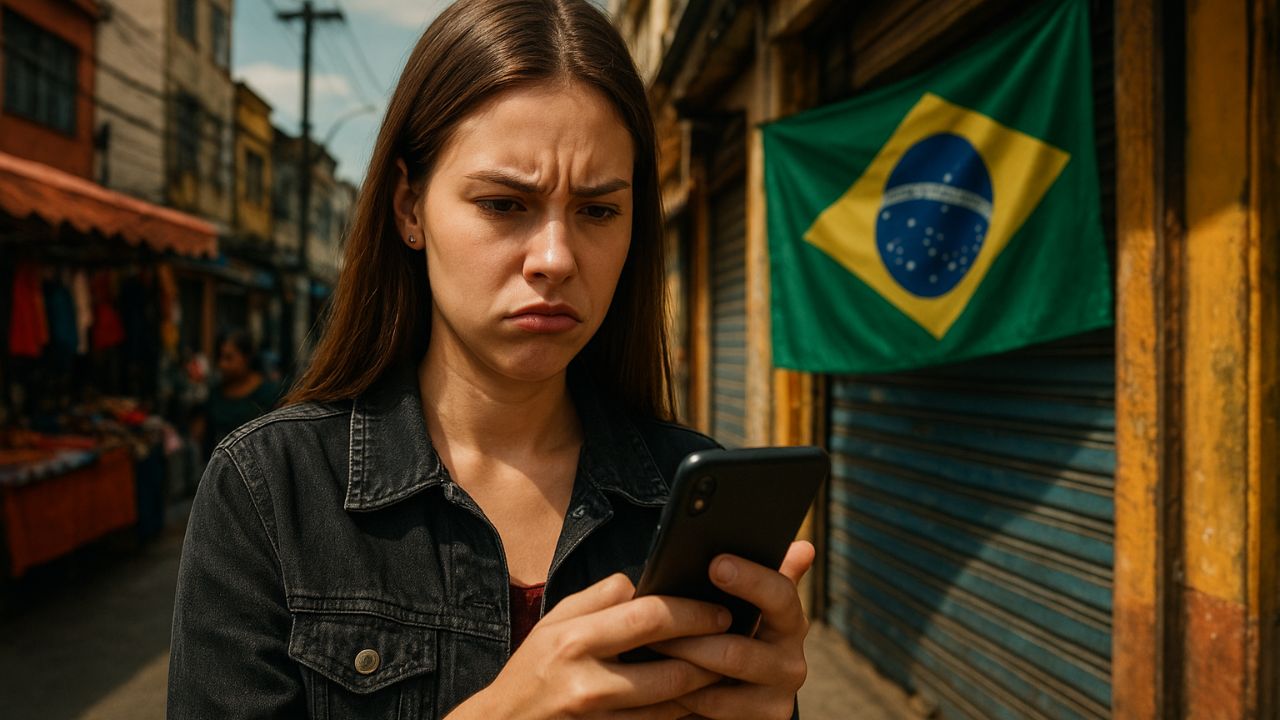


Understand The Factors That Explain The Decline Of Street Commerce In Brazil In The Face Of The Advancement Of E-Commerce And The Change Of Generations.
The street commerce in Brazil is experiencing a silent yet visible crisis. Where there used to be intense movement and lines, there are now signs saying “for rent.” The flow of consumers, which plummeted during the pandemic, has never returned to previous levels, leaving a void that is redefining the urban landscape.
This phenomenon is not a coincidence. It is driven by a perfect storm: the explosion of e-commerce, unsustainable structural costs for physical retailers, and a profound change in consumer behavior. The purchase decision, now made in seconds via mobile, puts the traditional model in check.
The Unfair Battle Of Costs And Prices
The consumer perception is clear: seven out of ten Brazilians believe that prices are better online. An analysis from the Maestria in Business channel highlights that this difference is no longer subtle, but “striking.” In surveys regarding products like smartphones, online prices are consistently lower than those in physical stores. According to industry research data, 43% of consumers cite lower prices as the main reason to shop online.
-
FIRJAN’s mega plan of R$ 526.3 billion for Rio de Janeiro aims to revive Brazil’s largest industry, with two-thirds of the investments going to oil and gas.

-
China signals an increase in beef imports, Brazil has already consumed 70% of the 1.106 million ton quota and seeks to renegotiate the tariff that jumps from 12% to 55%, while demand from the US also skyrockets.
-
Food inflation rose 302% in 20 years in Brazil, but the supermarket changed: purchasing power yielded 87% more mortadella and 31% less fruit, and ultra-processed foods took over the cart.
-
Petrobras sells the first batch of 3,800 m³ of aviation fuel made with certified soy, capable of reducing emissions by up to 70%, in an unprecedented project that anticipates the aviation sector’s requirements expected for 2027.



The explanation for this disparity is structural. Street vendors bear a heavy list of fixed costs: rent, electricity, security, display, inventory, and employees, along with a complex tax burden. Each of these items is inevitably embedded in the final price of the product, making direct competition with digital almost impossible.
In contrast, online sellers operate with a lean structure. Many work from home, with reduced inventories and integrated logistics, listing their products on giants like Mercado Livre, Amazon, Magalu, and Shopee. In these marketplaces, competition is fierce, creating an environment that compresses prices to a level that physical commerce simply cannot replicate.
Digital Convenience: The New Currency Of The Consumer
The economy, however, is not the only factor driving e-commerce. Convenience has become decisive. As highlighted by the Maestria in Business channel, 56% of Brazilians cite free shipping as a main deciding factor. Benefits offered by platforms like Amazon Prime and Mercado Pontos have eliminated the old advantage of physical stores, which was instant product availability without shipping costs.
Moreover, speed has changed the game. Weeks of waiting for delivery are over; in large cities, 24-hour or same-day delivery is a common reality. Almost 30% of consumers consider this agility as important as price. For the customer, the time spent on traveling, parking, and waiting in street commerce is seen as a loss, a friction that online shopping has completely eliminated.
The internet has also removed the “information asymmetry.” In physical stores, customers rely on the salesperson’s word. Online, they have access to thousands of reviews from other buyers—seven out of ten Brazilians say that reviews influence their decisions. The ease of comparing prices in seconds (cited by 49% of consumers) puts street retailers in constant vulnerability, competing directly with the mobile search engine even before the customer enters the store.
The Generational Abyss That Sustains Physical Stores
Street commerce has always been a point of sociability, but this habit is changing with demographics. An in-depth analysis from the Maestria in Business channel reveals a strong generational contrast: 64% of Generation Z prefer to shop online, while 66% of people over 57 still opt for physical stores.
Street commerce today largely survives supported by older consumers. In Rio Grande do Sul, for example, 88% of consumers over 40 stated they prefer in-person shopping. They report that they still value trust, the need to “see and touch” the product, and the possibility of negotiating face-to-face with the seller.
For younger consumers, the journey is hybrid and time is scarce. Three out of four Generation Z consumers use multiple digital channels (websites, reviews, YouTube videos) before completing a single purchase. When a physical store is used, it is often just a logistical pickup point, a “convenience warehouse,” rather than a destination for leisure or consumption experience.
The “Retail Apocalypse” Hits Brazil


The numbers confirm that the decline of street commerce in Brazil is not a prediction, but a reality. Data from 2024 show that traffic in physical stores has fallen by 3.9% compared to the previous year. More alarmingly: the flow of in-person consumers is 27% below pre-pandemic levels (2019). Millions of customers who migrated to digital during the pandemic have never returned to stores as before.
The impact is not limited to small retailers. Large chains are shrinking their physical operations. Americanas closed 120 stores in 2023; Marisa shut down more than 90 points of sale; and Via (the parent company of Casas Bahia) announced reductions of up to 100 stores and laid off around 6,000 employees. Even chains that invested in the integration of physical and digital, like Magazine Luiza, faced negative recent results, despite their extensive reach.
This phenomenon, referred to as the “Retail Apocalypse” in the United States, where more than 7,300 stores closed in 2024, indicates a structural change. Vacant commercial spaces are not being occupied by new retail but by services that cannot be digitized: medical clinics, dental offices, gyms, and bars. The commercial street is transitioning from a space for products to a territory for services.
The decline of street commerce in Brazil is the result of a business model suffocated by high costs, outdated logistics, and relentless digital competition. As pointed out by the Maestria in Business channel, the physical model survives today more due to deep-rooted habits of past generations than by real competitiveness. The transformation is inevitable and the numbers show that it will not slow down.
Do you agree with this change? Do you think it impacts the market? Leave your opinion in the comments; we want to hear from those who experience this firsthand.




Eu realmente não gosto de lojas online
Não vou negar que ajuda bastante e evita muitos problemas como enfrentar filas, pesquisar preços e produtos etc. Porém por mais que leia e analise as informações sobre o produto ainda é uma compra no escuro. Muitas vezes não é o que desejamos. Prefiro lojas físicas.
Eu tenho 45 faz uns 2 anos que compro.na internet, as vezes produto vêem de baixa qualidade e danificado, mais só compro o que é barato, pois os prejuízos compensa os lucros da compra, e na internet você além ver as avaliações tem especificações técnica do produto, o que os vendedores não fazem.
Tudo tem dois lados. Amo andar em.lojas simples em detrimento do online que apesar das avaliações ainda assim parecem muito pouco confiáveis. Só que a loja física tem muito vendedor que se acha dono e trata mal a pessoa que vai só olhar e a resposta é óbvia, a loja física é para olhar se fosse para comprar sem analisar eu compro online. Enfim acho que serviços/ lojistas tem muito a progredir pq o online também é cruel comerciante pequeno demora a ter visualização na plataforma, as pessoas compram a primeira opção, não vão até a 20 página. Roupas as pessoas não preferem tanto assim o on-line mas a experiência se ser classe média baixa e entrar numa loja é sempre constrangedor. As coisas tem que se aperfeiçoar e pronto. Outra muita coisa que eu eu comprei por impulso eu compro físico pq online vai ficando de lado mesmo, tipo maquiagem, não gosto de maquiagem mas é bom ter, nunca que vou comprar online pq já teria desistido de comprar kkkkkk