Portuguese
  Spanish


Electro-agriculture technology transforms CO₂ and electricity into nutrients for crops in the dark, as research on food for long missions to the Moon and Mars advances with a focus on reducing loads sent from Earth.
Food production in space is among the topics researched for long-duration missions to the Moon and Mars, with a scientific front aimed at transforming CO₂ and electricity into nutrients for organisms cultivated in the dark.
Called electro-agriculture, the technology is still under study but appears in research as an alternative to reduce part of the dependency on food loads sent from Earth on prolonged space journeys.
So far, there is no indication that NASA has a farm ready to feed astronauts on Mars, but there are university research and initiatives linked to space exploration aimed at this goal.
-
Six Helicopters to Drop 550 Tons of Poison on Island Near Antarctica to Eradicate Mice Threatening Albatrosses and 19 Seabird Species.

-
Russia Unveils Poseidon: A 20-Meter Nuclear Torpedo-Drone with 10,000 km Range, 185 km/h Speed, and 100-Ton Capacity Threatening Coastal Cities with Radioactive Waves
-
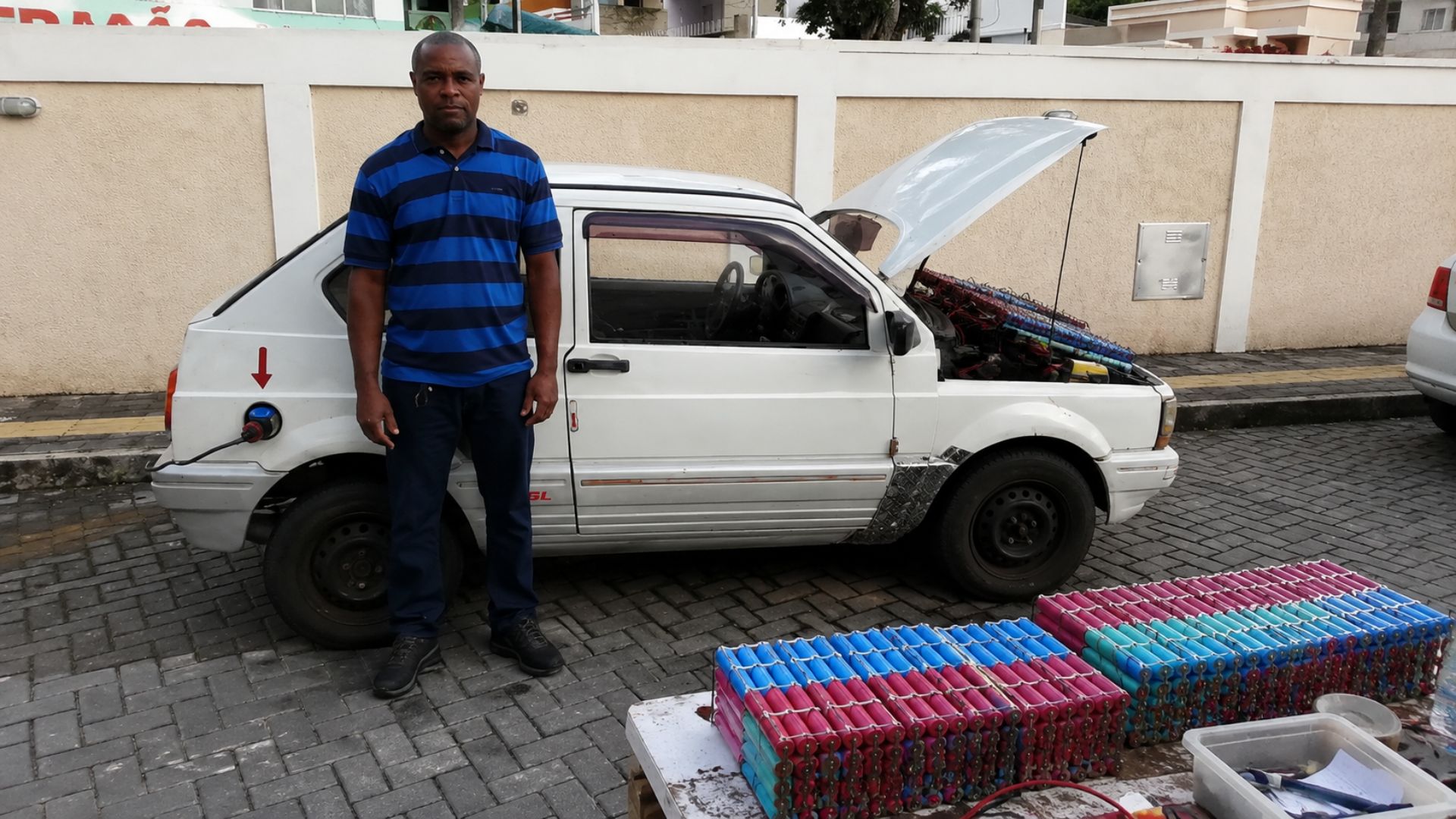
Brazilian Innovator Converts Old Car into Electric Vehicle Using Laptop Batteries and Forklift Motor, Achieves Nearly 90 km/h in Urban Settings

-
Samsung Unveils Smart Oven with Built-In Camera, AI Food Recognition, and Real-Time Monitoring via Smartphone.


These studies seek systems capable of producing food with less light, less occupied area, and lower resource use, factors considered relevant in spacecraft, lunar bases, and possible installations on Mars.
Manned missions to Mars can last hundreds of days, and a crew of six people would require a large volume of food to safely make the journey.
For this reason, space agencies and research groups are evaluating technologies that allow part of the food to be produced during the mission, instead of transporting the entire supply from launch.
Electro-agriculture attempts to reduce light dependency
Electro-agriculture proposes an alternative form of cultivation, based on the use of electricity to convert carbon dioxide into acetate, an organic molecule that can serve as a source of carbon and energy for certain organisms.
In this process, the conversion is done by an electrolyzer, equipment that uses electric current to transform simple raw materials into compounds that can be used in controlled biological systems.
After this stage, organisms such as yeasts, algae, fungi, and in more recent research, genetically modified plants, can receive acetate as a food source in environments without light.
The proposal was described by researchers from the University of California in Riverside and Washington University in St. Louis in a study published in the journal Joule, according to a release by Cell Press.
According to the researchers, the central idea is to reduce dependency on sunlight or LED lamps, as photosynthesis converts only a small fraction of light energy into usable biomass.
Robert Jinkerson, professor of chemical and environmental engineering at UC Riverside, states that agriculture may advance to controlled environments and be less dependent on natural conditions.
His team works with Feng Jiao, a researcher at Washington University in St. Louis, on developing chemical and biological routes to transform CO₂ into food.
Efficiency up to 18 times greater still depends on validation
The most significant results reported in the research occurred with organisms that can already grow without light, such as yeasts, algae, and fungi.
Studies cited by the researchers indicate that, in some cases, the conversion of energy into food can be up to 18 times more efficient than traditional methods based on sugar from plants grown by photosynthesis.
With plants, however, the experiments still face technical limitations that prevent the direct application of the method as a complete food source on a space mission.
Lettuce, tomato, and bell pepper were tested with carbon-13 labeled acetate, which allowed verification if the molecule was incorporated into plant tissues.
The experiments showed that the plants could absorb the compound, although they have not yet shown significant growth with just this energy source.
To try to overcome this limitation, researchers use genetic editing tools, such as CRISPR, with the aim of reactivating metabolic pathways present in seeds during germination.
In the initial growth phase, the plant uses internal reserves before fully relying on photosynthesis, and the studies’ proposal is to adapt this mechanism to improve acetate utilization.
Even so, the process depends on additional validation before being considered an applicable large-scale solution for food cultivation outside Earth.
At the current stage, electro-agriculture appears as a developing technology, not as a ready substitute for conventional crops nor as a proven system to feed an entire crew on Mars.
The research itself indicates that the most consistent gains so far have occurred in organisms that are simpler to cultivate in the dark, especially fungi, algae, and yeasts.
NASA seeks food for long-duration missions
NASA and the Canadian Space Agency launched the Deep Space Food Challenge in 2021 to stimulate technologies capable of producing safe, nutritious, and palatable food on long-duration missions.
The declared goal of the challenge is to develop systems that use few resources, generate little waste, and can also have applications in extreme environments on Earth.
This program helps explain the interest in solutions like electro-agriculture, although different technologies are being evaluated to meet the nutritional needs of astronauts on prolonged journeys.
On a spacecraft, a lunar base, or a future installation on Mars, common factors in terrestrial agriculture become technical constraints, such as the lack of large available areas and the need for strict control of light, water, and nutrients.
Irrigation also presents challenges in microgravity because water, air, and nutrients need to circulate predictably to avoid moisture buildup, growth failures, and microbial contamination.
Therefore, closed systems with air and nutrient recycling are being studied as part of food engineering aimed at long-duration space missions.
Besides plants, other proposals analyzed for space include fungi, microorganisms, alternative proteins, and cultivation modules designed to operate with low resource consumption.
The competition organized by NASA seeks to compare different technological paths without relying on a single solution for all the nutritional needs of astronauts.
Food production in space could impact Earth
Although the initial focus is on space missions, electro-agriculture is also being studied for its potential use in dense cities, regions with little fertile soil, and areas affected by droughts, extreme cold, or disasters.
In theory, food could be produced in closed environments with temperature, water, and nutrient control, provided the technology achieves efficiency, safety, and scale compatible with real applications.
Another possibility pointed out by researchers involves reducing the need for large agricultural areas for certain high-value crops, especially those aimed at producing specific ingredients.
Among the applications cited in research are fresh foods, compounds used by industry, vaccines, medicines, and high-value ingredients, provided efficiency and safety are proven on a larger scale.
Before any widespread use, however, there are technical and regulatory issues to resolve, including energy cost, genetic stability of modified plants, contamination control, and rules for production in closed environments.
Producing a sample in a laboratory does not equate to maintaining a reliable food system for months or years, especially in a space environment with limited resources and high operational demands.
Research on space food indicates that long missions to Mars depend on systems capable of producing food, recycling resources, and functioning predictably far from Earth.
For such journeys to become sustainable, technologies like electro-agriculture still need to advance in efficiency, safety, scale, and practical validation in controlled environments.